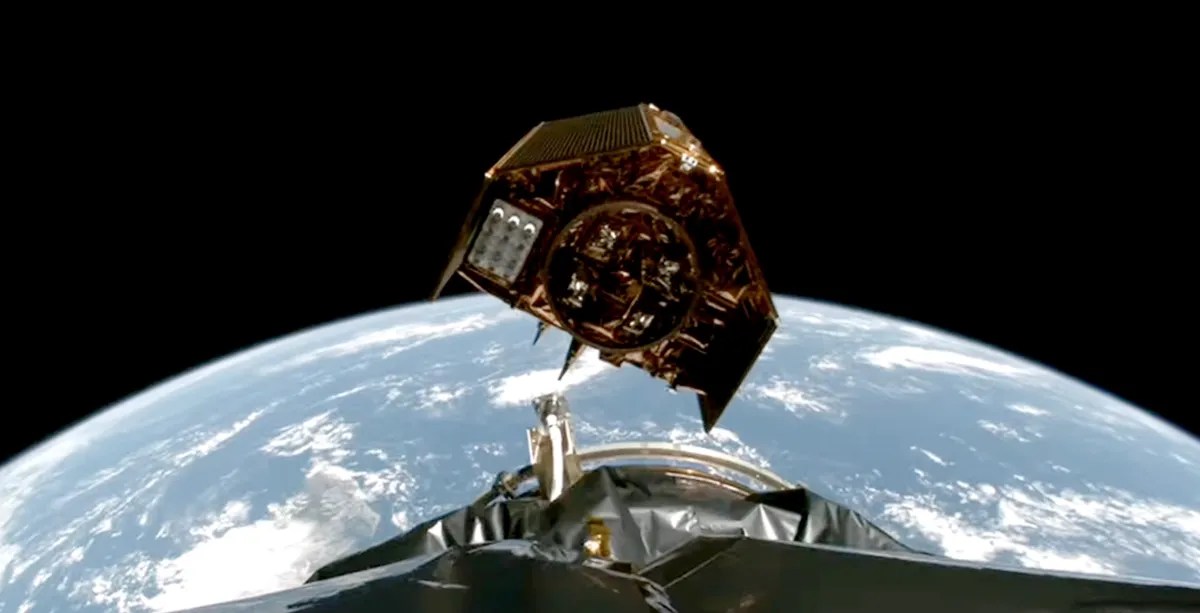
SpaceX launched a European ocean-monitoring satellite from California early Monday, completing the company’s 500th orbital mission using a flight-proven rocket booster.
The Sentinel-6B spacecraft lifted off atop a Falcon 9 from Vandenberg Space Force Base at 12:21 a.m. EST (0521 GMT). “Sentinel-6B rising, extending nearly four decades of the precise sea-level record from space,” NASA spokesperson Derrol Nail said during a webcast.
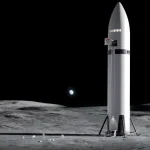
SpaceX highlighted the milestone on its X account, while company president and COO Gwynne Shotwell praised the achievement. “You’ve made the impossible possible with reusable rockets, paving the way to land huge amounts of cargo and lots of people to establish permanent human presence on the moon and beyond with Starship!” she wrote.
Congratulations to the SpaceX team on completing 500 (!!!!) missions with flight-proven rocket boosters. You’ve made the impossible possible with reusable rockets, paving the way to land huge amounts of cargo and lots of people to establish permanent human presence on the Moon… https://t.co/BPXHHNw84u
— Gwynne Shotwell (@Gwynne_Shotwell) November 17, 2025
Starship, the fully reusable heavy-lift system under development, has flown 11 suborbital tests to date but is not included in the 500 orbital tally.
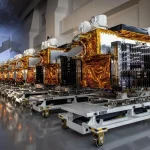
Sentinel-6B is part of the European Union’s Copernicus Earth-observation program. It will measure sea surface height to extend a climate data record spanning nearly forty years, following on from the Sentinel-6 Michael Freilich, launched in 2020.
“Monitoring sea-level rise is high on the global agenda,” the European Space Agency (ESA) said in a mission brief. Copernicus data indicate global sea levels have risen nearly 10 cm (4 inches) over the past 25 years.
The satellite carries an ESA-built radar altimeter and a NASA-supplied microwave radiometer to help refine sea-level measurements. For its first year in orbit, Sentinel-6B will operate alongside Sentinel-6 Michael Freilich for cross-calibration. The mission is jointly managed by the European Commission, ESA, NASA, Eumetsat and NOAA, with support from France’s CNES.
The Falcon 9 upper stage deployed the satellite about 57 minutes after launch into a 1,322-kilometer orbit. The booster returned to Vandenberg roughly nine minutes after liftoff, completing its third flight.