DHV Technology, headquartered in Málaga, Spain, develops flight-proven electrical power systems for small satellites, CubeSats, microsatellites and mission-specific spacecraft platforms. The company, established in 2013, is widely known for its solar panels and power subsystems used across commercial, scientific and institutional missions. Within the broader portfolio, DHV Technology offers Electrical Power Systems (EPS) and Power Distribution Units (PDU) designed to provide reliable power management, distribution and protection capabilities for satellites operating in low Earth orbit (LEO) and beyond. These subsystems are engineered to integrate seamlessly with CubeSat formats and are configurable for custom power architectures depending on mission requirements.
Electrical Power System (EPS) – Centralized Power Regulation and Battery Management

DHV Technology’s Electrical Power System (EPS) forms the central power-conditioning and distribution unit for small satellites, supplying regulated power to payloads and subsystems while managing onboard energy storage. The EPS is designed to interface directly with the spacecraft’s solar arrays while coordinating battery charging, bus regulation and fault protection. Each unit incorporates multi-stage power-conversion electronics, dedicated battery-management circuitry and both regulated and unregulated power rails sized to the mission’s electrical architecture. Depending on spacecraft configuration, the EPS can operate with primary energy supplied exclusively by solar panels or in combined modes where lithium-ion or lithium-polymer batteries provide secondary energy storage for eclipse operation or peak-load events.
DHV offers multiple EPS variants designed for different CubeSat and small-satellite form factors, including 3U, 6U, 12U, 16U and custom platforms. These units typically provide several regulated output lines commonly 3.3 V and 5 V rails, with optional higher-voltage outputs for specialized payloads. Integrated maximum power point tracking (MPPT) ensures optimal power harvesting from the solar array under changing illumination and thermal conditions. Battery protection electronics safeguard the cells against undervoltage, overvoltage, over-temperature and excessive discharge, helping maintain battery health throughout the mission.
The EPS architecture supports comprehensive telemetry, allowing the spacecraft’s onboard computer or ground operators to monitor key operational parameters such as bus currents, voltage stability, battery state of charge and system temperature. Interfaces are provided through standard CubeSat communication protocols including I²C and CAN, enabling straightforward integration into common bus types. For missions that require additional fault tolerance, DHV supplies optional redundant circuits and protections to reduce single-point failure risk. All EPS models are built using space-rated components and are flight-qualified through environmental testing that includes thermal-vacuum cycling, vibration loads, and radiation exposure representative of low Earth orbit conditions. This ensures stable long-term operation of the power-distribution and battery-management functions across the satellite’s expected mission life.
Power Distribution Unit (PDU) – Load Switching, Protection and Power-Bus Management
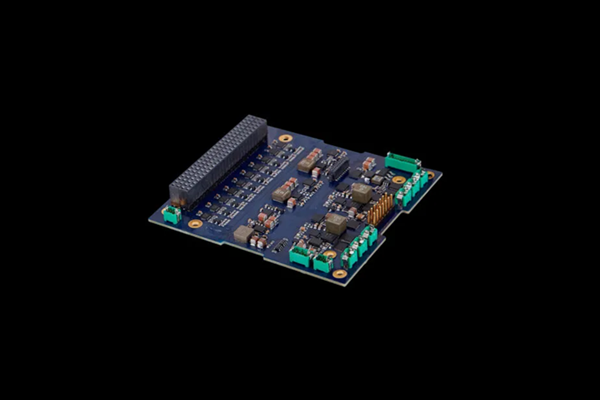
DHV Technology’s Power Distribution Unit (PDU) functions as the downstream switching and protection subsystem that manages how electrical power from the EPS is safely delivered to each satellite component. Designed around modular, flight-proven electronics, the PDU provides a controlled interface between the spacecraft power bus and mission payloads, communications units, ADCS actuators, sensors and deployment mechanisms. Each PDU includes multiple independently controlled output channels that allow operators to activate, deactivate, or isolate specific loads on demand. Current limits can be defined per channel, ensuring that individual subsystems remain protected from over-current conditions, short circuits or anomalous power draw. Depending on the mission configuration, PDUs can switch both regulated and unregulated EPS outputs, allowing flexible distribution of 3.3 V, 5 V and higher-voltage lines. Telemetry is integrated at the channel level, providing real-time reporting of current consumption, voltage levels and switching states to the onboard computer through standard interfaces such as I²C or CAN. The PDU’s fault-handling logic supports automatic or commanded restart after a protection event, contributing to mission continuity in the event of subsystem anomalies. Built in standard CubeSat mechanical formats, the PDU is straightforward to integrate and enables mission designers to sequence payload operations, reduce peak loads, manage duty cycles and maintain overall spacecraft power stability throughout the operational lifetime.
Combined EPS + PDU Architecture – Integrated Power Infrastructure for CubeSats and Small Satellites
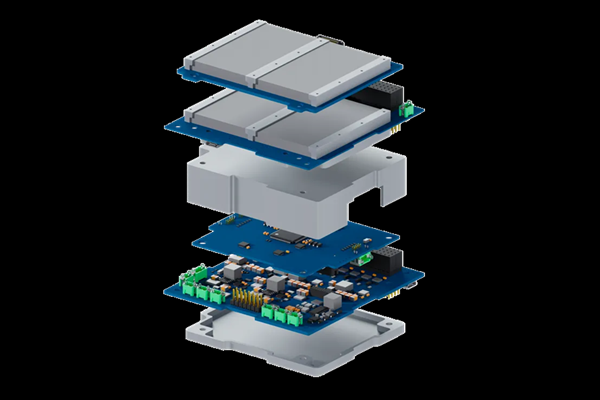
DHV Technology designs the Electrical Power System (EPS) and Power Distribution Unit (PDU) as complementary elements that together form a complete, modular spacecraft power architecture for CubeSats and small satellites. The EPS is responsible for energy harvesting, regulation and storage managing power inputs from solar arrays, implementing maximum power point tracking, controlling battery charging, and stabilizing regulated output rails. The PDU extends this functionality by handling the controlled distribution of power to downstream subsystems, with independently switchable channels, configurable current limits and fault-protection logic that isolates anomalous loads to preserve overall spacecraft health.
When deployed as an integrated pair, the EPS and PDU provide a unified electrical backbone capable of supporting CubeSat buses from 1U through 16U and custom small-sat designs. The combined system enables mission teams to allocate power budgets dynamically, sequence payload activation during limited-energy periods, and monitor subsystem consumption through built-in telemetry reporting on currents, voltages, and battery states. This configuration is particularly advantageous for payloads with variable duty cycles such as high-rate radios, active ADCS systems, or imaging instruments as the EPS ensures stable power generation while the PDU manages distribution without exceeding safe operating thresholds.
Both modules are built using space-qualified components and are tested for environmental stresses, including thermal cycling, vacuum conditions, vibration and radiation exposure. Because the design follows standard CubeSat mechanical and electrical interfaces, the EPS and PDU can be integrated with DHV Technology’s own solar panels or with third-party spacecraft buses, offering a scalable, flight-proven solution that reduces development time and mission integration risks for operators across academic, scientific, commercial, and constellation missions.
Applications Across Scientific, Commercial, and Defence Missions
DHV Technology’s EPS and PDU subsystems are used across a broad spectrum of CubeSat and small-satellite missions where stable, configurable and long-duration electrical power management is essential. The company reports deployment of these units in Earth-observation platforms that require continuous regulated power for imaging sensors, onboard processors and high-demand downlink transmitters. Communications and AIS/ADS-B satellites benefit from the EPS’s ability to support radios with intermittent but high transient loads, while the PDU’s channel-level protection ensures that power surges do not compromise mission hardware. In scientific and academic missions, where spacecraft often carry multiple low-power sensors or experimental payloads, the modular distribution channels enable precise sequencing and selective subsystem activation. Technology-demonstration missions use the energy-budget flexibility of the EPS/PDU combination to characterise new payloads without redesigning the spacecraft’s main power electronics. For constellation deployments, DHV’s standardized, flight-proven units support repeatability and reduce integration time across dozens of spacecraft. With environmental qualifications suitable for long-duration LEO missions, these power modules provide reliability across commercial, research and defence applications that depend on predictable and protected electrical power delivery.
DHV Technology’s Electrical Power Systems (EPS) and Power Distribution Units (PDU) together establish a robust, modular power-management infrastructure designed specifically for CubeSats and small satellites. By integrating maximum power point tracking for solar-array optimisation, regulated and unregulated power buses, comprehensive battery protection, load-switching capabilities and detailed telemetry reporting, the subsystem maintains stable electrical performance throughout the mission lifecycle. The compact, standardized form factors enable straightforward integration into 3U–16U platforms, while the use of space-qualified components and qualification testing ensures reliability under vacuum, radiation exposure, thermal cycling and vibration.
About DHV Technology
DHV Technology is a Spain-based manufacturer of space-qualified power systems, headquartered in Málaga, Andalucía. Founded in 2013, the company specialises in photovoltaic (PV) solar arrays and electrical-power subsystems for small satellites, CubeSats, microsatellites and custom spacecraft platforms. Its product portfolio spans deployable and body-mounted solar panels, electrical power systems (EPS), power distribution units (PDUs) and mission-specific power electronics designed for both LEO and deep-space environments. DHV Technology supports commercial, institutional and scientific missions worldwide, delivering flight-ready hardware with heritage across more than 150 satellites. The company’s engineering capabilities cover design, manufacturing, environmental testing and qualification, enabling end-to-end development of power systems that meet ECSS and NASA-grade performance requirements. Through continued expansion of the PV technologies and integrated power-management systems, DHV Technology provides spacecraft manufacturers with reliable, modular power solutions that support increasing demands for efficiency, compact stowage and long-duration mission resilience.