CopaSAT, headquartered in Largo, Florida (USA) and operating as a certified small business, develops rugged satellite-communications systems designed for defence, government, maritime, vehicular, first-responder and expeditionary missions. The company specializes in portable, quickly deployable SATCOM hardware that provides broadband connectivity in austere, contested and infrastructure-limited environments. The product portfolio includes integrated mobile terminals, multi-orbit connectivity platforms and portable communications kits engineered for mission-critical use, enabling operational teams to establish reliable communications across remote sites, mobile command posts and rapidly shifting field locations. Built for resilience, ease of transport and fast activation, the solutions support scenarios where dependable SATCOM performance is essential for continuity of operations and situational awareness.
STORM V3 – Ruggedized Multi-Orbit Mobile SATCOM Terminal

The STORM V3 is CopaSAT’s flagship ruggedized SATCOM terminal, designed as a compact, field-ready Ku-band system optimized for multi-orbit communications, LEO roaming and rapid deployment in demanding operational environments. Built around a low-profile electronically steered array, the terminal supports GEO and LEO broadband connectivity, delivering data rates of up to 200 Mbps downlink and 20 Mbps uplink and can operate autonomously without user commissioning when deployed under a managed service or subscription model. The hardware is engineered to military environmental standards, featuring MIL-STD-810G qualification, IP68 water-ingress protection and an operating temperature range from –30 °C to +55 °C, ensuring reliability in conditions involving sand, dust, salt spray, humidity, extreme heat, or sub-freezing temperatures. Despite the robustness, the STORM V3 maintains a highly portable form factor measuring approximately 23 × 20 × 2.25 inches and weighing under 30 lbs (≈13.6 kg) allowing single-operator carry, airline-checkability and on-site activation within minutes. Designed for Communications-on-the-Pause (COTP) missions, it supports diverse field applications including command-and-control, ISR data transfer, tactical networking, VoIP and cloud-connected workflows. Integrated network intelligence features such as SD-WAN failover and automated path selection between cellular, Wi-Fi and satellite links enhance resilience and ensure continuous connectivity across variable operational environments.
STORM MINI – Ultra-Portable Expeditionary SATCOM Terminal
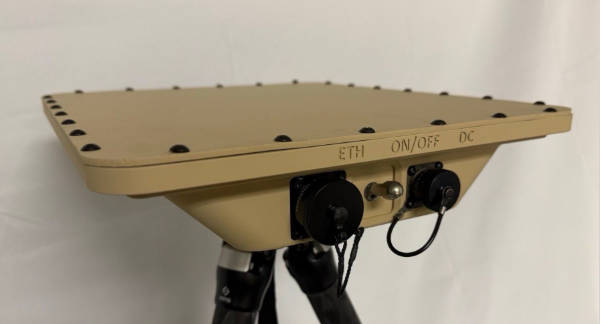
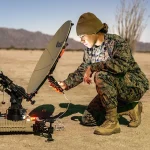
The STORM MINI is CopaSAT’s smallest and most mobile SATCOM solution, designed to support missions where portability, minimal weight and rapid field activation are essential. Developed as a hand-carried and backpack-compatible terminal, the STORM MINI is intended for tactical teams, rapid-response personnel, humanitarian operators and remote-site survey units that require a reliable communications link while remaining highly mobile. The reduced-size antenna configuration allows the terminal to provide satellite connectivity without the bulk or logistical footprint of larger deployable systems, making it suitable for operations that involve frequent movement, constrained transport capacity or helicopter and foot-borne insertion. The STORM MINI maintains many of the ruggedization standards found in the larger STORM V3, including environmental durability for outdoor field conditions and a design that supports rapid setup with minimal operator training. The lightweight build enables users to carry the unit alongside mission gear, establish a broadband link quickly and reposition as needed during dynamic operations. This portability is particularly useful for forward observers, special-mission units, emergency medical teams, or search-and-rescue crews that must maintain situational awareness and communication while on the move. The STORM MINI also integrates fully within CopaSAT’s broader SATCOM ecosystem, supporting multi-path routing, network-management capabilities, and compatibility with portable power sources such as batteries or solar modules. This allows users to manage communications through cellular, Wi-Fi, or satellite paths based on availability and mission requirements ensuring connectivity redundancy in remote or infrastructure-limited environments. For missions requiring lightweight deployment without sacrificing network intelligence or operational resilience, it offers an adaptable and field-proven communications option.
Legacy Products and Accessory Ecosystem

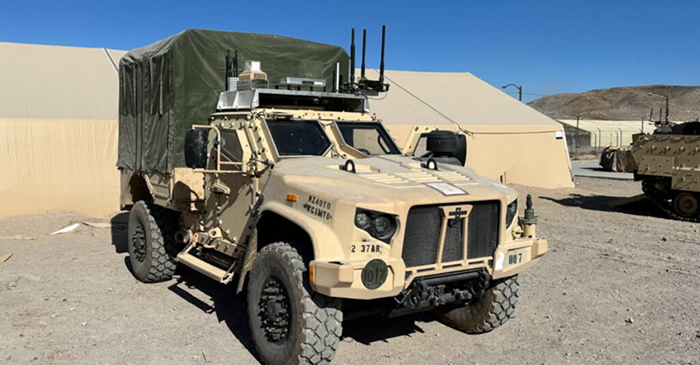
CopaSAT continues to support a wide portfolio of legacy SATCOM terminals and mission accessories that remain in service with defense, government and enterprise users. These legacy systems form an important part of the company’s long-term support model, allowing organisations to sustain fielded equipment while integrating enhancements as operational requirements evolve. The accessory ecosystem is designed to extend functionality and enable flexible deployment across air, land and maritime environments. The catalogue includes fly-away transport cases, engineered for airlift and vehicle movement while protecting SATCOM hardware from impact, vibration and moisture. Vehicle-mounting hardware, such as roof-mount frames and rack adapters, enables integration into tactical vehicles, mobile command units and maritime craft for on-the-move or stationary operations. Magnetic mounting solutions support temporary field installation on civilian or military vehicles without requiring permanent modification, useful for rapid mission setup or ISR support. For power resilience, CopaSAT offers battery modules, portable power stations and solar charging kits that allow terminals to operate in off-grid conditions where conventional power is unavailable. These systems are complemented by a range of field cabling, modems, and networking modules, enabling turnkey SATCOM deployment with minimal configuration. The legacy terminals and accessories provide mission planners with a flexible toolkit for designing communications setups to different operational timelines, mobility levels and environmental conditions.
Deployment Efficiency and Environmental Engineering
CopaSAT designs the SATCOM systems around the principle of rapid deployment, ensuring that users can establish a broadband link with minimal steps and minimal specialised training. The company’s terminals follow a largely plug-and-play activation workflow, allowing operators to achieve satellite lock and network connectivity within minutes. Tool-free assembly, pre-configured modems, intuitive mounting systems and automated calibration routines reduce setup time and help prevent common field-assembly errors that can delay mission communications. Environmental engineering plays a central role in the design of every CopaSAT platform. Terminals undergo testing for vibration, shock, thermal cycling, water immersion, dust exposure and other conditions encountered in expeditionary and tactical operations. Electronics are housed in sealed or semi-sealed enclosures with ingress-protection ratings suitable for heavy rain, salt spray, blowing sand and humid environments. The rugged construction supports missions such as disaster-relief coordination, infrastructure restoration, mobile command post establishment and defence communications where dependability, environmental resilience and rapid activation directly impact mission success.
Multi-Orbit and Multi-Path Connectivity
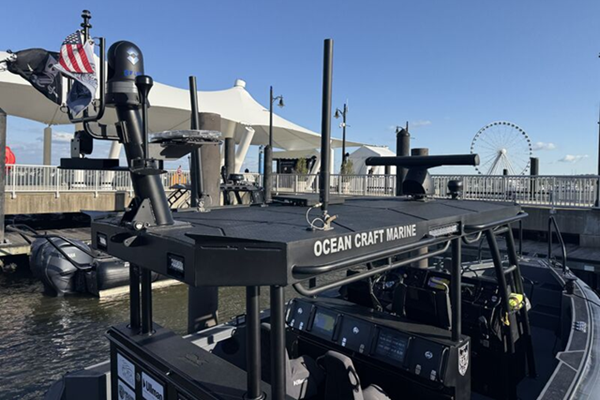
CopaSAT’s communications architecture is built around the principle of uninterrupted connectivity, achieved through support for multiple orbital layers and diversified transport paths. The company’s terminals are engineered to operate across GEO, LEO and hybrid networking environments, allowing users to maintain broadband access as mission conditions shift or as platforms move across large geographic areas. In fixed or stationary deployments, GEO satellite networks provide high-availability links suitable for command posts, emergency operations centres and long-duration missions requiring stable throughput. For mobility-intensive scenarios, LEO broadband offers low-latency, high-speed connectivity that supports real-time data transmission, ISR workflows and cloud-dependent applications in the field. Beyond satellite links, CopaSAT integrates multi-path networking that combines satellite, cellular and Wi-Fi connections. This enables terminals to select the best available transport layer based on signal strength, congestion, or mission priority. At the core of this system is SD-WAN routing, which automates link selection, optimises bandwidth usage, and provides seamless failover between paths without operator intervention. This multi-layer, multi-path approach ensures communication continuity as users transition between coverage zones, relocate to remote sites, or operate in contested or degraded environments. The capability supports a wide set of operational profiles from humanitarian teams moving through urban and rural terrain to military units maneuvering across land and maritime domains by ensuring reliable connectivity regardless of location or network conditions.
CopaSAT’s SATCOM systems are used across a broad spectrum of operational environments where reliable connectivity is essential. Defence organisations rely on the STORM product family to maintain resilient communications during field deployments, supporting activities such as situational awareness, mission coordination, intelligence sharing and mobile command operations. For government agencies, the portability and rapid-activation design of these terminals enable secure communications for mobile units, interagency task forces, border operations and field investigations. In civilian and emergency contexts, first-responders deploy CopaSAT terminals to re-establish communications in regions affected by natural disasters, where terrestrial networks have been damaged or destroyed. Maritime and offshore operators use the systems to maintain broadband links for vessels, offshore installations and remote maritime missions, ensuring continuity of navigation, crew welfare services and operational oversight. Across these varied applications, the STORM family’s compact form factor, environmental ruggedness and autonomous network-management functions enable critical capabilities such as reconnaissance support, command-and-control operations, ISR data transfer, logistics coordination, remote asset monitoring and continuity of operations in the absence of fixed communications infrastructure.
About CopaSAT
CopaSAT is a US-based satellite communications provider headquartered in Largo, Florida, specializing in rugged, rapidly deployable SATCOM systems for defense, government and remote-operations users. The systems combine compact mechanical architecture, rapid tool-free deployment and ruggedised enclosures with support for multi-orbit satellite networks, allowing users to operate across GEO, MEO and LEO constellations as well as terrestrial and wireless paths. By integrating SD-WAN routing, automated link selection and interoperability with a range of network services, CopaSAT enables government, defence, emergency-response and critical-infrastructure operators to establish broadband communications quickly and maintain continuity with operational conditions. As a certified small business, CopaSAT provides field-proven systems for tactical teams, government agencies, first responders and enterprise users requiring reliable, on-demand broadband connectivity in remote or mission-critical settings.