ARQUIMEA, headquartered in Madrid, Spain, is a multidisciplinary technology company with a significant footprint in the European space industry. Over more than two decades, the company has built a comprehensive set of capabilities spanning satellite systems, mission payloads, structural and thermal subsystems, avionics and radiation-hard microelectronics. The space division supports a wide spectrum of mission profiles across commercial operators, institutional space programs, defence agencies, and scientific research missions, providing technologies that remain operational in low Earth orbit (LEO), geostationary orbit (GEO), and deep-space environments.
The company’s space activities encompass the full lifecycle of flight hardware development, including system design, precision manufacturing, assembly, integration, environmental qualification and verification testing. ARQUIMEA operates dedicated ISO-certified clean-room facilities, along with specialised laboratories for thermal-vacuum testing, vibration and shock qualification, electronics testing and optical alignment. These facilities allow the company to deliver subsystems and satellite platforms that meet ECSS and ESA mission standards, while maintaining traceability and quality controls required for long-duration missions.
With expertise that spans from small-satellite manufacturing to mechanisms, actuators, optical assemblies, thermal systems, and rad-hard semiconductor devices, ARQUIMEA integrates multiple engineering disciplines under one operational framework. This end-to-end capability enables efficient coordination across hardware development stages, reduces program risk and supports customers seeking reliable space-qualified hardware for both constellation-scale deployments and institutional missions.
Satcom Payloads
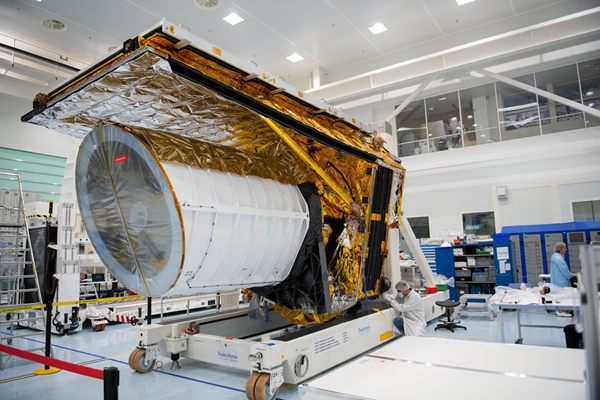
ARQUIMEA develops and manufactures a range of hardware components that form part of satellite communications (satcom) payloads, supporting missions that require reliable, high-throughput data transmission. The company works on elements used in transponders, antenna subsystems, RF signal conditioning and payload-processing electronics, providing the building blocks for communication links used by commercial operators, government programmes and secure defence networks. The satcom payload capabilities encompass RF front-end components, frequency converters, amplifiers, filtering units, waveguide assemblies and digital processing modules, all engineered to withstand the thermal, radiation and vacuum conditions of space. These hardware elements enable functions such as uplink and downlink signal management, channelisation, power amplification, beam shaping and data routing within the spacecraft payload. ARQUIMEA’s payload designs prioritise modularity and scalability, allowing the same core technologies to be adapted to different spacecraft platforms, including small satellites, GEO communication satellites, and high-capacity HTS (High-Throughput Satellite) architectures. The company’s expertise in payload hardware ensures compatibility with beam-forming networks, multi-beam payloads and next-generation digitally processed communications architectures, which enable dynamic bandwidth allocation and improved spectral efficiency.
Small Satellite Manufacturing
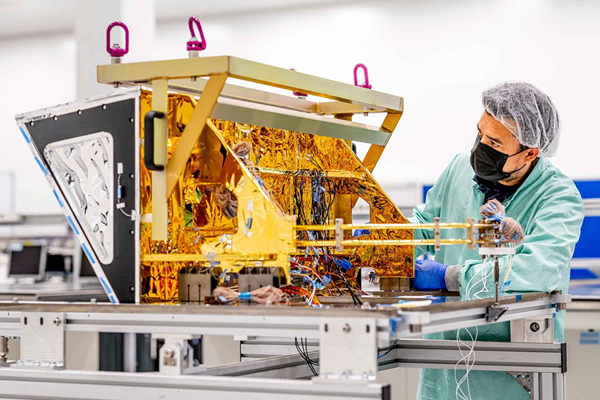
In the small satellite domain, ARQUIMEA is engaged in the design, integration and manufacturing of satellites up to approximately 300 kg in mass, with an emphasis on optimising size, weight and power (SWaP) metrics. The company’s manufacturing lines include clean-room facilities, precision machining, mechanowelding and full AIT workflows. By supporting small-satellite production at scale, ARQUIMEA provides end-to-end services from platform design through launch-integration, thereby reducing time-to-orbit for constellation or single-mission deployments.
Mechanisms and Actuators for Satellites
ARQUIMEA develops and manufactures a range of mechanical subsystems and actuation units that perform critical functions throughout a satellite’s mission lifecycle. These mechanisms are used for launch restraint, in-orbit deployment, payload positioning and structural reconfiguration, ensuring that satellites transition safely from stowed launch configurations to fully operational states once in orbit. The company’s portfolio includes hold-down and release mechanisms (HDRMs) designed to secure antennas, solar arrays, and deployable structures during launch before releasing them in space through pyrotechnic-free, low-shock actuation methods. ARQUIMEA also produces deployable booms, hinges, rotary actuators and translation mechanisms, which enable the controlled unfolding and positioning of appendages and instruments required for communications, attitude control and scientific observation. These mechanisms are engineered to meet the stringent environmental conditions of space, including exposure to vacuum, radiation, extreme thermal cycling, micro-vibration and mechanical shock. Materials and components are selected to maintain dimensional stability and mechanical performance over long mission durations, while lubricants, bearings and coatings are qualified for vacuum-compatible operation. By providing deployable and motion-control hardware that is both precise and robust, ARQUIMEA supports a range of mission types from small satellites to large geostationary platforms where controlled motion, structural deployment and high-fidelity alignment are essential for mission success.
Thermal Structures and Hardware
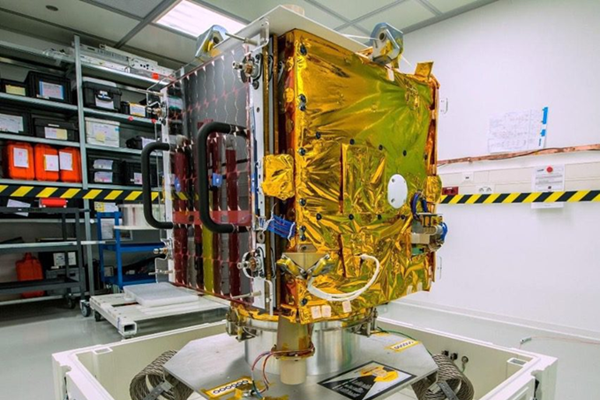
Thermal management and structural assemblies are a central part of ARQUIMEA’s contribution to spacecraft design. The company develops thermal control hardware and structural components that ensure satellites maintain stable operating temperatures throughout their mission, despite the large thermal gradients experienced in space. ARQUIMEA’s product portfolio includes aluminium and composite structural panels, radiators, heat pipes, loop-heat-pipes (LHPs), thermal straps, and integrated thermal–mechanical assemblies, all designed to dissipate heat efficiently and provide mechanical stability for payload and bus subsystems. These components are engineered to support both passive and active thermal control architectures, depending on mission requirements. Heat pipes and loop-heat pipes, for example, transport heat away from sensitive electronics and high-power payloads, maintaining thermal equilibrium without moving parts. Structural panels are produced with strict flatness, stiffness and thermal-expansion tolerances to prevent mechanical distortion that could affect payload alignment or spacecraft pointing accuracy. ARQUIMEA also develops mission-specific thermal assemblies, integrating mounting brackets, conductive interfaces, insulation layers and embedded heat-transfer components. Through these thermal and structural solutions, ARQUIMEA supports spacecraft operators in maintaining temperature stability, mechanical integrity, and payload performance, providing components that interface seamlessly with satellite buses, avionics modules and high-dissipation payloads.
Optical Payloads
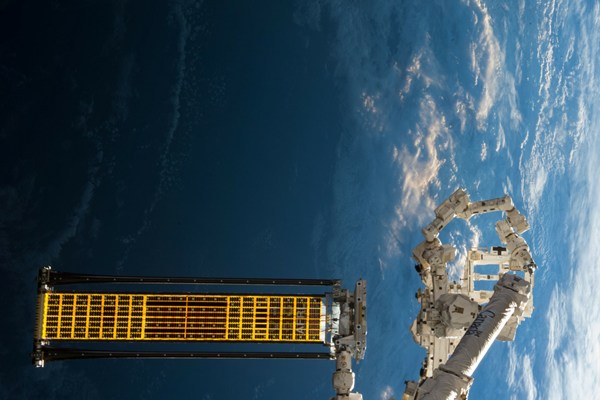
ARQUIMEA develops a range of optical payload components and subsystems used in Earth-observation, remote sensing, scientific and reconnaissance missions. The company’s capabilities span the design and manufacturing of high-resolution imaging assemblies, optical benches, structural supports for optical elements, calibration systems and sensor integration units. These elements form the mechanical and thermal backbone of optical instruments that require stable alignment and high imaging accuracy over long mission lifetimes. The company produces precision-machined optical benches and support structures that maintain strict dimensional tolerances to ensure that lenses, mirrors, and detector elements remain aligned under launch loads and in-orbit thermal variations. These structures are engineered to have low thermal expansion coefficients, helping maintain image stability and minimizing optical distortion when exposed to temperature cycles in space. ARQUIMEA also supports the integration of detectors, focal plane assemblies, baffles and alignment hardware, providing interfaces that allow optical payload developers to mount and calibrate their instruments accurately. The company’s calibration systems and optical support hardware assist in achieving the necessary optical throughput, focus accuracy and stray-light rejection required for imaging and scientific instruments. All optical components are designed to withstand the environmental stresses associated with orbital operations, including vibration, shock, vacuum, radiation exposure and thermal gradients. Qualification and verification activities include metrology checks, thermal-vacuum testing, vibration qualification, optical alignment validation and performance characterisation, ensuring that the assembled payload hardware maintains stability and functionality throughout the mission. By providing reliable optical structures and integration hardware, ARQUIMEA supports missions that require consistent imaging performance, precise geolocation, and scientifically accurate data collection, enabling both commercial and institutional customers to deploy optical payloads with predictable and validated performance.
Avionics for Space

In the avionics domain, ARQUIMEA engineers and manufactures flight electronics, on-board processors, power-distribution units, sensor electronics and communication modules for space applications. These avionics systems are designed to operate in the harsh conditions of space—low temperatures, radiation, vacuum and high reliability demands and support both commercial and government satellites. The integration of avionics into ARQUIMEA’s broader system-level offerings allows operators to access spacecraft platforms that already include critical flight electronics and control systems.
Radiation-Hard Microelectronics for Space Applications
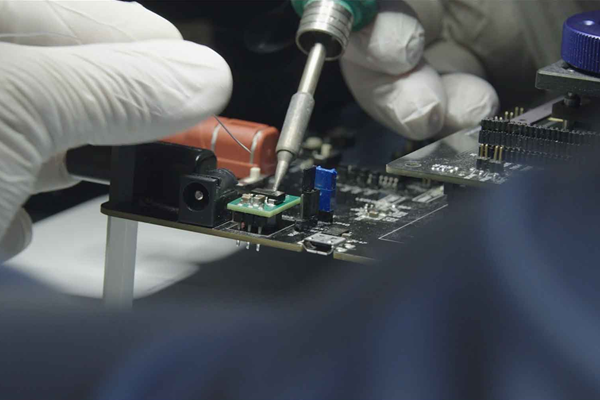
ARQUIMEA designs and produces radiation-hardened (rad-hard) microelectronics used in satellites, deep-space spacecraft, and high-reliability payloads. The company develops a wide range of devices including analog and digital ASICs, mixed-signal integrated circuits, memory components and sensor-interface chips that are engineered to operate reliably under the radiation environments present in LEO, MEO, GEO and beyond. These microelectronic components are designed to withstand key radiation effects such as total ionizing dose (TID), single-event effects (SEE), displacement damage, and long-duration thermal cycling. ARQUIMEA’s semiconductor processes emphasise robust circuit architecture, protective layout techniques, and technology nodes compatible with radiation-tolerant behaviour. Devices are validated through radiation testing campaigns that may include heavy-ion testing, proton irradiation, gamma exposure and temperature-extreme qualification. ARQUIMEA also manages wafer fabrication, packaging, screening, and quality assurance, ensuring that each device meets the reliability requirements of institutional and commercial mission profiles. These processes follow space-sector standards and allow the company to supply components that can be integrated into flight avionics, communication payloads, control systems and sensor electronics. Through these rad-hard microelectronics capabilities, ARQUIMEA provides spacecraft manufacturers and payload integrators with long-life, space-qualified electronic components that support mission-critical functions across communications, Earth observation, scientific instrumentation and defence applications.
Manufacturing, Assembly, Integration & Test (MAIT)
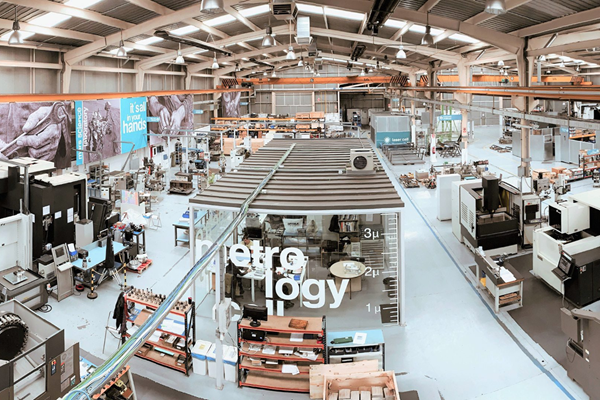
ARQUIMEA provides comprehensive Manufacturing, Assembly, Integration and Test (MAIT) services that support the full development cycle of satellite platforms, payloads and mission-critical subsystems. The company maintains dedicated facilities equipped to handle flight hardware from initial fabrication through environmental qualification, ensuring compliance with ECSS, ESA and industry-standard requirements. The MAIT infrastructure includes ISO-classified clean rooms for the assembly of sensitive components such as avionics modules, optical structures, thermal hardware and microelectronics. Precision machining and mechanowelding areas support the fabrication of structural panels, mounts, brackets and mechanical assemblies, while specialised equipment enables tight-tolerance manufacturing suitable for high-reliability space missions. For verification and qualification activities, ARQUIMEA operates a suite of environmental test chambers, including thermal-vacuum facilities that simulate the vacuum and temperature extremes of space, as well as vibration and shock laboratories used to evaluate hardware performance under launch loads. Additional resources include radiation test support, electrical testing benches, functional verification setups, and metrology systems for dimensional and alignment inspections. These integrated MAIT capabilities allow ARQUIMEA to conduct mechanical, thermal, electrical and environmental qualification on-site, reducing the need for external testing and enabling efficient coordination between design, manufacturing and verification teams. This end-to-end workflow helps customers minimise program risk, maintain configuration control and reduce the time required to deliver flight-ready systems. ARQUIMEA operates as a systems-level supplier across the satellite development chain. The company’s contributions span commercial, institutional, and defence missions, supported by a track record of participation in more than 160 space missions and the delivery of over 20,000 qualified components. This combination of engineering expertise and production infrastructure enables ARQUIMEA to provide reliable, space-ready hardware for a wide range of orbital and mission requirements.
About ARQUIMEA
ARQUIMEA is a multidisciplinary technology company headquartered in Madrid, Spain, operating across strategic sectors including space, aerospace, defence, biotechnology and renewable energy. Within the space domain, ARQUIMEA has established itself as a fully integrated provider of satellite systems, payloads, subsystems and mission-critical components. The company delivers solutions that cover the entire lifecycle of space hardware from design and engineering to manufacturing, assembly, integration and environmental testing. With facilities that include ISO-certified clean rooms, precision manufacturing lines and dedicated MAIT (Manufacturing, Assembly, Integration & Testing) infrastructure, ARQUIMEA supports both institutional programs (such as ESA missions and European government contracts) and commercial satellite operators. The company has more than 20 years of heritage supplying high-reliability components, mechanisms, microelectronics and subsystems for satellites operating in LEO, MEO, GEO and deep-space environments.