Sophia Space is expanding the capabilities of in-orbit computing through a portfolio of satellite products engineered to deliver high-performance artificial intelligence (AI), edge computing and scalable orbital data processing. Designed to address the growing demand for autonomous spacecraft operations and real-time data analytics, the company’s product lineup including the Sophia Blade, Sophia TILE and Sophia Satellite provides a modular computing architecture that enables satellites to process, analyze and act on mission data directly in space. Sophia Space addresses these challenges by moving advanced computing capabilities closer to the source of data, enabling spacecraft to perform AI inference, data filtering, sensor fusion and mission-critical decision-making while remaining in orbit.

Sophia Space is focused on developing computing infrastructure specifically engineered for the space environment. The company is advancing an architecture where spacecraft become intelligent computing nodes capable of executing complex workloads autonomously. The product portfolio supports applications ranging from Earth observation and remote sensing to defense, scientific research, communications, autonomous satellite operations and future commercial space infrastructure. Through modular hardware and software architectures, Sophia Space enables satellite operators to deploy scalable computing resources that can evolve with mission requirements while reducing dependence on continuous ground intervention. The company’s approach combines radiation-tolerant hardware, AI acceleration, thermal optimization and distributed computing technologies to support reliable operation in the demanding conditions of space. At the core of Sophia Space’s product portfolio is the Sophia Blade, a radiation-hardened and fault-tolerant edge server designed for deployment aboard satellites and other orbital platforms. The system combines an NVIDIA Jetson AGX Orin compute module with a space-rated microcontroller, providing a platform capable of executing advanced AI and high-performance computing workloads while maintaining operational resilience in radiation-rich environments. Sophia Blade incorporates fault-tolerant design principles intended to support reliable operation during extended space missions where radiation effects, thermal extremes and hardware reliability are critical considerations. The platform is designed to execute AI inference directly onboard spacecraft, allowing satellites to process mission data without waiting for instructions from ground stations. This enables faster decision-making, reduced communication latency and more efficient utilization of available downlink bandwidth.

Sophia Blade is powered by the Sophia Space Orbital Operating System (SOOS), which provides software infrastructure for managing distributed computing resources in orbit. SOOS is designed to support high-availability computing clusters, allowing multiple computing nodes to operate together while maintaining operational continuity even when individual hardware components experience faults. The operating system incorporates workload management capabilities that enable containerized applications to be deployed and managed across available computing resources. Thermal management functions built into SOOS help optimize system performance within the unique thermal environment of space, where traditional air-based cooling methods cannot be used. By coordinating hardware utilization and thermal behavior, the operating system supports reliable long-duration computing performance. The software platform also integrates with the NVIDIA AI ecosystem, supporting technologies such as TensorRT for optimized AI inference performance and ONNX Runtime for executing machine learning models across diverse AI frameworks. These capabilities allow developers to deploy sophisticated artificial intelligence applications while maximizing the efficiency of available onboard computing resources.
Also Read: What is the role of AI in Space Exploration and Satellite Operations?
Sophia Space has developed Sophia TILE, a modular AI edge computing platform built around a four-blade architecture. The system is engineered for rapid integration across multiple satellite buses as well as future commercial space station platforms, providing mission designers with a flexible computing solution that can be configured according to application-specific requirements. Each Sophia TILE can be customized for different mission profiles, allowing operators to tailor sensor compatibility, onboard storage capacity and battery configuration to meet operational objectives. The modular design enables spacecraft developers to integrate advanced computing capabilities without requiring extensive redesign of satellite architectures, helping reduce development complexity while supporting mission scalability. One of the defining engineering challenges in spacecraft design is thermal management. Sophia TILE is specifically engineered to address this constraint through an architecture optimized for operation in vacuum environments. By improving thermal efficiency, the system reduces overall power consumption while minimizing mechanical complexity associated with traditional cooling approaches. This design contributes to improved operational stability, increased hardware longevity and more efficient utilization of spacecraft resources throughout extended missions. The thermal architecture also supports sustained AI processing workloads that would otherwise generate significant heat during continuous high-performance computing operations. Sophia TILE is designed to support computing across multiple operational layers. Individual satellites can perform edge processing locally while simultaneously participating in distributed constellation-level computing architectures.

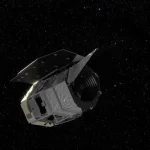
Building upon the modular computing architecture, Sophia Space has introduced Sophia Satellite, an orbital data center platform designed around multiple Sophia TILE computing modules. Sophia Satellite employs independently operating compute TILEs that collectively provide scalable high-performance computing resources in orbit. This architecture enables computing capacity to increase incrementally as mission requirements evolve, allowing additional processing capability to be integrated without redesigning the overall satellite platform. The modular design also supports parallel execution of computational workloads, enabling multiple AI models, sensor processing tasks, communication applications and payload operations to run simultaneously across separate computing resources. A key characteristic of the Sophia Satellite architecture is its emphasis on operational resilience. Sophia Satellite reduces this risk by distributing computing functions across multiple independent compute TILEs. If an individual TILE experiences radiation-induced faults or hardware failures, the issue remains isolated to that specific module while the remaining computing resources continue operating. This approach eliminates single points of failure and enables graceful degradation of system performance rather than complete mission interruption. Such fault containment is particularly valuable for long-duration missions operating in harsh radiation environments where hardware reliability remains a critical design consideration.
Sophia Space’s computing platforms are designed to support a broad range of emerging space applications that increasingly rely on autonomous onboard processing. Potential mission applications include Earth observation image analysis, multisensor data fusion, autonomous spacecraft health monitoring, communications optimization, scientific experimentation, robotic operations, space situational awareness and next-generation commercial space infrastructure. Through products such as the Sophia Blade, Sophia TILE, and Sophia Satellite, Sophia Space is advancing a modular computing ecosystem designed specifically for these emerging requirements. By combining radiation-tolerant hardware, AI acceleration, distributed computing and software-defined workload management, the company is enabling satellite operators to deploy scalable in-orbit computing infrastructure capable of supporting current and future space missions across commercial, scientific and government applications.
About Sophia Space
Sophia Space is a space technology company headquartered in California, USA, focused on developing high-performance computing infrastructure for satellites and orbital platforms. The company designs AI-enabled edge computing systems, modular orbital data centers and software platforms that support autonomous in-orbit data processing and distributed computing. The portfolio includes the Sophia Blade radiation-hardened edge server, the Sophia TILE modular AI computing platform, the Sophia Satellite orbital data center architecture and the Sophia Space Orbital Operating System (SOOS) for high-availability workload management. By combining space-qualified hardware with AI software and scalable computing architectures, Sophia Space supports Earth observation, communications, scientific research, commercial space stations and other next-generation space applications.