Thursday update: The US military confirms it scrubbed a planned hypersonic missile test Wednesday. The test has not yet been rescheduled. Here’s the full statement from a spokesperson from the Office of the Secretary of Defense: “On September 6, the Department planned to conduct a flight test at the Cape Canaveral Space Force Station, Florida to inform our hypersonic technology development. As a result of pre-flight checks the test did not occur. The Department was able to successfully collect data on the performance of the ground hardware and software that will inform the continued progress toward fielding offensive hypersonic weapons. Delivering hypersonic weapons remains a top priority for the Department.”
Original post: Airspace and maritime navigation warnings released to pilots and mariners suggest the US military might launch a hypersonic missile this week on a test flight from Cape Canaveral, Florida.
This test could be one of the final milestones before the US Army fields the nation’s first ground-based hypersonic weapon, which is more maneuverable and more difficult for an enemy to track and destroy than a conventional ballistic missile. Russia has used hypersonic missiles in combat against Ukraine, and US defense officials have labeled China as the world’s leader in emerging hypersonic missile technology.
That has left the US military playing catch-up, and the Army is on the cusp of having its first ground-based hypersonic missiles ready for active duty. If informed speculation is correct, the test launch from Cape Canaveral Space Force Station this week—performed in partnership with the Army and the Navy—could be a full-scale test of the new solid-fueled hypersonic missile to propel a hypersonic glide vehicle to high speeds over the Atlantic Ocean.
Time and place
The missile’s scheduled launch window and trajectory are indicated by the parameters of the published launch hazard zones. According to experts who closely monitor launch activity, the flight path closely matches the expected trajectory for a planned hypersonic missile test that was previously supposed to launch from Cape Canaveral earlier this year.
The flight path doesn’t align with any planned missions by SpaceX, United Launch Alliance, or NASA. That leaves the US military, which isn’t saying much about the operation.
,
“We have nothing to announce at this time,” a spokesperson for the Office of the Secretary of Defense told Ars. “Test dates and event details are not announced in advance.”
It appears the missile test could take off from Cape Canaveral as soon as Wednesday between approximately 10 am EDT and 1:30 pm EDT (14:00-17:30 UTC), according to the air and sea navigation warnings. The exact launch window hasn’t been announced.
1/x
Navigational Warnings have appeared that suggest a new test launch attempt of the #LRHW hypersonic #missile from Cape Canaveral between Sept 6-8:@nukestrat @planet4589 @wslafoy @EmreKelly pic.twitter.com/wKWsgv9Vb5— Dr Marco Langbroek 🇬🇱 🇩🇰 (@Marco_Langbroek) September 4, 2023
In March, a similar set of navigation warnings popped up on the National Geospatial-Intelligence Agency and Federal Aviation Administration websites. But there wasn’t a launch, and military officials later acknowledged the warnings were associated with a hypersonic missile test, which was scrubbed due to a technical problem with a battery.
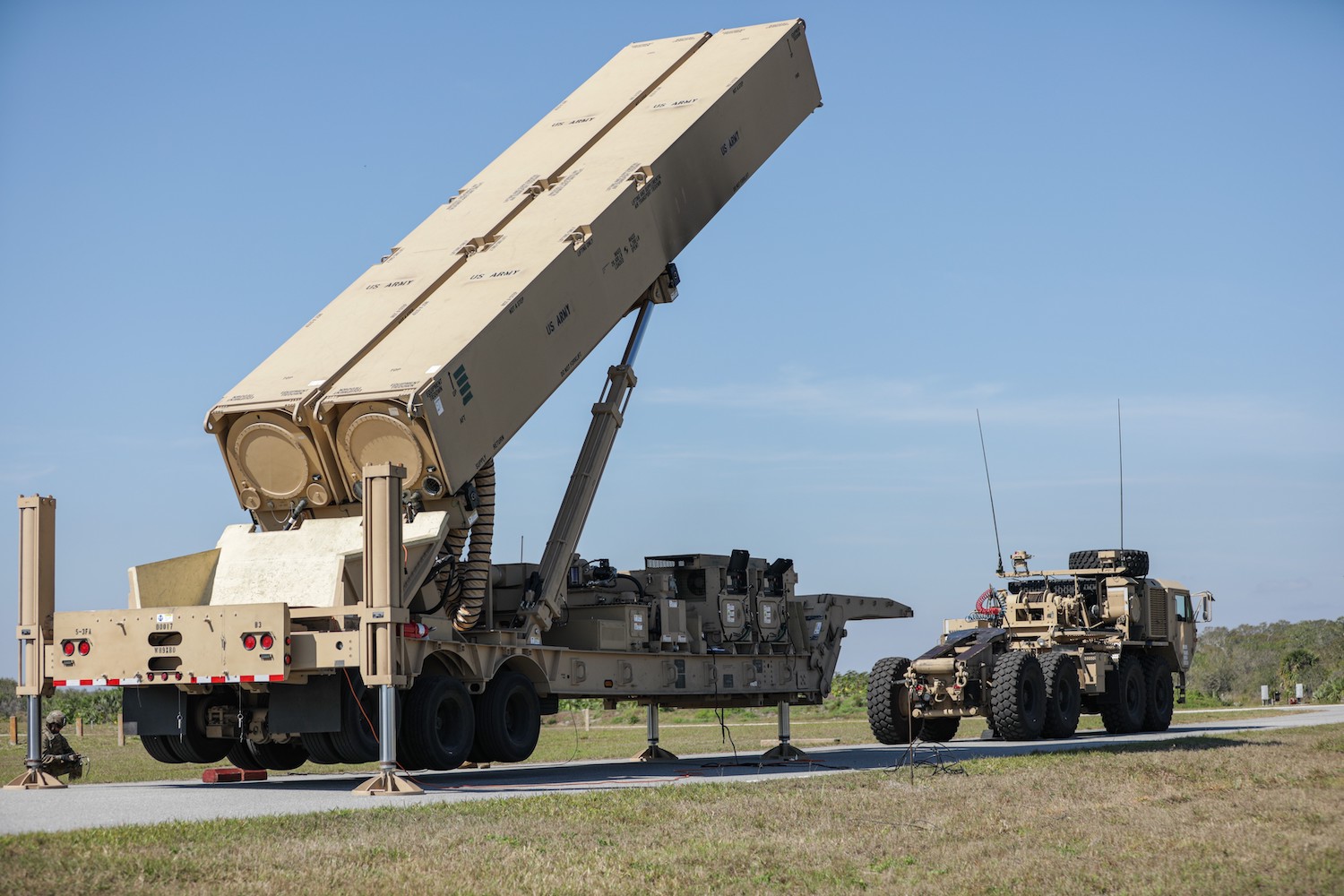
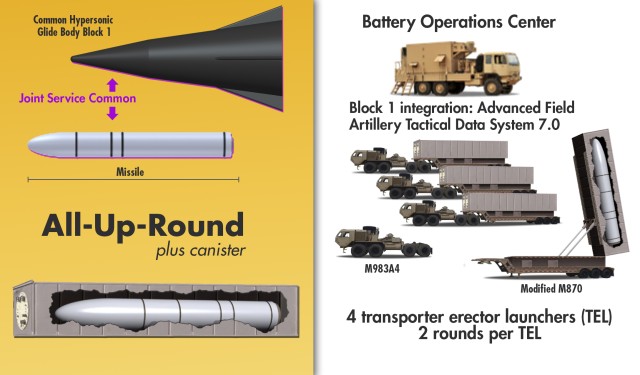
A few weeks later, the Army published a press release outlining “a full rehearsal of expeditionary hypersonic launch capabilities” at Cape Canaveral Space Force Station without mentioning the postponed test flight. A picture of a road-mobile missile battery for the Army’s Long-Range Hypersonic Weapon (LRHW) deployed to Cape Canaveral accompanied the press release.
The LRHW, managed by the Army’s Rapid Capabilities and Critical Technologies Office, is the land-based component of the military’s effort to develop and deploy hypersonic missiles. The Navy will use the same type of system on its vessels to provide a sea-launched hypersonic weapon capability called Conventional Prompt Strike.
The Army and Navy programs will use an identical two-stage missile, which will jettison after depleting its rocket motors, freeing a hypersonic glide vehicle to steer toward a target and strike with little or no warning. The entire rocket and glide vehicle are collectively called an “all up round.”
The military canceled an air-launched hypersonic weapon program earlier his year after it ran into problems during testing.
It has been several decades since the military performed land-based missile testing at Cape Canaveral. During the Cold War, the Air Force launched Minuteman missiles from the Florida spaceport on test flights, and the launch range in Florida continues to support offshore tests of submarine-launched Trident missiles.
Now, Cape Canaveral is poised to become a center of hypersonic missile testing.
Vice Admiral Johnny Wolfe, director of the Navy’s strategic systems programs, told a subcommittee of the House Armed Services Committee earlier this year they have coordinated with the Space Force’s range at Cape Canaveral to “provide funding for infrastructure upgrades necessary to establish the first Atlantic hypersonic flight test corridor.”
Catching up to China and Russia
The Pentagon has established several programs to deploy offensive hypersonic weapons systems and defensive technology to detect and destroy hypersonic vehicles taking aim at US or allied forces.
“Fielding hypersonic weapons are one of the department’s highest priorities,” a military spokesperson told Ars. “The Army, Navy, Air Force, Defense Advanced Research Projects Agency (DARPA), and Missile Defense Agency will execute tests of offensive and defensive hypersonic technologies in support of expanding this capability.”
The Army’s Long-Range Hypersonic Weapon, which could be tested this week, has a range of 1,725 miles (nearly 2,800 kilometers), according to a report published in March by the Congressional Research Service.
“Hypersonic weapons, capable of flying at speeds greater than five times the speed of sound (Mach 5), are highly maneuverable and operate at varying altitudes,” the Army says. “This provides the warfighter with an ability to strike targets hundreds and even thousands of miles away, in a matter of minutes, to defeat a wide range of high-value targets.”
In testimony to a House subcommittee in March, a senior official from the Defense Intelligence Agency laid out the growing hypersonic weapon capabilities of China and Russia.
“Hypersonic weapons, designed to evade US sensors and defensive systems, pose an increasing and complex threat due to the availability of both nuclear and conventional capabilities, challenging flight profiles, and maneuverability,” said Paul Freisthler, chief scientist of the DIA’s directorate for analysis.
While Russia has already used hypersonic missiles in war, China leads Russia in supporting infrastructure and the number of hypersonic systems, according to Freisthler.
The US military says it has no plans to outfit its hypersonic weapons with nuclear warheads.
The test flight this week could pave the way for the Army to field its first hypersonic missile battery by the end of this year, according to Breaking Defense, a defense industry trade publication. Additional land-based hypersonic missile batteries will come online in the next few years, and the Navy plans to deploy the missiles on surface ships in the mid-2020s.
The capability won’t come cheap. The Congressional Budget Office concluded in January that purchasing 300 intermediate-range hypersonic missiles would cost $41 million per missile.
Meanwhile, the Missile Defense Agency plans to launch the Hypersonic and Ballistic Tracking Space Sensor mission into orbit later this year on a SpaceX Falcon 9 rocket. This new sensor will have improved sensitivity to detect and track hypersonic missiles, which have lower heat signatures from their exhaust plumes than larger long-range ballistic missiles, making them more challenging to see with the military’s existing missile-tracking satellites.
The Space Development Agency is also deploying a constellation of hundreds of low-Earth orbit satellites to bolster US defenses against missile attacks, including those by hypersonic weapons.