Infinity Avionics, founded in 2020 and based in Canberra, focuses on satellite payload technologies-especially advanced imaging, autonomous onboard processing, and space domain awareness systems. Infinity Avionics’ mission is to deliver flexible, reconfigurable, and small-form-factor electronic subsystems – especially vision systems – for complex nano-satellite and space missions.
Infinity Avionics partnered with HEO Robotics and the Australian National University (ANU) to co-develop the Holmes imaging system to inspect satellites in orbits beyond HEO’s existing coverage. It collaborated with SmartSat CRC, UNSW Canberra Space, and Nominal Systems to build a dual-head neuromorphic camera system for autonomous SDA imaging, targeting on-orbit demonstration. It signed an MoU in 2025 with Nurjana Technologies to co-develop next-generation SDA payloads combining Infinity’s Lynx4MP-70MM camera with AI analytics for European surveillance needs. entX contracted Infinity to build components for a Radioisotope Heater Unit (RHU) lunar demonstrator payload aimed at supporting future Artemis-style missions and lunar surface operations.
Key technologies
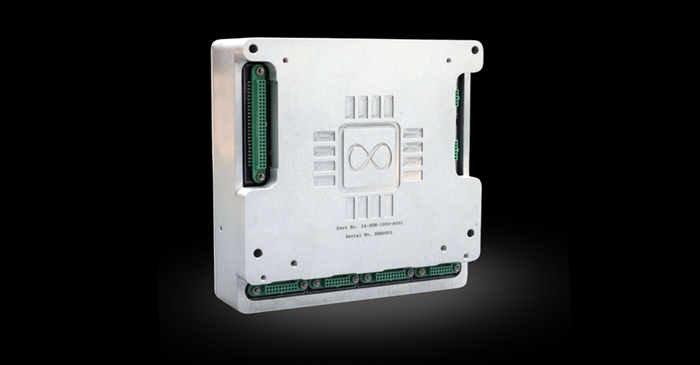
BRAIN Edge Processor
The BRAIN is Infinity Avionics’ high-performance, space-qualified edge computing platform built around the NVIDIA Jetson Orin NX architecture. It offers up to 100 TOPS of AI processing power and is designed to support demanding autonomous vision and analytics workloads directly onboard spacecraft. This processor enables real-time image processing, object detection, anomaly recognition, and autonomous decision-making directly on the spacecraft. It significantly reduces the need for high-bandwidth downlinks by transmitting only important metadata or summary results. It is compatible with Infinity Avionics camera lines (e.g., Lynx4MP, Orion12MP), offering direct feed and control, and supports major camera interfaces such as USB, MIPI CSI, Ethernet, making it adaptable across payload configurations. It autonomously tracks and classifies objects (e.g. debris or other satellites) using onboard vision and analytics and preprocesses imagery before sending essential payload data down to Earth. The BRAIN can also provide real-time visual feedback and decision-making in robotic arms or SelfieCam deployment monitoring.
Lynx4MP Camera
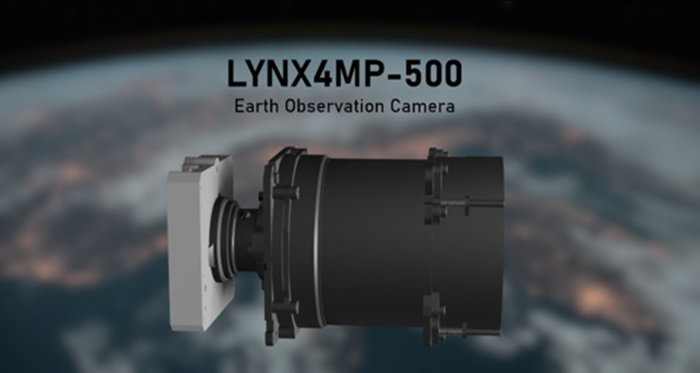
Lynx4MP is a 4-megapixel RGB/Mono space-qualified camera backend engineered for CubeSat-compatible missions and other small platform applications. It is available in multiple optical configurations (10 mm, 70 mm, 500 mm focal lengths). Lynx4MP is flight-proven at TRL 9, and offers modular, mission-adaptable performance across Earth observation, space situational awareness (SSA), deployment monitoring, and planetary engineering roles. Its combination of flight heritage, radiation tolerance, and customization makes it a versatile choice for smallsat missions and commercial space applications. The system has been qualified for thermal vacuum, vibration, and shock testing up to 40kRad TID. Lynx4MP camera backend electronics can be combined with different optical assemblies to suit a range of space applications. Lynx4MP models include Lynx4MP-10, Lyn4MP-70 and Lyn4MP-550.
Leo2MP Engineering Camera
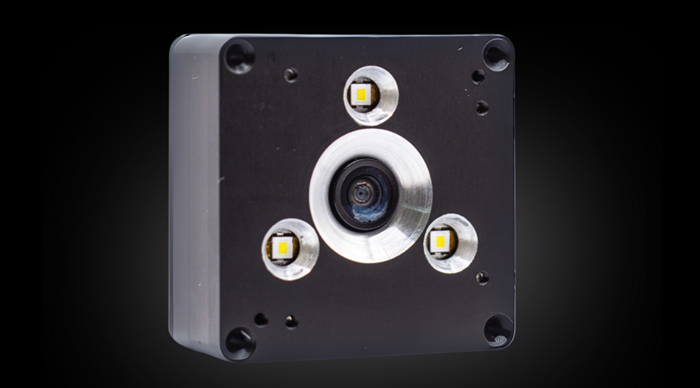
Leo2MP is a small form factor engineering camera designed for space applications. Capable of both onboarding image data storage and image data streaming over USB interface, the camera is ideal for monitoring spacecraft structures or deployment activities, space manufacturing and robotics, as well as rover applications. Leo2MP comes with LEF illumination to support challenging space lighting conditions. It has a frame rate of up to 12 frames per second and offers 90/110 degrees optional field of view to suit wide-angle observation needs. This camera tracks and visually documents the deployment of structures such as solar arrays, antennas, or logistics modules. It offers an onboard storage of up to 200 JPEG images and can assist onboard systems by providing imaging feedback for robotic operations and assembly tasks.
SelfieCam Video
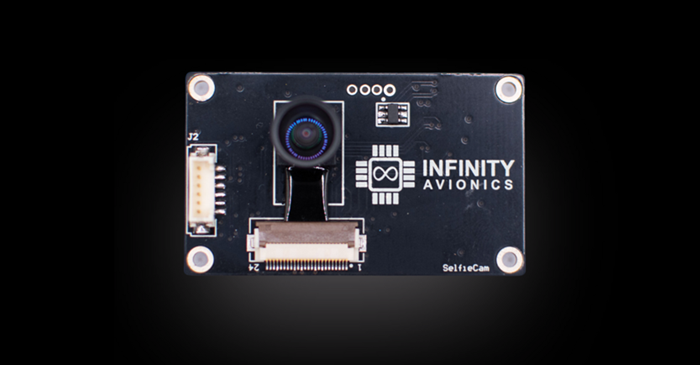
SelfieCam is a small form factor, TRL 9, space asset monitoring camera with demonstrated flight heritage through numerous space missions. The camera can capture and save images in non-volatile memory. It is designed with ease of integration and operation in mind, providing on-orbit imaging capability to your mission. The camera is ideal for spacecraft deployment monitoring such as solar panels and antennae. Its strengths lie in its simplicity, compact size, and low-power footprint, perfect for deployment tracking, health verification, and onboard visual feedback. With a straightforward UART interface and robust heritage, it’s a versatile and reliable choice for missions prioritizing onboard awareness with minimal mass and power impact.
Orion12MP
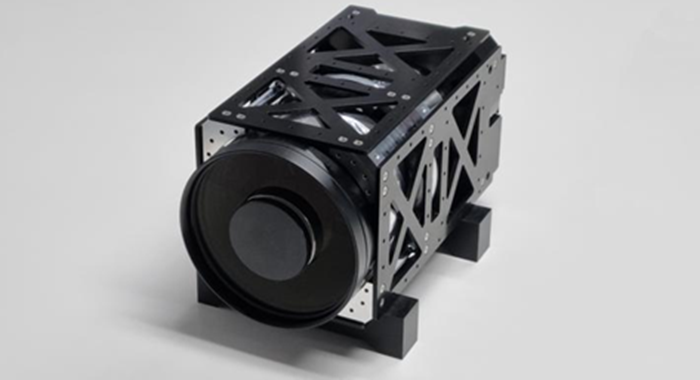
Orion12MP is a 12 Megapixel RGB/ Monochrome camera back-end electronics unit that can be combined with application-specific optical assemblies. Orion12MP is suitable for a range of space applications such as Earth observation, hyperspectral imaging, space-based space surveillance, and docking/rendezvous applications based on the selected optical assembly. The camera provides high FPS image capture capability with on-board non-volatile data storage options. Orion12MP is designed leveraging a modular methodology, providing the ability to customize the camera with different sensors and interface options with reduced engineering effort and cost. The system has been qualified for thermal vacuum, vibration, and shock. The Orion12MP camera system delivers exceptional versatility for high-resolution, high-frame-rate imaging in space. Its modular design, large onboard storage, and rugged qualification suit it well for diverse missions, from Earth observation and spacecraft inspection to autonomous rendezvous and planetary exploration. Offering a customizable backend that can be tailored to optics, interfaces, and operational sequences, Orion12MP forms a critical payload component in advanced vision systems.
Infinity Avionics is reshaping the space and satellite industry by delivering compact, intelligent, and highly adaptable systems that power next-generation space missions. Their technologies are enabling smarter, safer, and more autonomous spacecraft across commercial, defense and scientific domains.