The Scaleup Europe Fund was announced in 2025 as part of the EU Startup and Scaleup Strategy, an effort to reshape the region’s regulatory and financial landscape to support local deep-tech industries. While its first investment supported the space sector, the fund’s scope is broader, with managers exploring future investments in AI, robotics, semiconductors, energy, biotech, and advanced industrial systems. The fund aims to close a persistent growth-stage financing gap that has forced many European startups to seek large capital raises abroad and often exit through sales to foreign buyers. In 2025, European investors did not lead a single growth-stage investment round in Europe’s space industry.
The European Commission has agreed to contribute €1B to the fund, with the remainder coming from Novo Holdings, the Export and Investment Fund of Denmark, CriteriaCaixa, Santander, Wallenberg Investments, Mouro Capital, Fondazione Compagnia di San Paolo, Dutch pension fund ABP, and Allianz. In May, the European Innovation Council selected EQT, a Sweden-headquartered investment firm with €291B in assets under management, to lead the fund. EQT will decide on investments and provide funding to companies seeking €100M or more.
“This is about more than capital. It’s about helping strengthen the broader European technology and life-sciences ecosystem by connecting founders with long-term capital, industrial partnerships, talent, infrastructure and global networks,” officials from EQT said in a joint statement in May. “Most importantly, it’s about raising ambition and helping more European companies become global category leaders.”
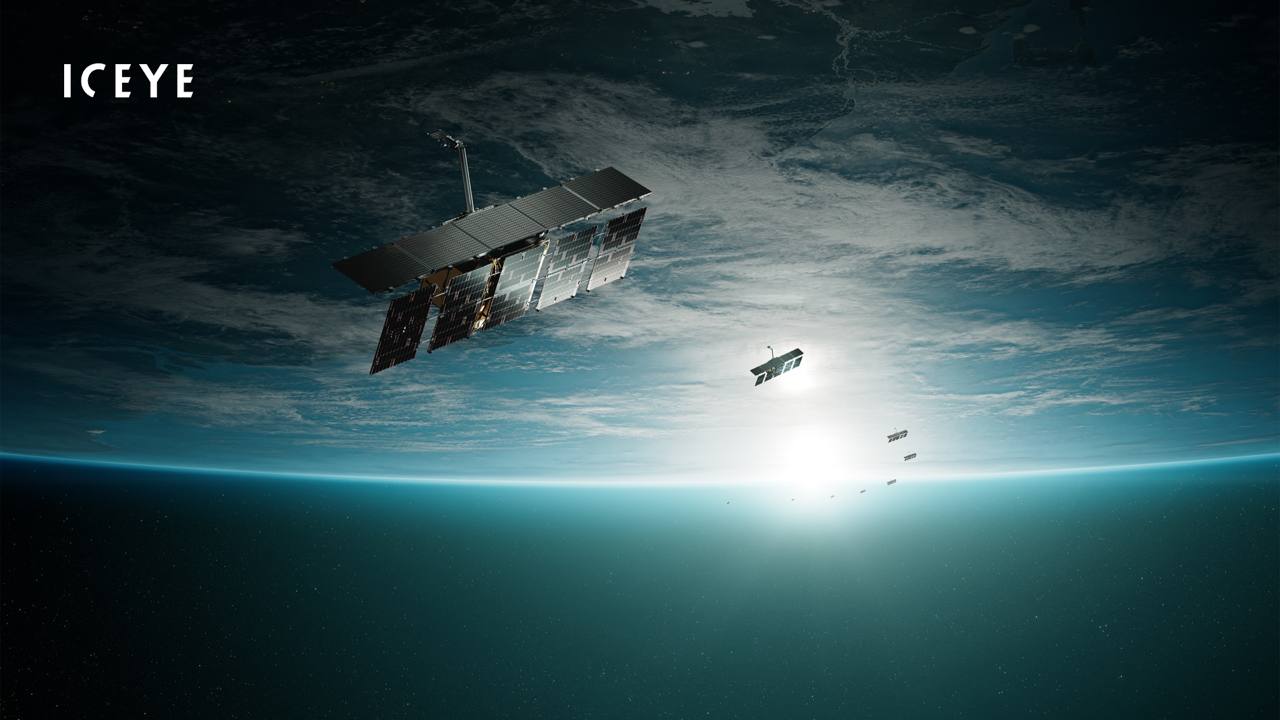
ICEYE operates a constellation of synthetic aperture radar satellites used for disaster response, insurance, and defense applications. The company is deepening its footprint in the Gulf region, including a new UAE presence with a newly appointed CEO for that market.
Scaleup Europe Fund representatives hope the vehicle will solve Europe’s growth-stage financing gap and help companies remain in Europe as they mature. The €5B total dwarfs other European efforts, including the European Innovation Council’s STEP Scale Up initiative, which provides up to €30M to deep-tech startups. Still, the fund’s reach is finite. At most, €5B can be spread across 50 separate €100M rounds, and European space startups must now compete for EQT’s attention against other strategic technologies. EQT did not outline how much it planned to invest in space compared with other sectors and did not respond to a request for comment.
Growth-stage capital in space stretches only so far. This year multiple global space startups closed rounds exceeding $500M, roughly €435M or more, including ispace, True Anomaly, and K2 Space. Against that backdrop, a single €100M check does not go as far as it might appear.
Whether the Scaleup Europe Fund follows the ICEYE investment with more space bets remains to be seen. EQT will make future investment decisions, and how much of the fund flows to space rather than to AI, robotics, semiconductors, energy, biotech, or advanced industrial systems is still undetermined.