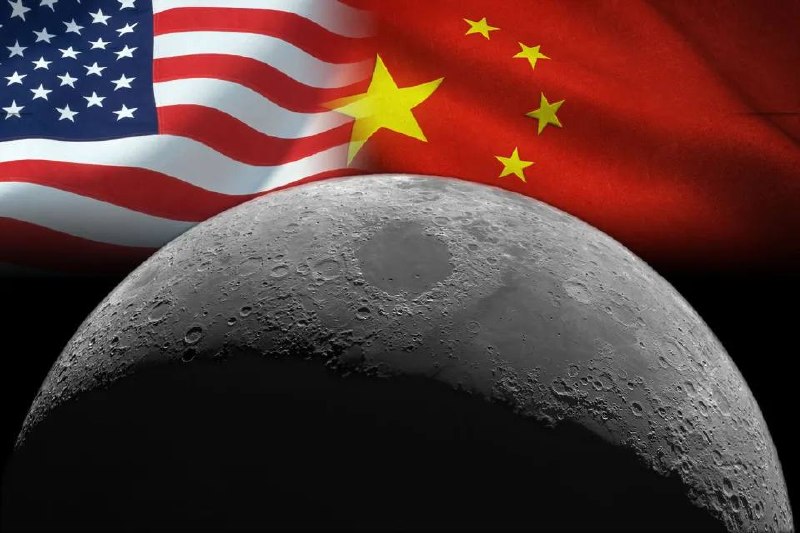
Isaacman said China launched its first astronaut in 2003 and has since assembled a broad portfolio of space capabilities, including lunar missions and plans for a crewed moon landing before 2030. Those advances, he argued, have narrowed the gap and raised concerns among U.S. officials that America could lose momentum in a domain it once dominated.
“Nor will NASA sit idly by and watch one of the most consequential moments of this new century pass to our overseas competitors,” Isaacman said. “The appetite for tolerating and defending the status quo has reached its conclusion.”
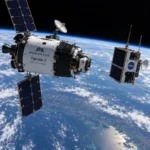
NASA reaffirmed its summer plans for Artemis III and for Artemis IV, the mission scheduled to return astronauts to the lunar surface in 2028. The agency will continue to depend on SpaceX and Blue Origin, which are developing the lunar landers. Artemis III will be a two-week mission involving four astronauts and a series of docking demonstrations in Earth’s orbit. The mission will not travel to the moon but is designed to test systems and operations needed for future landings, requiring multiple launches in quick succession from Florida so crews can conduct docking exercises with both commercial spacecraft.
Artemis Program Manager Jeremy Parsons praised the development pace of SpaceX during the briefing. “We’re seeing lots of hardware, lots of quick changes, and an absolute blistering pace of production,” he said. Isaacman repeatedly invoked the Apollo era, noting that NASA progressed from Apollo 7’s first crewed mission to Apollo 11’s lunar landing within nine months. “It’s a playbook this agency knows really well,” he said. While emphasizing that NASA will not compromise safety, he said the agency is cutting bureaucracy, speeding decision-making, and increasing the pace of hardware development.
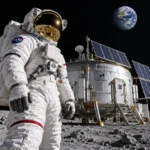
Isaacman said the broader goal extends beyond simply returning astronauts to the moon. “This will not be a repeat of flags and footprints,” he said, describing future missions as laying the groundwork for a permanent human presence beyond Earth. The vehicles under development, he said, are designed to dramatically reduce the cost of delivering mass to orbit and to the moon, to support longer surface operations, enable more frequent astronaut missions, and transform what begins as a small scientific outpost into something that may one day resemble a city on the lunar surface.
NASA’s push comes as China works toward its publicly stated goal of landing astronauts on the moon before 2030. Isaacman framed the effort as a response to that timeline, casting the coming years as a contest the United States intends to win while building toward a sustained lunar presence rather than a single landing.
The near-term milestones to watch are Artemis III, planned for the coming summer with its Earth-orbit docking demonstrations, and Artemis IV in 2028, which is scheduled to return astronauts to the lunar surface. Both missions depend on the lunar landers being developed by SpaceX and Blue Origin.