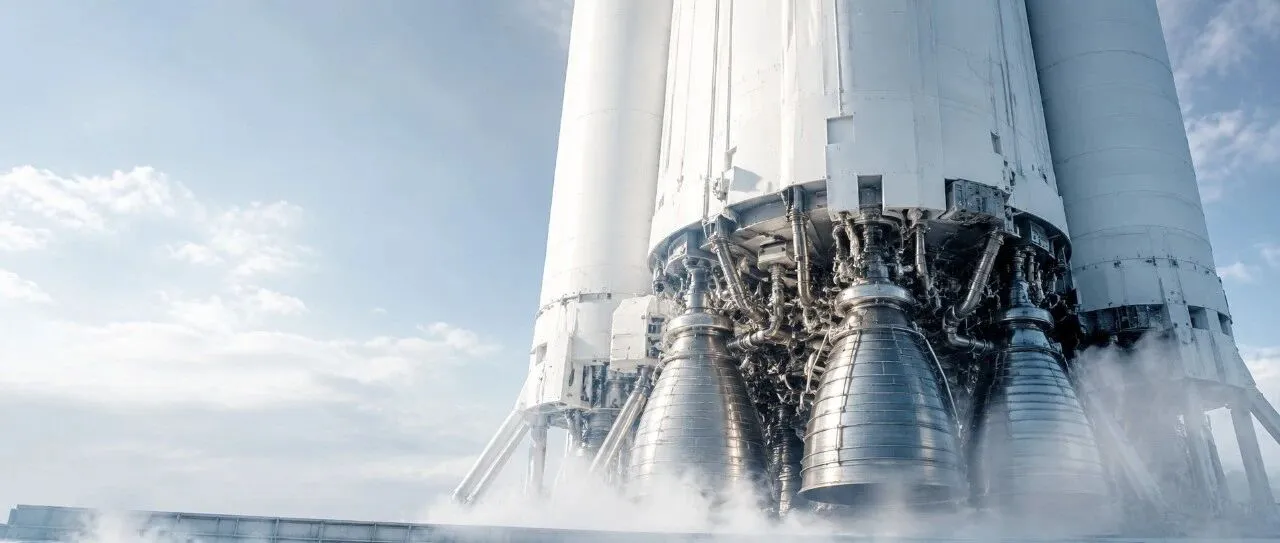
On the morning of September 1, PALLAS-1 Y1 lifted off from Jiuquan and successfully entered its planned orbit. For Galactic Energy, the mission marked not only the debut of a new launch vehicle, but also the company’s transition from small solid-fuel rockets to a medium-lift liquid-fuel rocket.
The rocket also embodies a choice that is easy to overlook. At a time when liquid oxygen/methane has become a popular propulsion option for reusable rockets, PALLAS-1 still relies on the CQ-50, a liquid oxygen/kerosene engine.
Why kerosene? Was the choice driven by greater technological maturity, or by the rocket’s need for high thrust and a compact structure? Kerosene is prone to coking, so how can it support first-stage recovery and reuse?
In short: selecting a rocket propellant is not about ranking fuels by how “advanced” they are. Liquid oxygen/methane burns more cleanly and generally offers higher specific impulse by mass. Liquid oxygen/kerosene has a higher bulk propellant density, allowing for more compact tanks and vehicle structures, while benefiting from more extensive experience in ground storage and handling.
Based on PALLAS-1’s publicly disclosed configuration, Galactic Energy has selected an integrated design intended to deliver five to seven tonnes to low Earth orbit, using a cluster of seven engines and eventually supporting first-stage recovery. The trade-off is equally clear: kerosene engines require more rigorous management of thermal cracking, deposits, cleaning and post-flight condition assessment.
1. Understanding the Rocket: What It Has Proven So Far Is That It Can Reach Orbit
At 10:00 a.m. Beijing Time on September 1, 2026, PALLAS-1 Y1 lifted off from the Dongfeng Commercial Space Innovation Pilot Zone. The China National Space Administration reported that the vehicle performed normally throughout the flight, achieved the mission’s test objectives and completed the mission successfully. Galactic Energy subsequently confirmed that the rocket had entered its planned orbit as intended.[1][2]

PALLAS-1 Y1 lifts off. Image source: Galactic Energy’s public report dated September 2, 2026.
PALLAS-1 uses a two-stage configuration and can be fitted with an optional upper stage. The rocket is 52 meters long, has a core-stage diameter of 3.35 meters, a liftoff mass of approximately 283 tonnes and liftoff thrust of 350 tonnes. Its publicly stated low Earth orbit payload capacity ranges from five to seven tonnes. The first stage is powered by seven CQ-50 liquid oxygen/kerosene engines. Its target market includes the deployment of low Earth orbit constellations and the launch of large satellites.[2][3]
“Liquid oxygen/kerosene” refers to a propellant combination: liquid oxygen is the oxidizer, while kerosene is the fuel. They are stored separately aboard the rocket and mixed inside the thrust chamber for combustion. What a rocket program selects is not simply a fuel. The choice also encompasses the engine cycle, thrust class, injection and cooling systems, tank dimensions, ground-fueling procedures, and the way the entire vehicle is manufactured and launched.
No first-stage recovery attempt was announced for this mission. According to the development roadmap disclosed by Galactic Energy, Y1 was intended to complete baseline validation during the maiden flight. Subsequent missions will progressively test reentry control, grid fins, braking and deceleration, and precision recovery at sea or on land.
The successful maiden flight demonstrated that the complete vehicle could reach orbit. Several more levels of evidence will still be required before Galactic Energy can demonstrate that the first stage can return and fly again.[3]
Table 1. Launch-vehicle-level trade-offs between liquid oxygen/kerosene and liquid oxygen/methane
Source: Analysis created by the author based on publicly available information.
2. Kerosene or Methane: Which Is Better for Rockets?
The best-known metric in discussions of rocket propellants is specific impulse. Broadly speaking, it describes how much effective impulse an engine can generate for a given amount of propellant consumed. All else being approximately equal, a higher specific impulse means better propellant mass efficiency.
A first-stage rocket, however, cannot be designed solely in kilograms. Its designers must also think in cubic meters. A lower-density propellant requires larger tanks to store the same mass. Changes in tank diameter and length affect surface area, structural mass, aerodynamic shape, transportation requirements and factory equipment.
System-level design therefore also considers “density-specific impulse.” This is not simply another engine marketing metric. Instead, it reminds designers that mass efficiency and volumetric efficiency may move in opposite directions.
In a theoretical comparison conducted under standardized conditions, Tan Yonghua assumed a chamber pressure of 25 MPa and a nozzle area ratio of 30. The theoretical specific impulses of liquid oxygen/methane and liquid oxygen/kerosene thrust chambers were calculated at 345 seconds and 335 seconds, respectively. Their propellant density-specific impulses were approximately 2.797×10⁶ and 3.40×10⁶ kg·m−2·s−1, respectively. The first set of figures shows methane’s advantage in mass efficiency. The second demonstrates kerosene’s advantage in volumetric efficiency.[4]
The most prominent advantage of liquid oxygen/methane is cleaner operation. Methane is less prone to coking inside regenerative cooling channels, while its combustion produces less soot. These characteristics make it attractive for engines designed for multiple starts and frequent reuse. Methane also generally offers a modest advantage in mass-specific impulse.
The trade-offs are that methane itself must be stored at cryogenic temperatures, while the bulk density of the liquid oxygen/methane combination is lower than that of liquid oxygen/kerosene. Designers must therefore reconsider vehicle volume and cryogenic ground infrastructure.
Liquid oxygen/kerosene offers compactness and technological maturity. Kerosene can be stored at ambient temperature and has a relatively high density, giving the propellant combination good volumetric efficiency. More compact tanks and vehicle structures can be particularly valuable for a first stage that operates within the atmosphere and must generate high thrust.
China has also accumulated substantial engineering experience in liquid oxygen/kerosene engines, propellant supply and ground fueling. Publicly available research consequently concludes that both liquid oxygen/kerosene and liquid oxygen/methane can be used in reusable rockets: the former currently benefits from a stronger engineering foundation, while the latter has greater potential in clean combustion and ease of maintenance.[5]
Table 2. How propellant selection affects the entire launch vehicle
Source: Analysis created by the author based on publicly available information.
3. Viewed in the Context of PALLAS-1, the Value of Kerosene Becomes Clear
Galactic Energy has not published a complete report detailing its propellant trade study, so outside observers cannot provide a single definitive explanation on the company’s behalf. Nevertheless, the engineering logic behind the choice can be inferred from the publicly disclosed vehicle dimensions, engine configuration and mission positioning.
The first consideration is vehicle volume. PALLAS-1 has a core-stage diameter of 3.35 meters, yet must accommodate the propellant and systems required for a rocket with a liftoff mass of several hundred tonnes. A higher bulk propellant density helps control tank length, wetted surface area and structural mass growth within a fixed vehicle diameter.
This should not be interpreted as meaning that kerosene necessarily makes the rocket lighter. The final result also depends on intertank sections, common bulkheads, materials, pressurization and engine design. Nevertheless, kerosene does give the overall vehicle design more favorable volumetric conditions.
The second consideration is the thrust profile required by the first stage. The first stage must operate near sea level, lift a 283-tonne-class rocket off the ground and propel it through the dense lower atmosphere. A seven-engine cluster provides greater design flexibility for liftoff thrust allocation, thrust-vector control and engine-out redundancy.
Combined with the CQ-50’s deep-throttling and multiple-restart capabilities, the configuration also provides a propulsion foundation for future return burns and landing control.
A further consideration is the engineering schedule and operational infrastructure. Kerosene does not need to be maintained at cryogenic temperatures, although the rocket as a whole still requires a cryogenic liquid oxygen system. Given China’s existing liquid oxygen/kerosene engineering base, the program can draw on more accumulated experience in propellant supply, fueling procedures, sealing materials, purging and safety protocols.
This is a system-level engineering assessment, not a publicly stated conclusion from the vehicle’s developer. The rocket’s ultimate cost will still depend on its design, testing, manufacturing, payload capacity, production rate and launch frequency. Propellant is only one part of that equation.
4. If Kerosene Causes Coking, How Can It Still Be Used in a Reusable Engine?
The answer lies in engine design. The properties of a fuel can make reuse more difficult, but they do not determine on their own whether an engine can be reused. Engineers must address multiple factors simultaneously, including restart capability, thrust modulation, thermal-structural life, turbopump and valve life, seal reliability, condition monitoring and maintenance accessibility.

The 50-tonne-class CQ liquid oxygen/kerosene engine during final assembly. Image source: Galactic Energy, December 3, 2021. This image shows an engine from the development phase and does not necessarily depict the Y1 flight hardware.
According to information published by Beijing E-Town, the CQ-50 uses a pintle injector, has demonstrated a thrust-regulation range of 32% to 105%, and is capable of multiple starts. Deep throttling allows the engine to reduce terminal-phase thrust to a level suitable for landing control, while multiple-start capability supports reentry braking and landing burns.
A pintle injector can operate across a broad range of conditions. At low thrust, however, the feed system, turbopump and combustion stability must still undergo comprehensive validation.[3][5]
The seven-engine cluster also provides scope for propulsion redundancy. Galactic Energy has said that the design incorporates mission-continuation capability following the failure of a single engine. The successful operation of all seven engines during the Y1 maiden flight provides important full-system flight data. It does not, however, mean that an engine-out scenario—in which one engine is shut down in flight and the remaining six complete the mission—has been demonstrated in an actual flight.

The PALLAS-1 first stage positioned on an offshore test platform. Image source: Galactic Energy, November 19, 2025. This was a ground propulsion-system firing test, not an offshore recovery test.
The principal difficulties associated with kerosene arise in the engine’s hot section and cooling channels. When kerosene passes through high-temperature regenerative cooling channels, it may undergo thermal cracking and form coke. Combustion can also produce deposits.
The extent of these deposits depends on the fuel composition, wall temperature, residence time, cooling-channel design, mixing and combustion conditions. A single fixed cleaning interval therefore cannot be applied to every liquid oxygen/kerosene engine.
After recovery, engineers must assess flight telemetry and conduct borescope inspections, leak checks, performance tests, and any necessary cleaning and maintenance. These procedures help determine whether the thrust chamber, turbopump, valves and seals can safely be used again.
Research in China on reusable liquid oxygen/kerosene engines has advanced beyond simply demonstrating repeated ignition. It now covers post-recovery processing, condition inspection, life assessment, maintenance accessibility and maintenance economics.[6]
5. If Liquid Oxygen/Methane Is Cleaner, Why Not Simply Switch?
Because changing the fuel is almost equivalent to redesigning the propulsion and ground-support systems. The injector, turbopump, seals, ignition system, cooling system, mixture ratio, tanks, pressurization and feed systems, fueling equipment, and safety procedures must all be adapted to the new propellant’s physical properties.
A rocket cannot simply have its fuel tank cleaned, filled with a different fuel and then be launched.
Methane’s lower tendency to form coke makes it attractive for reducing maintenance complexity. Nevertheless, a methane engine still undergoes repeated cycles of high temperature, high pressure, cryogenic chill-down and ignition shock. Its turbopumps, combustion chambers, valves, welds and seals will still accumulate damage and consume operational life.
The cryogenic storage and transportation of liquid methane, boil-off management and onboard propellant management also introduce new design challenges.
If a kerosene engine must undergo extensive disassembly, cleaning and component replacement after every recovery, the reduction in manufacturing amortization could be offset by maintenance costs and turnaround time. The two propellant routes must ultimately be compared on the basis of complete launch-vehicle performance under equivalent missions: payload capacity, reliability, reflight labor hours and cost per unit of payload.
Falcon 9 has already demonstrated that liquid oxygen/kerosene can support first-stage recovery and multiple reflights by an orbital-class rocket. A new generation of liquid oxygen/methane rockets aims to translate cleaner combustion into simpler or shorter inspection and maintenance processes. The operational differences between the two approaches must still be established through sustained flight data.[10]
Table 3. The evidence chain from PALLAS-1’s first orbital flight to commercial reuse
Source: Analysis created by the author based on publicly available information.
6. What Should We Watch to Determine Whether PALLAS-1 Chose the Right Path?
The first piece of evidence will be complete recovery. The first stage must demonstrate attitude control, reentry, propellant settling, engine restart, deep throttling and precision landing—not merely the successful ground testing of individual subsystems.
The second will be the condition of the engines after recovery. Where have kerosene deposits formed? How extensively must the engines be disassembled? Which components must be replaced? How many actual labor hours are required for inspection and cleaning?
Answers to these questions will reveal more about operational capability than a stated design goal of 25 reuses. For now, 25 is a design target, not a number of flights already completed.[7]
The third will be the reflight of the same first stage. Recovery proves that a stage can return. Reflight demonstrates that inspection, maintenance, life assessment and flight recertification have formed a complete operational loop. Reliability and turnaround time must then be observed across multiple first stages and multiple mission cycles.
Only after that comes the commercial outcome. Return propellant and recovery hardware reduce payload capacity. Offshore or land-based recovery requires infrastructure, while engine maintenance requires personnel and equipment. A reusable liquid oxygen/kerosene rocket will complete its economic validation only when the savings from amortizing manufacturing costs exceed the costs of lost payload capacity, recovery and refurbishment.
Conclusion: This Is Not Simply a Choice Between Fuels
The successful maiden flight of PALLAS-1 Y1 first demonstrates that Galactic Energy has taken seven liquid oxygen/kerosene engines, a 283-tonne-class vehicle and a complete flight-control system through an actual flight.
For a commercial space company that previously built its launch record with small solid-fuel rockets, that achievement carries weight in its own right.
Whether liquid oxygen/kerosene was the correct choice cannot be decided on the day of the maiden flight. High volumetric efficiency, an established operational foundation and the seven-engine cluster helped the rocket cross the first threshold by reaching orbit. Coking, inspection, cleaning and life-cycle management will present their bill during the recovery and reflight phases.
The next milestone worth watching is therefore not simply how many more satellites PALLAS-1 can send into orbit. The more consequential questions are how much work its engines require after the first stage returns, and how quickly that stage can be placed back on the launch pad.
Only when the same first stage flies again will the program produce its first genuinely verifiable answer to the engineering trade-off behind its choice of propellant.
References
[1] China National Space Administration: “PALLAS-1 Y1 Carrier Rocket Successfully Launched,” September 1, 2026.
[2] Galactic Energy: “PALLAS-1 Y1 Carrier Rocket Successfully Completes Maiden Orbital Flight, Opening a New Chapter for Galactic Energy’s Dual Solid-Liquid Development Strategy,” September 2, 2026.
[3] Beijing International Science and Technology Innovation Center, citing Beijing E-Town: “New Breakthrough in Reusable Rockets: Beijing E-Town Company Develops a Low-Cost ‘Space Express’,” September 1, 2026.
[4] Tan Yonghua: “Research Progress on High-Thrust Liquid Oxygen/Methane Rocket Engine Technology,” Acta Aeronautica et Astronautica Sinica, Vol. 45, No. 11, 2024, DOI: 10.7527/S1000-6893.2024.29690.
[5] Song Zhengyu, Huang Bing, Wang Xiaowei et al.: “Development and Key Technologies of Reusable Space Transportation Vehicles,” Science and Technology Foresight, Vol. 1, No. 1, 2022, pp. 62–74, DOI: 10.3981/j.issn.2097-0781.2022.01.006.
[6] Yang Yongqiang, He Jiang, Lü Fazheng et al.: “Analysis of Maintenance and Repair Technologies for a 130-Tonne-Class Reusable Liquid Oxygen/Kerosene Engine,” Manned Spaceflight, No. 1, 2025.
[7] Galactic Energy: PALLAS-1 product information, accessed September 2, 2026.
[8] Galactic Energy: “Galactic Energy Completes Final Assembly of Its First 50-Tonne-Class CQ Liquid Oxygen/Kerosene Engine, with Full-System Hot-Fire Test to Follow,” December 3, 2021.
[9] Galactic Energy: “Offshore Hot-Fire Test of the PALLAS-1 Reusable Launch Vehicle’s First-Stage Propulsion System Successfully Completed,” November 19, 2025.
[10] SpaceX: Falcon 9 product page and Falcon Payload User’s Guide, accessed September 2, 2026.
Note: This article is based on information that could be publicly verified as of September 2, 2026. Galactic Energy has not disclosed the complete internal trade study behind PALLAS-1’s propellant selection. The relevant analysis in this article is therefore based on the vehicle’s publicly disclosed configuration and general principles of launch-vehicle engineering. A “design reuse life” or “recovery capability” does not mean that recovery or reflight has already been completed. The vehicle’s specific status remains subject to subsequent formal disclosures by the relevant authorities and its developer.