
Tag: Astronomy
-

Rubin Observatory sends out thousands of data alerts with an assist from Seattle astronomers
Each night, the Vera C. Rubin Observatory issues thousands of alerts about changes in the night sky. (NOIRLab / NSF / DOE-SC Illustration) An astronomical alert system developed at the University of Washington started off with a bang this week, sending out 800,000 notifications about moving asteroids, exploding stars and other celestial changes detected by…
-

Space Science in 2026: New lunar explorers, Mars missions, and space telescopes
With many missions on the manifest, the new year promises to be packed with space science. Two interplanetary spacecraft will arrive at their destinations as another Mars window opens in late 2026. Meanwhile, multiple space telescopes have their launch dates set for this year, and the schedule promises an increased cadence for lunar missions. The…
-
Eric Schmidt-Backed Group Plans New Telescope Network Spanning Space and Earth
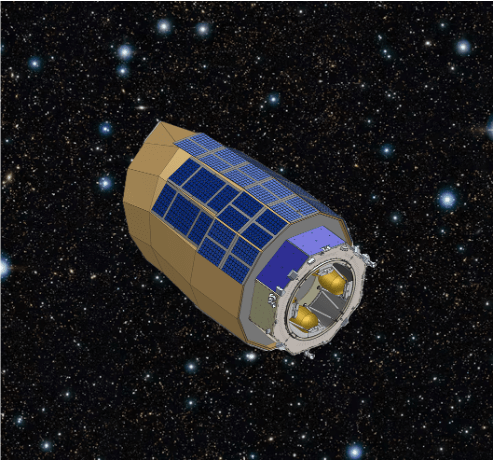
Former Google chief executive Eric Schmidt is moving into space science, announcing plans to fund and build a new global network of telescopes designed to operate faster and at lower cost than traditional government-led observatories. Schmidt said on Wednesday that Schmidt Sciences, one of his philanthropic organisations, will develop the Eric and Wendy Schmidt Observatory…
-
Rubin Observatory spots an asteroid that spins fast enough to set a record
An artist’s conception zeroes in on a main-belt asteroid called 2025 MN45, which makes a full rotation in less than two minutes. (Credit: NSF-DOE Vera C. Rubin Observatory / NOIRLab / SLAC / AURA / P. Marenfeld) Astronomers say they’ve found an asteroid that spins faster than other space rocks of its size. The asteroid,…
-
Wide-field surveys versus precise infrared observations: how Rubin compares to JWST
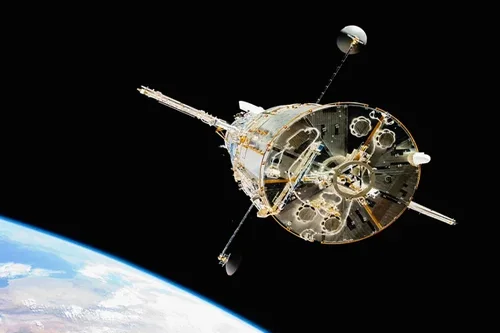
Earlier this year, the new Vera C. Rubin Observatory in Chile officially began scientific operations, becoming the world’s largest and most advanced ground-based telescope. Featuring an eight-meter primary mirror and the world’s largest camera, Rubin promises to deliver exceptional new results and astrophysical research opportunities for scientists worldwide. Meanwhile, situated at the L2 Lagrange point…
-

XRISM observes windy neutron star, Chandra studies a luminous quasar
Using the joint Japan Aerospace Exploration Agency (JAXA), European Space Agency (ESA), and NASA X-Ray Imaging and Spectroscopy Mission (XRISM), scientists uncovered a dense but surprisingly slow wind coming from a neutron star. The finding sheds new light on similar winds blowing from material surrounding supermassive black holes. Another team used NASA’s Chandra X-ray Observatory…
-

University of Washington celebrates Rubin Observatory’s debut — and looks ahead
University of Washington astronomer Zeljko Ivezic talks about the Rubin Observatory — a project in which he played a leading role — with an image of the facility displayed behind him. (GeekWire Photo / Alan Boyle) It’s been more than two decades since the University of Washington helped kick off the effort to get the…
-

The Rubin Observatory makes its debut — and the discoveries have already begun
After more than 20 years of planning and construction, astronomers celebrated the release of the first images from the Vera C. Rubin Observatory today — and also registered hundreds of the first discoveries from the world’s newest eye on the sky. University of Washington astronomer Mario Juric, a member of the Rubin team and director…
-
The Rubin Observatory is throwing a big party to reveal its first pictures — and you’re invited
After more than 20 years of planning and construction, the Vera C. Rubin Observatory is ready for its grand opening, and the world is invited. The observatory in the foothills of the Chilean Andes features a monster of a telescope, with an 8.4-meter-wide (28-foot-wide) mirror, coupled with what’s said to be the world’s largest digital camera. It will survey…
-
Testing a robot that could drill into Europa and Enceladus
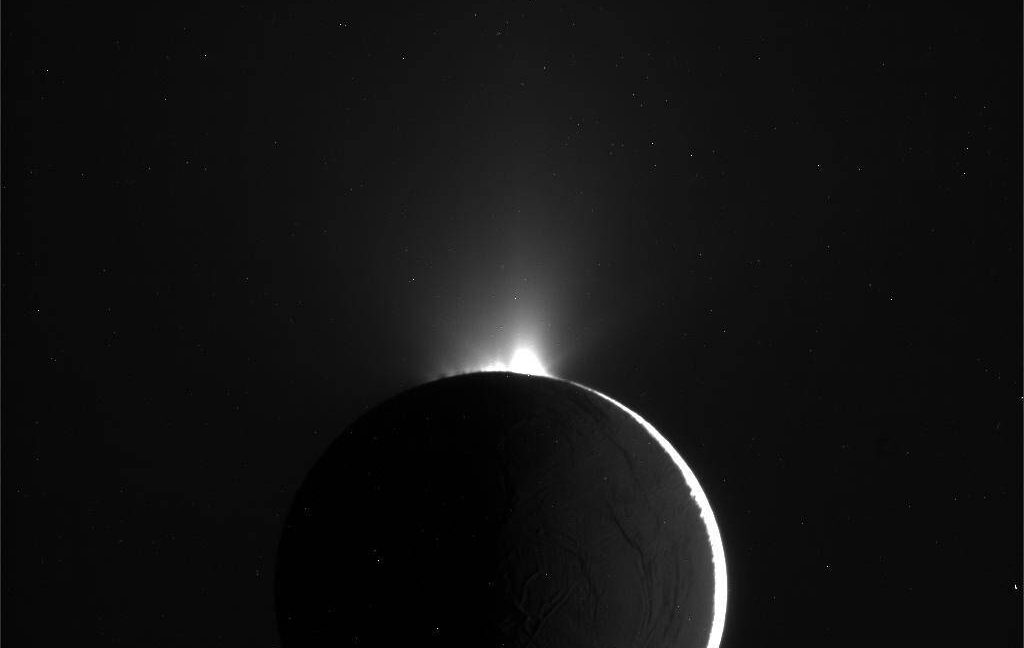
Europa and Enceladus are two ocean moons that scientists have concluded have liquid water oceans underneath their outer icy shells. The Europa Clipper mission should reach Europa around April of 2030. If it collects data hinting at the moon’s potential habitability, robotic lander missions could be the only way to confirm if there’s really life…