Former Google chief executive Eric Schmidt is moving into space science, announcing plans to fund and build a new global network of telescopes designed to operate faster and at lower cost than traditional government-led observatories.
Schmidt said on Wednesday that Schmidt Sciences, one of his philanthropic organisations, will develop the Eric and Wendy Schmidt Observatory System, comprising one space-based telescope and three ground-based facilities.
“Astronomy is ripe for new ideas, and we are working with scientists globally to build four new telescopes—one in space, three on the ground!” Schmidt wrote on X.
The project reflects a growing role for private capital in space science, an area historically dominated by large, publicly funded programmes such as NASA’s Hubble Space Telescope and the James Webb Space Telescope. Schmidt Sciences said its approach emphasises faster development timelines, modular designs, and wider global access to data and software.
Astronomy is ripe for new ideas, and we are working with scientists globally to build four new telescopes – one in space, three on the ground ! https://t.co/7nMU4mZ7GX
— Eric Schmidt (@ericschmidt) January 8, 2026
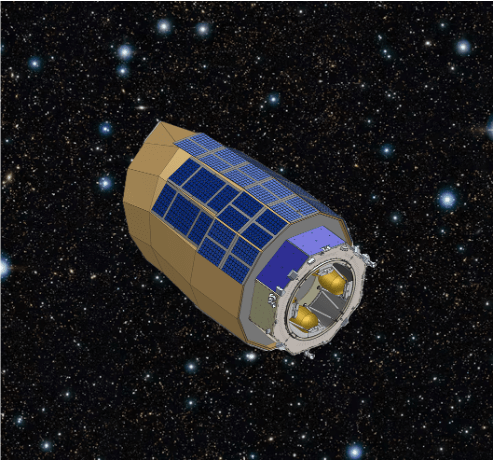
At the centre of the initiative is the Lazuli Space Observatory, an orbiting telescope expected to feature a 3-metre primary mirror. According to project information, the observatory is being designed to respond rapidly to scientific tasking, initially aiming to capture images within four hours, with a longer-term target of reducing that response time to 90 minutes. The telescope is also intended to observe targets continuously for up to 12 hours.
Industry publication Space News reported that Lazuli could rely on around 80% commercial off-the-shelf components and carry a total cost in the hundreds of millions of dollars, substantially less than flagship government missions. The outlet added that the telescope could be ready for launch as early as mid-2028.
Schmidt Sciences said international collaboration is a core element of the programme, with scientists worldwide expected to participate in both operations and research. The organisation has not disclosed locations or timelines for the three ground-based observatories.
The announcement comes as private entities increasingly fund ambitious scientific missions beyond Earth orbit. In recent years, companies such as Rocket Lab have backed privately financed planetary science missions, including a proposed probe to study the atmosphere of Venus.