
Tag: Cosmology
-
MeerKAT Detects Ancient Hydrogen Signal, Advancing Three-Dimensional Cosmic Mapping
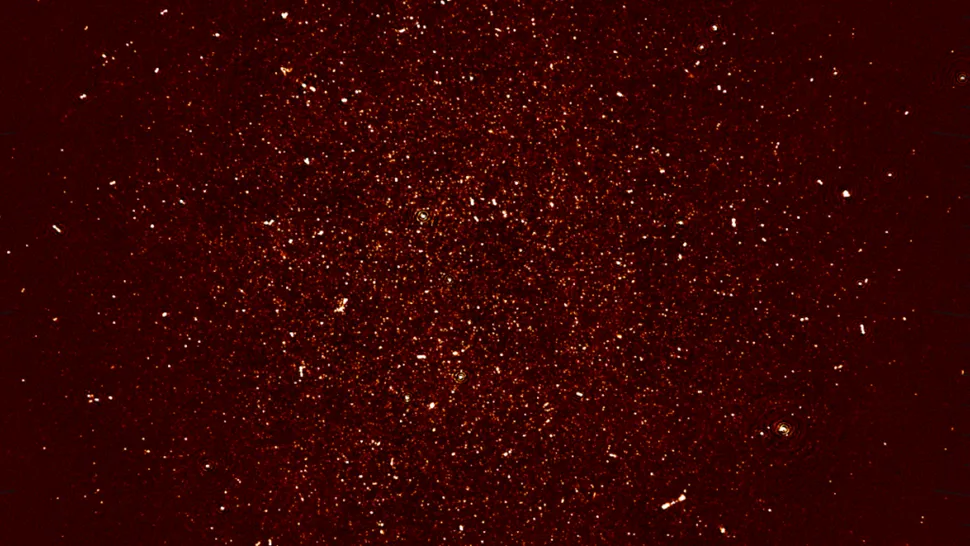
Astronomers using South Africa’s MeerKAT radio telescope have detected faint hydrogen emissions that travelled roughly four to five billion years to Earth, demonstrating a way to study cosmic structure without relying on optical galaxy surveys. Announced on September 1, 2026, the result draws on approximately 96 hours of observations and measures hydrogen at two redshifts,…
-
SPHEREx produces first all-sky map, highlights entire universe in infrared light
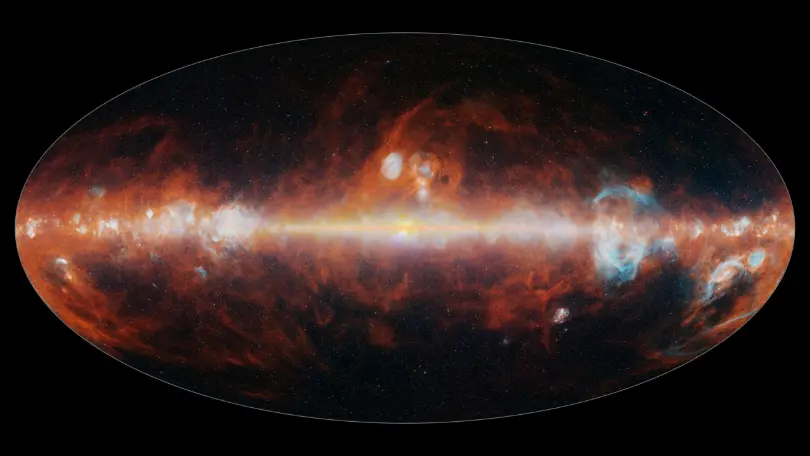
After launching in March and collecting near-infrared data throughout 2025, NASA’s SPHEREx observatory has completed its first map of the universe. The map, which is comprised of 102 infrared wavelengths, will allow SPHEREx’s team and astrophysicists to research the source of the early universe’s inflation and the distribution of organic molecules throughout the universe. “It’s…
-
Wide-field surveys versus precise infrared observations: how Rubin compares to JWST
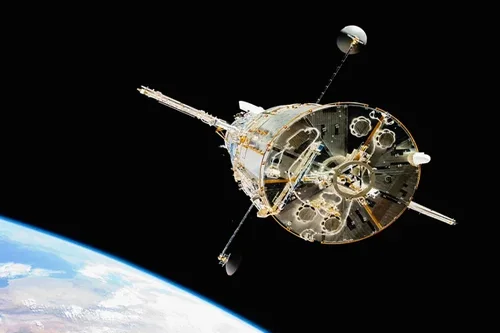
Earlier this year, the new Vera C. Rubin Observatory in Chile officially began scientific operations, becoming the world’s largest and most advanced ground-based telescope. Featuring an eight-meter primary mirror and the world’s largest camera, Rubin promises to deliver exceptional new results and astrophysical research opportunities for scientists worldwide. Meanwhile, situated at the L2 Lagrange point…
-
Space science in 2024: Moon missions, Martian milestones, astrophysics discoveries, and more
2024 was another busy year for space science, with many new missions, successes, and discoveries across the solar system and beyond. Three new missions were launched to the Moon, while one mission was canceled, and Curiosity and Perseverance continued to explore and make discoveries in their respective regions on Mars. Beyond the Earth-Moon system and…
-
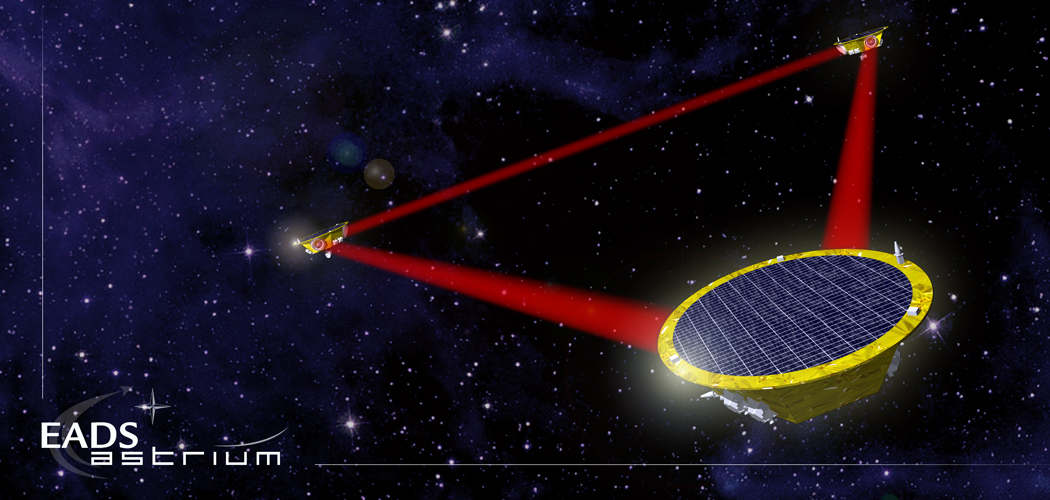
LIGO goes to space: ESA to proceed with LISA gravitational wave detector
On Thursday, the European Space Agency’s Science Programme Committee gave the go-ahead to the Laser Interferometer Space Antenna, or LISA project. This would mean the construction of the mission’s three spacecraft could begin as early as a year from now. While the interferometer would follow the same basic principles as the ground-based LIGO (Laser Interferometer…
-

ESA reveals Euclid’s first five images
The European Space Agency (ESA) has released the first full-color images from Euclid, the agency’s latest space telescope designed to study the nature and distribution of dark matter and dark energy in the universe. During a video broadcast on Nov. 7, scientists, engineers, and agency officials unveiled the telescope’s first five images. The images reveal…
-
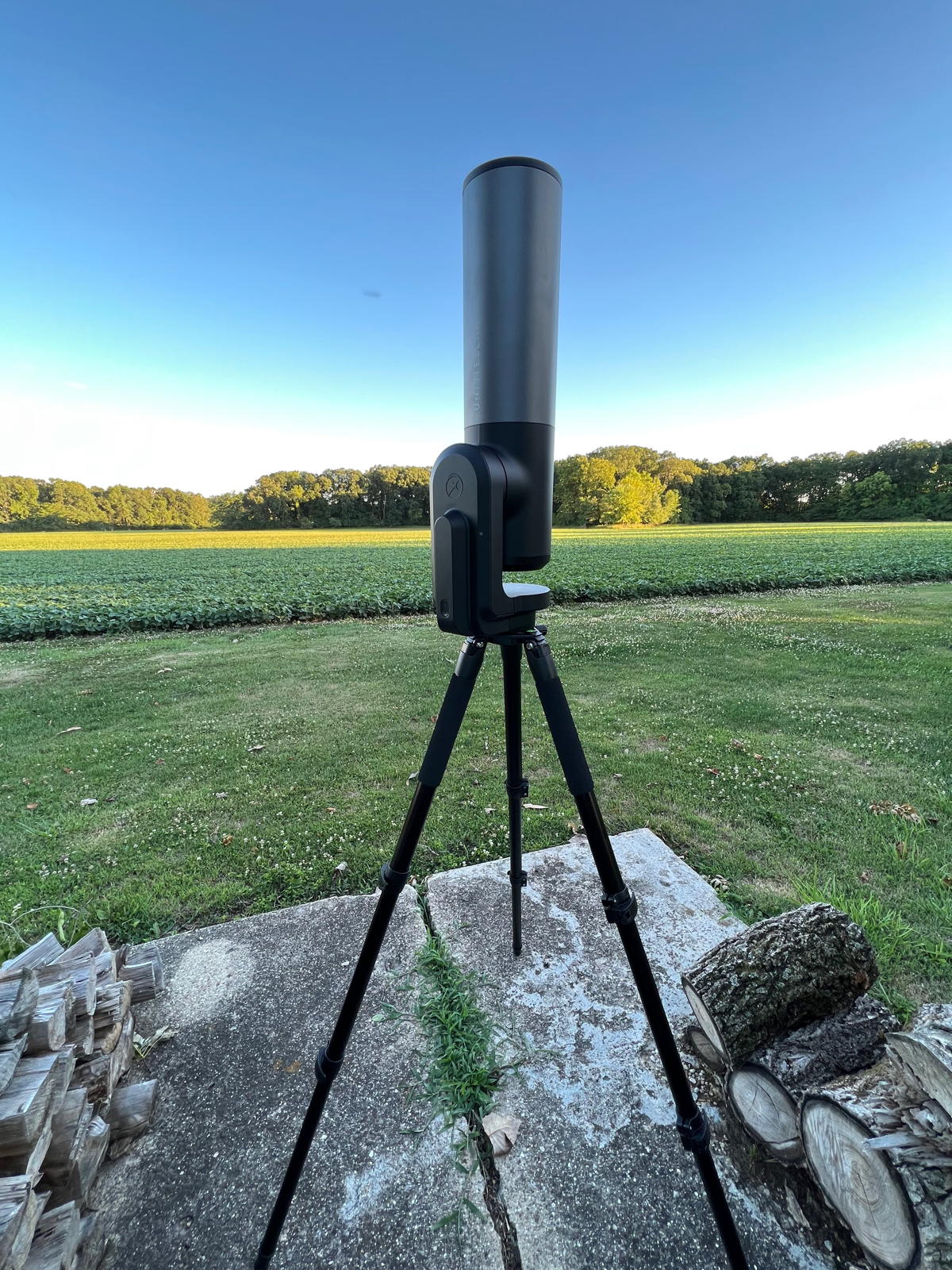
Communal stargazing using your phone: The Unistellar eQuinox 2, reviewed
When we reviewed the Unistellar eVscope a couple of years ago, we came away impressed. It offered a communal stargazing experience that takes our ubiquitous smartphones and turns them into a way to view the heavens. Unistellar’s newest offering is the eQuinox 2, a lower-cost alternative to eVscope 2, taking all of the features from…
-
SpaceX launches ESA’s Euclid Telescope to explore the dark universe
SpaceX launched its 45th mission of the year, carrying the Euclid telescope from the European Space Agency (ESA). Liftoff was Saturday, July 1, at 11:12 AM EDT (15:12 UTC) from Space Launch Complex 40 (SLC-40) in Florida. ESA’s Euclid will observe a large portion of the sky and deep into the past of the universe…
-

Webb unveils the secrets of the early universe via deep field, peers into stellar nurseries
With help from the joint NASA/European Space Agency/Canadian Space Agency James Webb Space Telescope (JWST), scientists are peering deep into the universe and uncovering secrets that were previously hidden from visible and X-ray telescopes. The JWST advanced deep extragalactic survey (JADES) utilized Webb’s incredible deep-field surveying abilities to create a deep field that shows over…
-
JWST completes tests to simulate rigors of launch
The fully-assembled James Webb Space Telescope is lifted at a Northrop Grumman facility in Redondo Beach, California, during recent environmental testing. Credit: NASA/Chris Gunn The fully-assembled James Webb Space Telescope has completed testing in Southern California to verify the $10 billion mission can withstand the sound and shaking it will see during launch scheduled late…