
Tag: Earth observation
-

NOAA Selects 14 Commercial Satellite Data Providers for Expanded Weather Contract
NOAA has selected 14 commercial satellite companies to compete for orders across seven environmental-observation categories under a new Space-Based Environmental Monitoring contract. Announced on September 10, 2026, the procurement expands NOAA’s use of privately operated constellations to support weather forecasting, climate monitoring, space-weather services and satellite orbit prediction. The indefinite-delivery, indefinite-quantity contract began its five-year…
-

European Commission Targets €65 Billion for Space in 2028–2034 EU Budget
The European Commission wants space activities to receive half of a proposed €131 billion defense, security and space funding envelope for 2028–2034, European Commissioner for Defence and Space Andrius Kubilius said in Paris. The proposed split would direct approximately €65.5 billion to space programs over seven years, substantially elevating space within the European Union’s next…
-

China Marks 666th Long March Flight with Six Remote-Sensing Satellites
China launched six remote-sensing satellites aboard a Long March 4B rocket Sept. 10, marking the 666th flight of the Long March family and adding new spacecraft for scientific experiments, land-resource surveys, agricultural monitoring and disaster reduction. The Long March 4B ignited at 5 p.m. Beijing time at the Jiuquan Satellite Launch Center and deployed Yaogan-53…
-

Canada Creates Direct Military Space Career Path for Non-Commissioned Members
The Canadian Armed Forces established a dedicated space occupation for non-commissioned members in summer 2026, allowing recruits to enter military service as space professionals rather than transferring from another trade later in their careers, Brig. Gen. Chris Horner disclosed September 4. Horner, commander of 3 Canadian Space Division and Joint Force Space Component Commander, revealed…
-

Royal Group of Abu Dhabi Backs $1 Billion Expansion of Altair AI Imaging Constellation to 50 Satellites
Loft Orbital and UAE-based Marlan Space announced on September 9 a $1 billion commitment led by the Royal Group of Abu Dhabi to expand the Altair Earth observation constellation from 10 to 50 satellites. The spacecraft will combine optical and synthetic aperture radar imaging with onboard artificial intelligence, serving government and commercial customers in the…
-

What Imaging Capabilities Does Commercial Earth Observation Need in the AI Era?
In the era of AI in space, customers are not simply purchasing an image. What they truly need is timely, comprehensive information about where an event is occurring, how quickly it is changing, and how far its effects extend. As commercial Earth observation evolves from data products toward decision-support services, pricing is no longer determined…
-
Private Satellites and AI Reshape Earth Observation as Security and Privacy Risks Grow
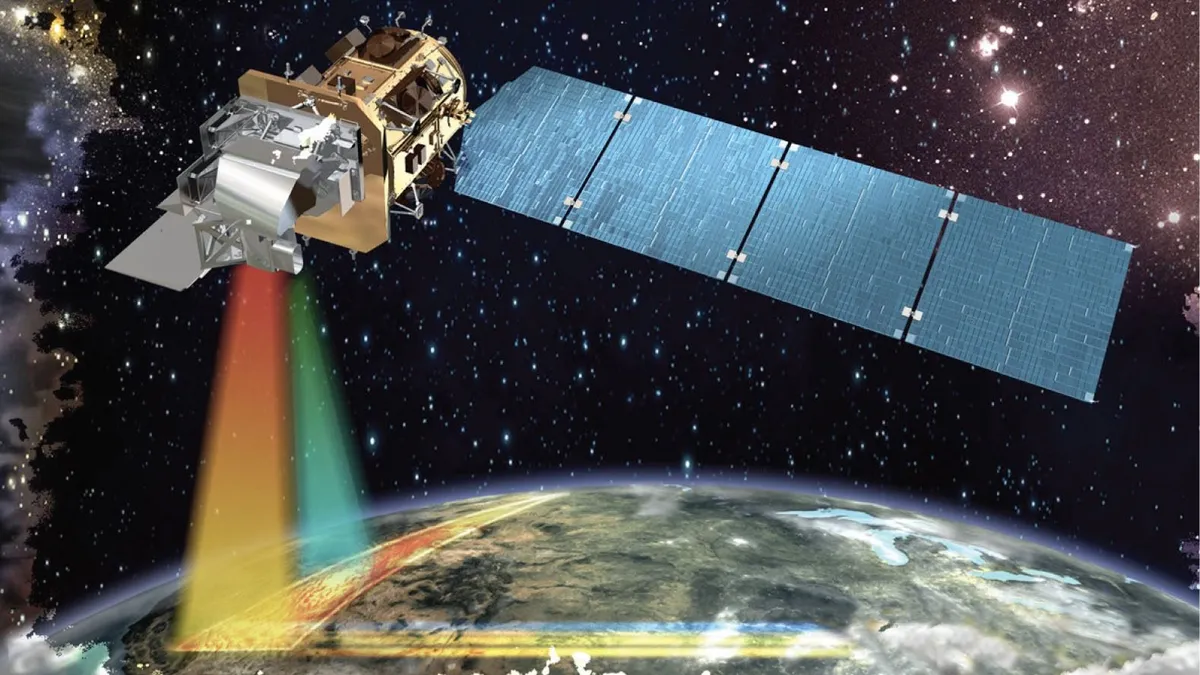
Commercial operators controlled 270 of the 472 Earth observation satellites identified by the U.S. Geological Survey in 2024, overtaking the 202 spacecraft operated by governments and accelerating a shift toward privately supplied imagery, analytics and geospatial intelligence. An OECD assessment published on February 10, 2026, said advances in sensors, cloud computing and artificial intelligence are…
-

‘Xuelong’ Receives and Processes HY-1E Data in Arctic, Expanding Real-Time Satellite Support for Polar Navigation
China’s icebreaker Xuelong successfully received and processed data from the HY-1E ocean-color satellite while sailing at high speed in the Arctic on Aug. 27, marking the first time the vessel’s shipborne satellite remote sensing system has acquired and processed data from the new-generation satellite in the region. The system maintained stable tracking of the HY-1E…
-

Pentagon Plans 50 Secure Facilities to Help Space Startups Become National Security Suppliers
The Pentagon announced on September 3 a plan to deploy approximately 50 mobile Sensitive Compartmented Information Facilities across the United States, lowering a barrier that prevents smaller companies—including commercial space startups—from competing for classified defense work. The Secure Space Network will provide accredited workspaces and related information systems where authorized companies can collaborate with government…
-

China Uses Fengyun Satellites and MAZU to Support Cross-Border Disaster Monitoring in Nepal
On Aug. 26, a high-altitude ice-and-rock avalanche occurred on the Nepalese side of the border, triggering a chain of cross-border debris flows that caused significant casualties and left people missing at Gyirong Port in China’s Gyirong County. Following the disaster, the China Meteorological Administration activated the Fengyun International User Disaster Prevention and Mitigation Emergency Support…