
Tag: exoplanets
-
NASA Powers Up Roman’s 300-Megapixel Camera, Checks Coronagraph Systems
NASA has activated the 300-megapixel Wide Field Instrument aboard the Nancy Grace Roman Space Telescope and completed initial checks of its Coronagraph Instrument, confirming that both payloads survived launch and are operating in space. The commissioning milestones, including activation of Roman’s 18 infrared detectors on September 11, keep the observatory on schedule to release its…
-
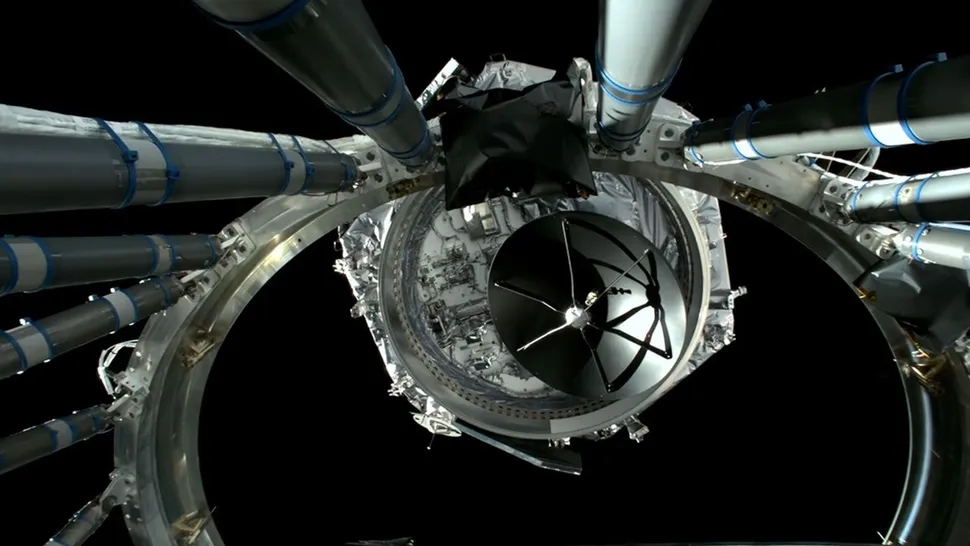
NASA Powers On Roman Space Telescope Instruments During Journey to L2
Roman is still traveling to its destination in space, with NASA gradually powering on and checking its instruments along the way. NASA has activated the Nancy Grace Roman Space Telescope’s 300-megapixel Wide Field Instrument and completed initial checks of its Coronagraph Instrument, the agency said Sept. 15. The observatory, launched Aug. 30 on a SpaceX…
-
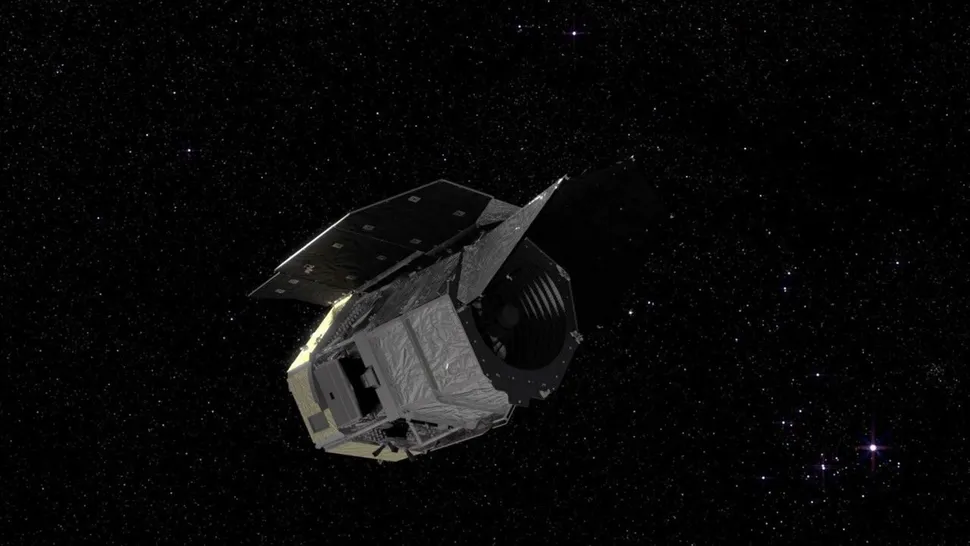
NASA’s Roman Space Telescope Fuel Savings Extend Potential Mission Life to 22 Years
NASA’s Nancy Grace Roman Space Telescope could support at least 22 years of science operations—more than double its original 10-year fuel budget—after a highly accurate trajectory-correction burn used less than one-tenth of the propellant allocated for the maneuver, the agency announced September 14. Roman launched at 7:26 a.m. EDT on August 30 aboard a SpaceX…
-

NASA’s Roman Space Telescope Launches on Falcon Heavy to Map Two Billion Galaxies
NASA’s Nancy Grace Roman Space Telescope launched aboard a SpaceX Falcon Heavy on August 30, beginning a three-month journey to a gravitationally stable observing location nearly one million miles from Earth. The rocket lifted off at 7:26 a.m. EDT from Launch Complex 39A at NASA’s Kennedy Space Center in Florida. Roman separated from Falcon Heavy’s…
-
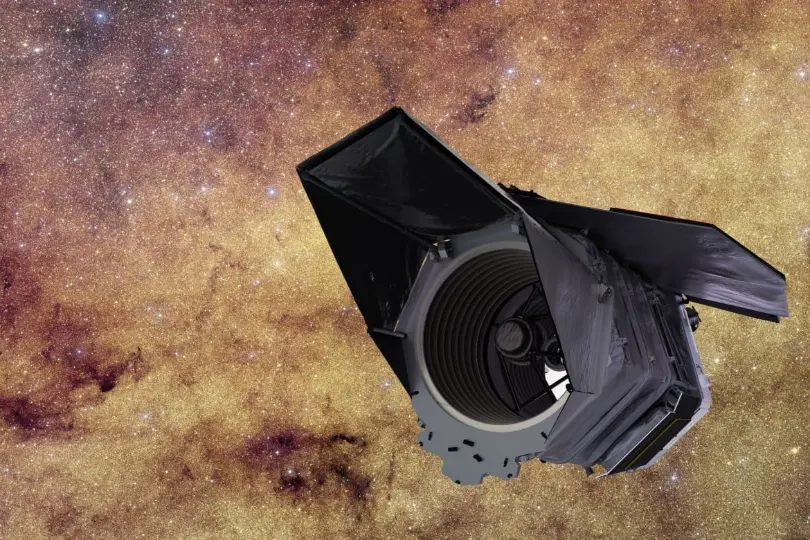
Euclid studies Milky Way center, supports future Roman observations
The European Space Agency (ESA) recently released a new picture of the center of the Milky Way galaxy, an area known as the galactic bulge. Containing over 60 million stars, the picture, taken by ESA’s Euclid space telescope, represents the largest and most detailed photo of this region to date. Euclid observed the area outside…
-
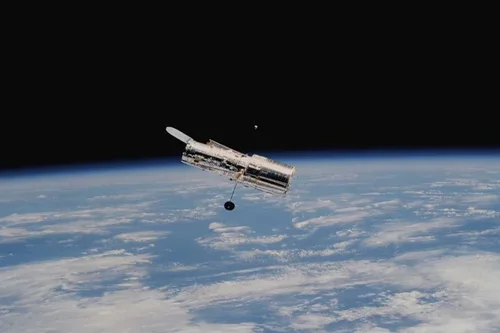
Roman Space Telescope Launches September, 8 Months Early
Will the Roman Space Telescope Launch on Schedule? NASA announced today that the Nancy Grace Roman Space Telescope will launch in September 2026, eight months ahead of its original May 2027 schedule and coming in under its $4.2 billion cost cap. The wide-field infrared observatory, designed to investigate dark energy and hunt for exoplanets, represents…
-
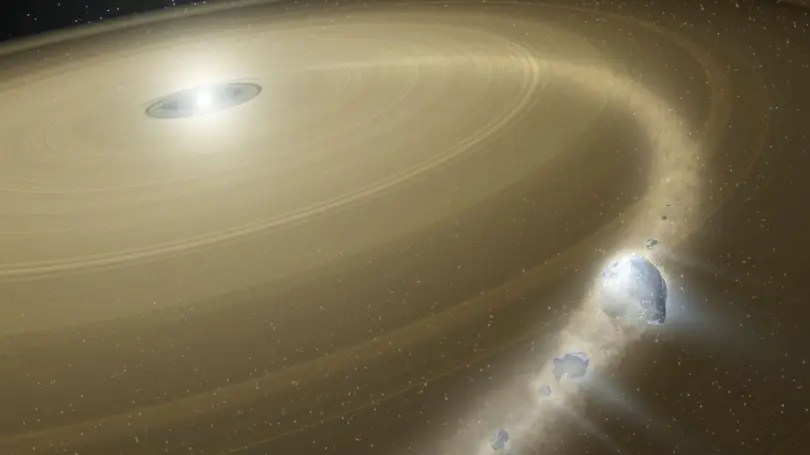
Hubble observes dead star devouring Pluto-like object
With help from NASA’s Hubble Space Telescope in low-Earth orbit, scientists recently observed a Pluto-like object being “eaten” by its host star. Hubble’s unique sensitivity to ultraviolet light allowed it to study the planetary system, which lies around 260 light-years away from Earth. The hungry star is a white dwarf — the dense, stellar core…
-

ESO’s VLT reveals inner wind layers of distant exoplanet
Using data from the four telescopic units of the European Southern Observatory’s (ESO) Very Large Telescope (VLT), a team of scientists has successfully peered into the atmosphere of an exoplanet for the first time. Moreover, the data allowed the team to create a three-dimensional map of the atmosphere. The results showed powerful winds within the…
-
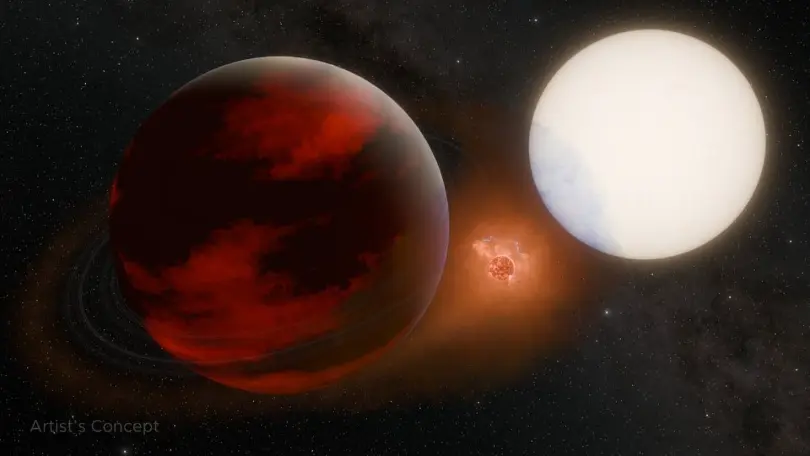
Astronomers find evidence of a volcanic exomoon
Astronomers have found evidence for a volcanic moon orbiting an exoplanet 635 light-years from Earth. No moons have been confirmed to orbit planets outside our solar system, but a sodium cloud hints at the existence of one around exoplanet WASP-49 b. Moons orbiting planets outside our solar system — also known as exomoons — are…
-
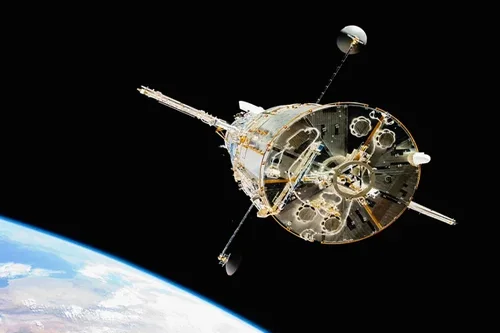
Webb identifies surprising carbon-rich ingredients around young star
Using the joint NASA, European Space Agency (ESA), and Canadian Space Agency (CSA) James Webb Space Telescope, a team of international scientists studied a disk of cosmic material surrounding an extremely low-mass star. The results from the investigation show the richest hydrocarbon chemistry ever observed within a protoplanetary disk, which is a disk of gas,…