
Tag: exoplanets
-

Astronomers find an Earth-sized exoplanet around a tiny star and a large, but ultra-light exoplanet around a Sun-like star
Astronomers from the Search for Planets Eclipsing Ultra-cool Stars (SPECULOOS) project found an Earth-sized exoplanet orbiting an ultracool dwarf star about 55 light-years away. The team concluded that the exoplanet, called SPECULOOS-3b, likely has a rocky surface and no atmosphere. The SPECULOOS project is a network of six robotic telescopes, four in the Southern Hemisphere…
-
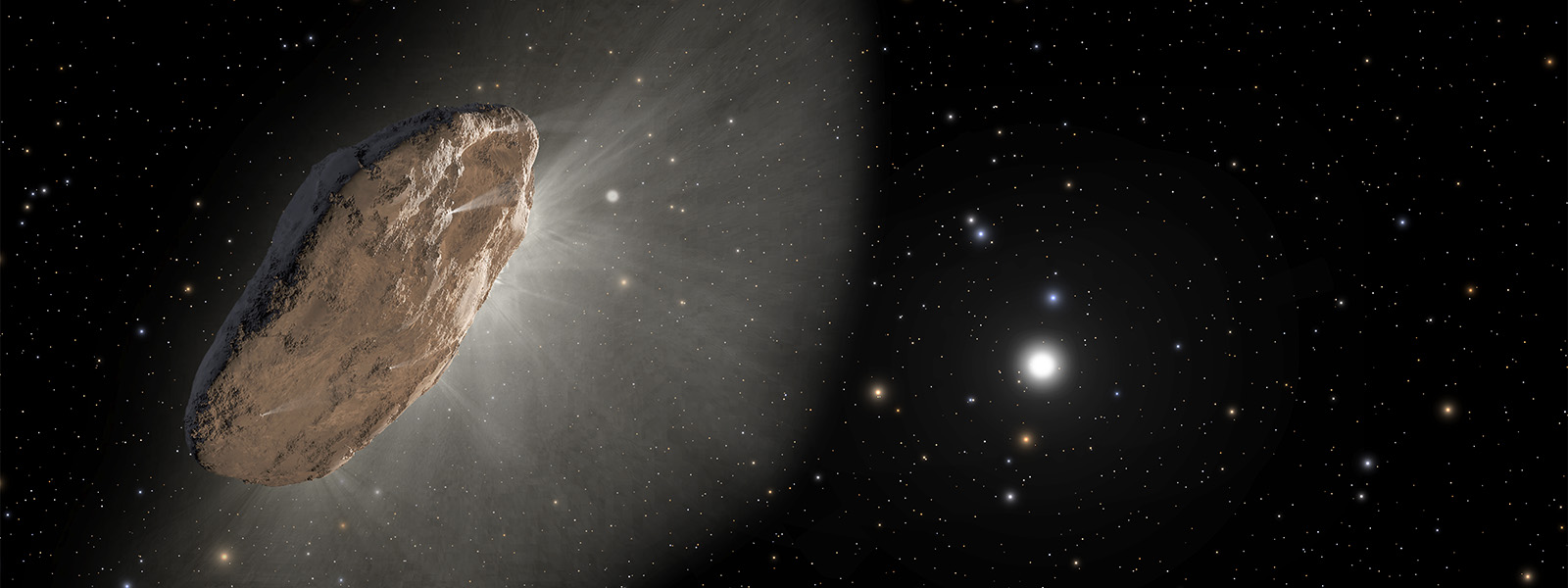
Why interstellar objects like ‘Oumuamua and Borisov may hold clues to exoplanets
On October 17 and 18, 2017, an unusual object sped across the field of view of a large telescope perched near the summit of a volcano on the Hawaiian island of Maui. The Pan-STARRS1 telescope was designed to survey the sky for transient events, like asteroid or comet flybys. But this was different: The object…
-
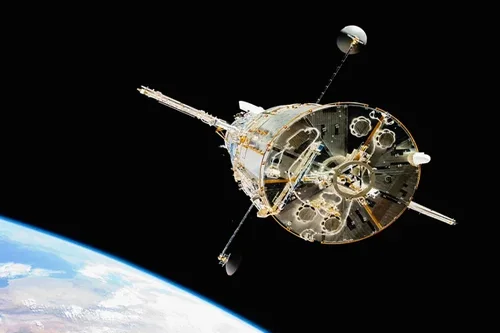
Using Hubble, scientists observe weather on exoplanet
Using data from NASA’s Hubble Space Telescope, an international team of astronomers has detected atmospheric variability on an exoplanet called WASP-121 b. The team analyzed observations taken with Hubble over several years and used computer simulations to demonstrate that the observed variations in the atmosphere could be explained by weather patterns. WASP-121 b, also known…
-
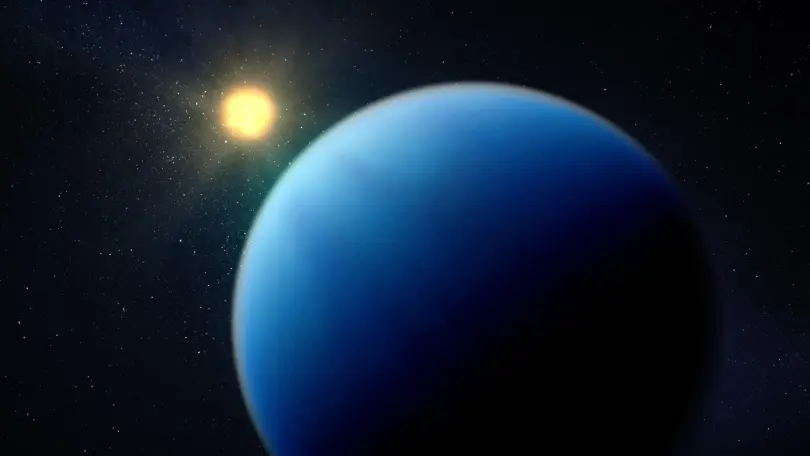
Data from Kepler reveals reason behind shrinking exoplanets
Located throughout the universe, there are billions — possibly even trillions — of exoplanets orbiting around stars of varying shapes, sizes, colors, and more. Like the stars they orbit, exoplanets also come in many different shapes, sizes, and colors, with scientists classifying exoplanets into one of four groups: gas giants, super-Earths, sub-Neptunes, and terrestrial. Interestingly,…
-
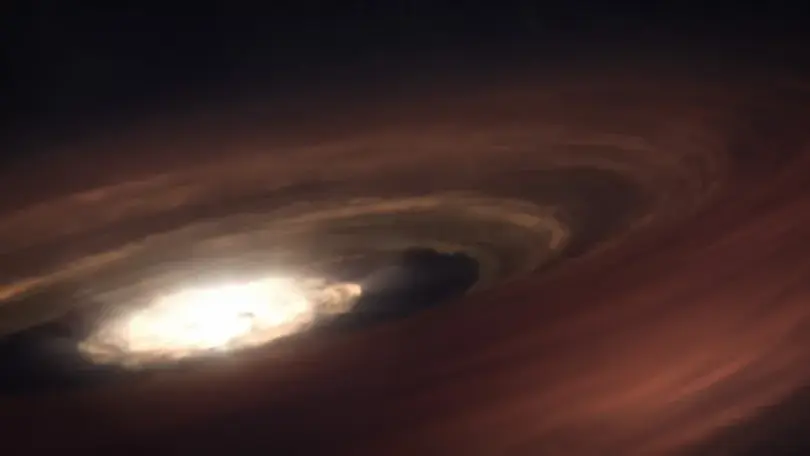
Webb detects neon in young star system, provides insight into planet formation
In 2008, observations from NASA’s now-retired Spitzer infrared space telescope hinted at the presence of neon within the protoplanetary disk of Sun-like star SZ Chamaeleontis (SZ Cha). However, Spitzer’s instruments could not confirm whether this reading was correct. Over a decade after Spitzer’s results were published, the joint NASA, European Space Agency, and Canadian Space…
-
Astronomers say new telescopes should take advantage of “Starship paradigm”
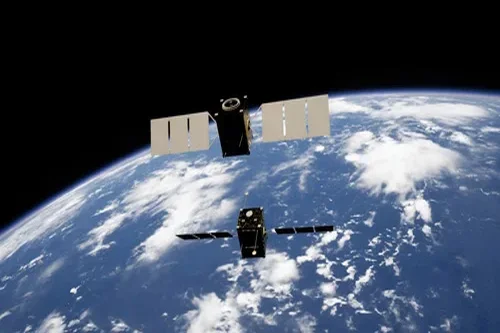
This slide from a presentation by Lee Feinberg, an engineer at NASA’s Goddard Space Flight Center, shows concepts for a space telescope fitting inside the volumes of a SpaceX Starship rocket and a Blue Origin New Glenn rocket. Credit: NASA/Lee Feinberg A consensus among leading American astronomers is that NASA’s next wave of great observatories…
-
Using Webb, scientists discover carbon dioxide and methane in habitable-zone exoplanet
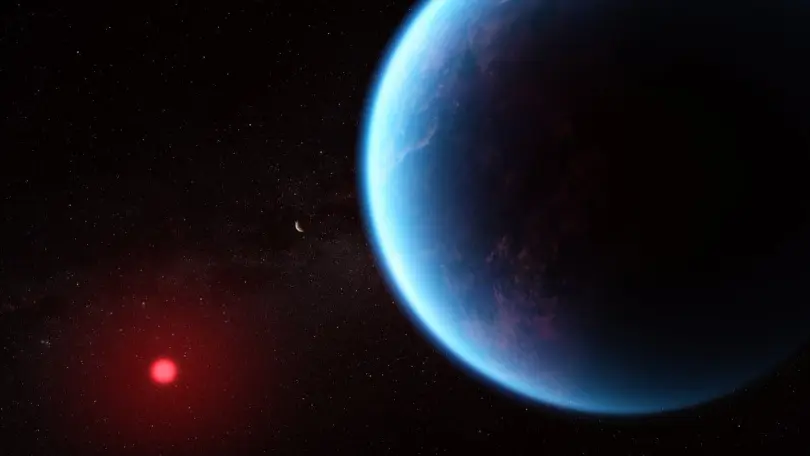
Using the joint NASA/European Space Agency/Canadian Space Agency James Webb Space Telescope, scientists have discovered the presence of carbon-bearing molecules within the atmosphere of exoplanet K2-18 b. Methane and carbon dioxide are among these carbon-bearing molecules. The discovery of the molecules is allowing scientists to better understand K2-18 b. The planet has been the subject…
-
Using data from Spitzer and TESS, scientists discover exoplanet littered with volcanoes
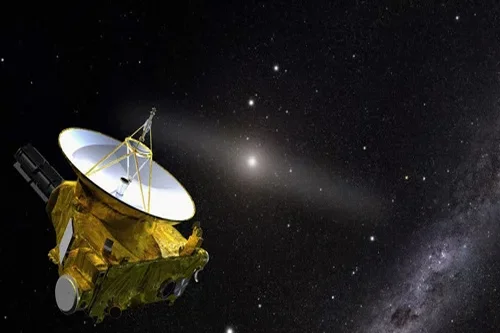
Using data collected by NASA’s retired Spitzer Space Telescope and NASA’s Transiting Exoplanet Survey Satellite (TESS), a team of scientists has discovered an exoplanet that could potentially be covered with volcanoes. The exoplanet is Earth-sized, and the team’s results suggest that the gravitational pull of a neighboring exoplanet could be causing an increase in volcanic…
-
Using data from Spitzer and TESS, scientists discover exoplanet littered with volcanoes
Using data collected by NASA’s retired Spitzer Space Telescope and NASA’s Transiting Exoplanet Survey Satellite (TESS), a team of scientists has discovered an exoplanet that could potentially be covered with volcanoes. The exoplanet is Earth-sized, and the team’s results suggest that the gravitational pull of a neighboring exoplanet could be causing an increase in volcanic…
-
With help from NEOWISE, astronomers observe giant star destroying planet for the first time
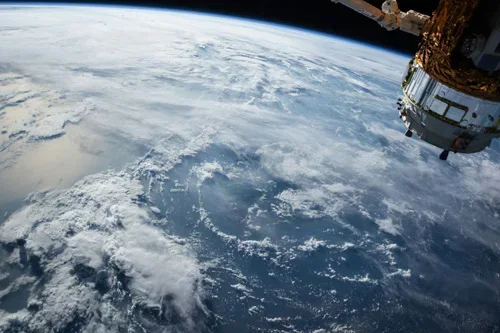
Using the California Institute of Technology’s (Caltech) Zwicky Transient Facility (ZTF) and NASA’s Near-Earth Object Wide Field Infrared Survey Explorer (NEOWISE) observatory, a group of scientists has observed an aging star destroying a planet within its own star system for the first time. Astronomers have long believed that such a phenomenon occurred in red giant…