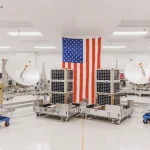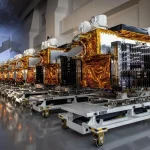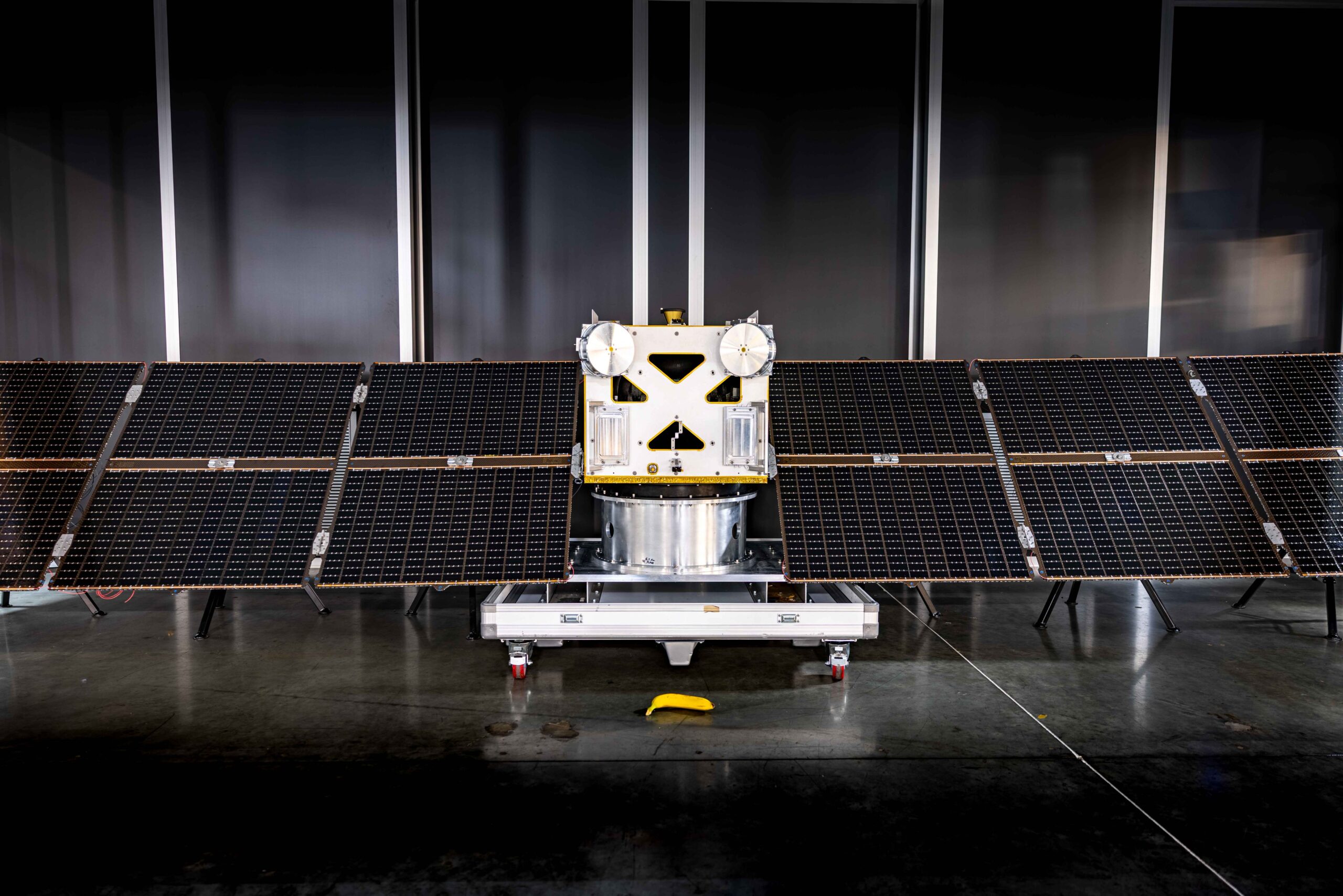
Asteroid mining startup AstroForge has completed assembly of the major flight hardware for its DeepSpace-2 spacecraft, positioning the mission for launch later this year as the company pursues its goal of demonstrating asteroid rendezvous capabilities in deep space.
The spacecraft is scheduled to launch aboard a SpaceX Falcon 9 rocket alongside Intuitive Machines’ IM-3 lunar lander. Once in space, DeepSpace-2 will attempt to rendezvous with an asteroid and capture close-range imagery, a key step toward AstroForge’s long-term ambition of developing commercial asteroid mining operations before the end of the decade.
Building on Lessons from Odin
DeepSpace-2 represents AstroForge’s second attempt to venture beyond Earth orbit following the loss of its first interplanetary spacecraft, Odin, in February 2025.
Odin’s mission ended approximately 530,000 miles from Earth after a failure in its solar array deployment system left the spacecraft without power. The setback provided valuable engineering lessons that have been incorporated into the new mission.
According to AstroForge, DeepSpace-2 is significantly larger and more capable than its predecessor. The spacecraft has a mass of approximately 200 kilograms, making it twice as large as Odin. Its redesigned solar arrays can continue generating power even in the event of a partial deployment failure, and only one of the two arrays is required for full mission operations.
Enhanced Capabilities for Deep Space Operations
The spacecraft is equipped with a Hall-effect electric propulsion system supplied by Safran, offering more efficient maneuvering compared to the chemical propulsion used on Odin.
DeepSpace-2 also carries a high-resolution monochrome camera designed to capture detailed images of its target asteroid. The imagery could help scientists and engineers better understand the asteroid’s mineral composition, supporting future resource extraction missions.
In addition, the spacecraft has been designed with future expansion in mind. AstroForge says the platform can accommodate up to 50 kilograms of payload and possesses the capability to support future asteroid landing missions.
Confidence Grows Ahead of Launch
Prior to Odin’s launch, AstroForge publicly estimated only a 30% probability of mission success. Following the development of DeepSpace-2, company leadership believes the outlook has improved substantially.
“DeepSpace-2’s odds have gone up dramatically—I’d say we’re probably in the 70 to 80% chance of success [range],” AstroForge CEO Matt Gialich told Payload.
According to Gialich, the increased confidence stems not only from improvements to the spacecraft itself but also from organizational growth. Since Odin’s development, AstroForge’s workforce has tripled, while the company has had nearly twice as much time to develop DeepSpace-2 compared with the eight-month schedule that produced Odin.
Asteroid Mining Race Intensifies
AstroForge is pursuing a market that is attracting growing interest from both established and emerging space companies.
In a recent public filing, SpaceX identified asteroid mining as a potential future revenue opportunity, highlighting the increasing commercial interest in extraterrestrial resource extraction.
Despite the prospect of competing against much larger companies, Gialich remains confident that AstroForge can maintain an advantage through its specialized focus on asteroid exploration and mining technologies.
If successful, DeepSpace-2 would mark an important milestone for the emerging asteroid mining sector and provide valuable operational experience for future missions aimed at identifying and eventually extracting valuable resources from near-Earth asteroids.