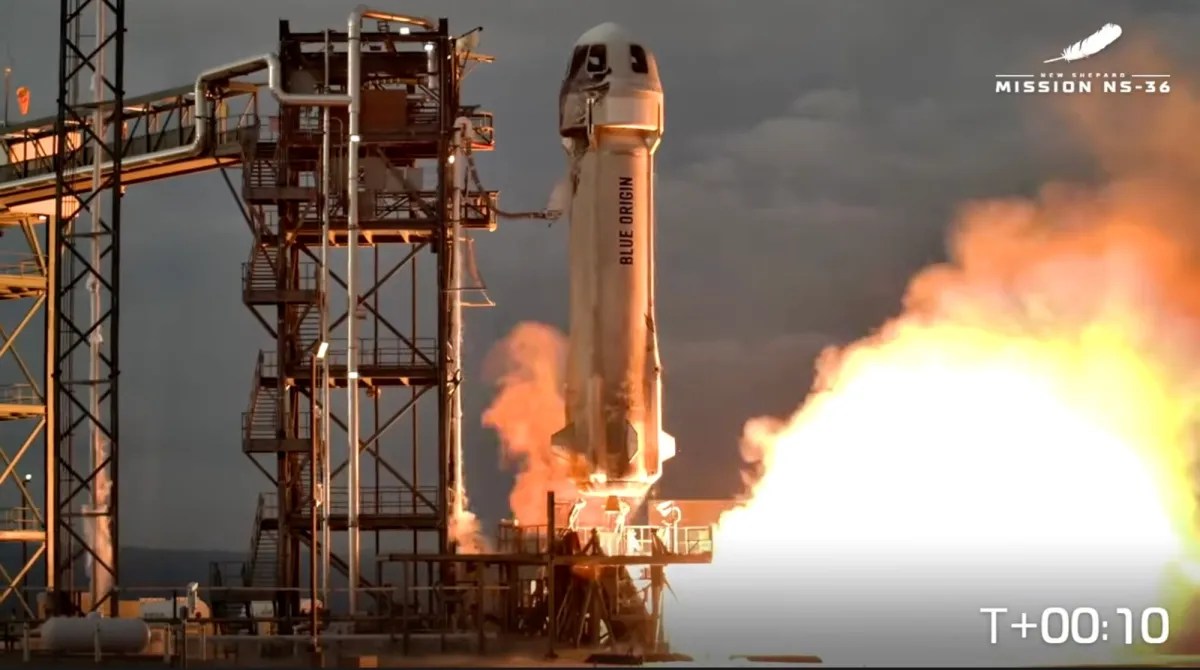
Blue Origin said on Friday it will pause flights of its New Shepard suborbital rocket for at least two years, effectively halting its space tourism operations as it redirects resources toward developing a lunar lander for NASA.
The company said it would “pause its New Shepard flights and shift resources to further accelerate development of the company’s human lunar capabilities,” as it focuses on meeting milestones tied to its moon exploration efforts.
New Shepard, a fully reusable rocket system designed for brief suborbital missions, has flown 38 times since 2015, carrying paying passengers and research payloads to the edge of space from West Texas. The vehicle became Blue Origin’s flagship space tourism platform after beginning crewed flights in 2021.
Blue Origin Chief Executive Dave Limp informed employees of the decision in an internal email, calling the move difficult but necessary. “New Shepard has achieved great success and will forever be our first step,” Limp wrote, adding that the pause would allow the company to “redirect our people and resources toward further acceleration of our human lunar capabilities inclusive of New Glenn.”
The decision surprised some employees and is widely viewed internally as a cancellation of the New Shepard program, staff told Reuters, speaking on condition of anonymity.
New Shepard’s vertical takeoff-and-landing design served as an early testbed for technologies later applied to Blue Origin’s larger New Glenn rocket, which is intended to compete with SpaceX in the heavy-lift orbital launch market.
The strategic shift comes as Blue Origin works under a $3.6 billion NASA contract to develop Blue Moon, a lunar lander slated to support U.S. astronaut missions to the moon later this decade. The lander will complement SpaceX’s Starship-based lunar system as part of NASA’s Artemis program.
Founded by Jeff Bezos, Blue Origin has increasingly emphasized government and national space exploration contracts as it seeks a larger role in future lunar and deep-space missions.