

Cailabs, headquartered in Rennes, continues to develop advanced optical communication technologies designed to enhance the performance, security and capacity of space-based telecommunications networks. By providing laser communication and proprietary optical signal processing technologies, the company is contributing to the evolution of next-generation satellite connectivity infrastructures. As global demand for data transmission continues to expand, satellite communication systems play an increasingly important role in connecting people, infrastructure, and information across the world. The conventional radio-frequency (RF) communication channels has growing limitations in bandwidth availability, throughput capacity and security. Optical communication systems offer a complementary solution by enabling high-speed laser-based links between satellites and ground stations.
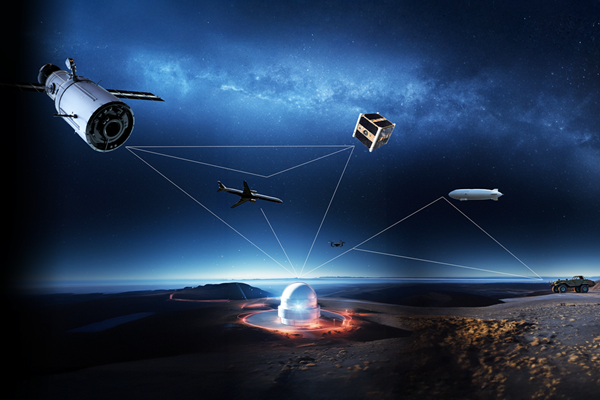
Satellite communication systems form a critical part of the global communications infrastructure. Satellites orbiting Earth relay signals between ground stations, enabling telephony, internet connectivity, television broadcasting and secure communications across continents and remote regions. Modern satellite networks increasingly operate as constellations consisting of multiple spacecraft communicating through inter-satellite links. These networks allow satellites to exchange data among themselves before transmitting it to ground stations, enabling global connectivity even when ground infrastructure is limited. Such architectures provide several advantages including global coverage, resilience against natural disasters or terrestrial network outages and connectivity in remote areas where building terrestrial infrastructure would be difficult or economically impractical.
Space-based telecommunications support a wide range of critical applications across civil, commercial and defense sectors. Satellite telephony enables voice communication in remote regions where terrestrial telecommunications infrastructure is unavailable. Signals are transmitted through a feeder link connecting the user to a telecom satellite and subsequently routed through a ground station into conventional telephone networks. Satellite broadcasting enables television signals to be distributed globally. Ground stations transmit high-volume data streams to satellites, which redistribute the signal to multiple receivers. In modern constellations, data can also travel through inter-satellite communication links before reaching its destination. Satellite broadband services provide internet connectivity in regions lacking traditional network infrastructure. Large constellations such as those used for broadband connectivity deliver high-throughput internet services supporting applications across healthcare, education, security, government services, and enterprise operations. Satellites are also essential for secure communications used by military and intelligence organizations. Satellite-based networks enable secure communication links between ground, naval, and airborne assets, supporting mission coordination and strategic operations. Satellite networks increasingly connect directly with data centers, allowing cloud operators to integrate satellite-generated data into digital services. Inter-satellite communication architectures help reduce latency and improve global data accessibility. In disaster scenarios where terrestrial communication infrastructure is damaged or unavailable, satellites provide essential connectivity for emergency services, humanitarian response and crisis management operations. Offshore energy platforms and remote industrial operations rely heavily on satellite communications to maintain connectivity in areas where terrestrial networks are not feasible.
Most current satellite communications rely on radio-frequency channels, typically operating in C, Ku and Ka bands. However, RF communications are approaching capacity limits due to spectrum congestion and regulatory licensing requirements. RF communication systems typically provide bandwidths reaching a few hundred megabits per second and reaching full capacity at several gigabits per second. In addition, RF signals cover large geographic areas, which makes them easier to intercept and less suitable for highly secure communications. As demand for global connectivity increases, new technologies are required to provide higher throughput, enhanced security and improved scalability. Free-space optical communications use laser beams to transmit data through space and the atmosphere. These systems provide significantly higher data rates compared to RF communications and offer inherent advantages in security and interference resistance. Laser communication systems support both space-to-ground links and optical inter-satellite links (OISL). The technology allows satellites within a constellation to exchange data directly, creating interconnected mesh networks capable of distributing information globally before routing it to ground infrastructure. Optical inter-satellite links are increasingly being deployed in modern constellations, supporting broadband connectivity, Earth observation networks and defense communication architectures.

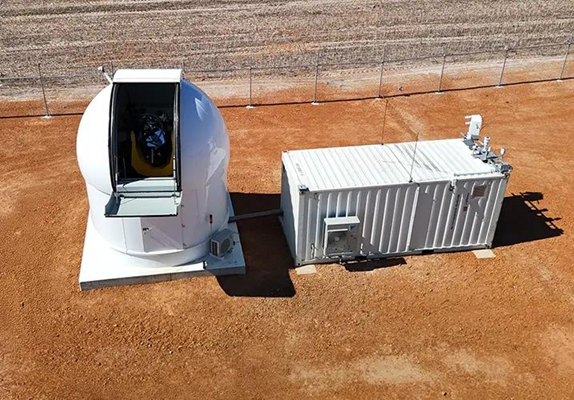
Cailabs has developed TILBA®-OGS, a turnkey optical ground station designed to support high-throughput space-based telecommunications networks. The system is based on the company’s proprietary Multi-Plane Light Conversion (MPLC) technology, which enables precise manipulation and stabilization of optical signals. TILBA®-OGS stations enable optical communications at 10 Gbps and beyond, meeting standards established by organizations such as CCSDS and the Space Development Agency (SDA). These stations support satellite-to-ground laser links capable of transmitting large volumes of data with high reliability. One challenge associated with ground-to-space optical communications is atmospheric turbulence, which can distort laser signals as they travel through Earth’s atmosphere. Variations in air density and temperature can affect the phase and intensity of the optical beam. Cailabs addresses this challenge through technological building blocks integrated within the TILBA® platform, including TILBA®-ATMO and TILBA®-IBC, which compensate for atmospheric disturbances and maintain signal integrity. These technologies help extend the communication range and ensure stable data transmission even under challenging atmospheric conditions.
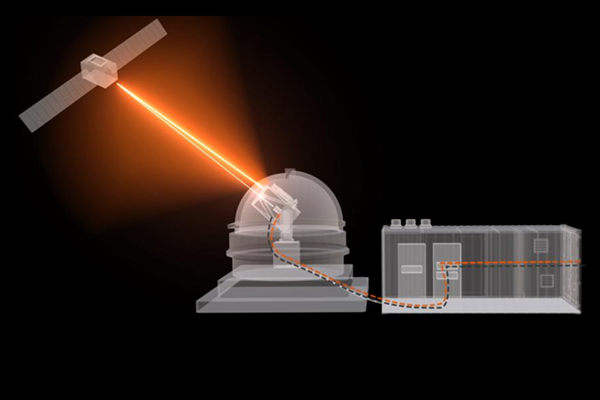
The TILBA® architecture is designed to support future high-capacity communication requirements. Using coherent beam combination (TILBA®-CBC) techniques, the system can scale toward feeder links capable of transmitting data at terabit-per-second levels. The optical ground stations are remotely operable and compatible with multiple satellite missions, allowing operators to integrate them into various space communication architectures. As satellite constellations expand and global data traffic continues to increase, optical communication technologies are expected to play a key role in the next generation of space-based telecommunications networks. Laser-based systems offer higher throughput, improved security and compatibility with high-capacity terrestrial fiber networks. Through the photonics expertise and MPLC-based optical technologies, Cailabs contributes to advancing the infrastructure required to support future satellite communication systems.
About Cailabs
Cailabs is a French technology company specializing in photonics and advanced optical communication solutions. Headquartered in Rennes, France, Cailabs develops optical technologies designed to improve the performance, efficiency and reliability of laser-based communication and industrial laser systems. The company’s portfolio includes optical ground stations for laser satellite communications, beam shaping solutions and optical signal processing technologies. Cailabs’ products are based on proprietary multi-plane light conversion (MPLC) technology, which enables efficient manipulation and transmission of optical signals in free-space and fiber-optic communication systems. Cailabs supports applications across space communications, telecommunications, defense and industrial laser processing. The solutions are used to enhance high-speed optical data links, including ground-to-satellite laser communication networks, contributing to the development of next-generation optical connectivity infrastructure.