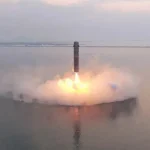
In the past ten years, China’s commercial aerospace has developed faster than many people expected. Rocket companies are booming, satellite manufacturing capabilities are rapidly improving, application scenarios are constantly expanding, local governments continue to introduce supporting policies, and the attention of social capital continues to rise. China’s commercial aerospace industry has entered a “large-scale growth stage.”
However, when we deeply observe the participation patterns of enterprises, local governments, research institutes, and investment institutions, we will find that China’s commercial aerospace industry is both “highly popular” and “low efficiency.” The popularity comes from technological breakthroughs, policy support, and capital attention; the low efficiency comes from the immature industrial ecological structure.
01
Four major structural features
Based on research and exchanges with dozens of companies, in-depth observations of industrial clusters, and long-term tracking of capital/supply chains/policies, Nihao Space has summarized four major structural problems in the ecology of China’s commercial aerospace industry: ① Extremely opaque information; ② Weak industrial collaboration; ③ Fragile supply and demand connections between enterprises; ④ Unstable capital chains and mismatched valuations. Together they make the industry “busy but difficult to run”.
1. Information is not transparent
This is the most underestimated structural problem in China’s commercial aerospace industry and the root of all other problems. Information opacity is divided into two categories:
(1) Enterprises do not understand each other
This is mainly due to the fragmentation of information in the upstream and downstream of the supply chain. There are two main reasons for this phenomenon. First, many start-ups still have a laboratory culture. The main creative teams mostly come from the technical departments of scientific research institutes and lack understanding of marketing and communication. What’s more, the “secrecy” attribute of the aerospace industry in China over the past many years has been “inherited” by many start-up companies. The companies basically do not take the initiative to speak out and just focus on research and development, resulting in poor market information flow.
(Picture: Confidentiality System Source: Xinhe County Media Center)
Second, because the market is in the early stages of development, companies “cannot say too much” due to product progress and technology confidentiality requirements in the research and development stage, and “vague descriptions” often appear on many details and key data. These include: opaque prices/delivery cycles of key components in the supply chain; opaque technical capabilities, production capacity, and delivery records of new companies; lack of real data from upstream and downstream companies; and disruption of cooperation information between rocket, satellite, and ground station companies.
The most typical example: When an aerospace company wants to find a new supplier, it often needs to be “introduced by friends.” This means: extremely inefficient matching of supply and demand, lack of price benchmarks, extended project cycles, and frequent mismatches (inappropriate suppliers get projects).
(2) The industry lacks a systematic data system
This is also a common problem faced by many industries in the early stages of development. There are no mature standardized products among enterprises, and upstream and downstream needs are unclear. One company’s rocket will carry another company’s satellite, but the interfaces are not unified and the design needs to be adjusted, resulting in launch delays. The satellite platform and stand-alone supporting equipment “each play their own role.” The satellite integration is low and there is no unified standard for data interfaces, forming various “small circles.” This has led to the government, enterprises, and investors “not being able to see the industry clearly.”
(Picture: Asia Pacific 6D Satellite Source: Fifth Academy of Aerospace Science and Technology)
For example, the government wants to formulate policies, but it cannot see the real production capacity of enterprises, understand the progress of projects, or monitor changes in industrial structure. Investors need to make judgments, but there is no unified data source, corporate disclosure standards are inconsistent, and technical indicators are difficult to evaluate. Enterprises need to judge the market because there is a lack of public data on downstream demand and a lack of industry benchmarks on upstream supply. Therefore, China’s commercial aerospace industry faces the contradiction of “only seeing results and missing key data links.”
2. Ecological decentralization: resources are divided rather than integrated
The main manifestation is that the degree of synergy between different cities and different subdivisions is very low. Aerospace is a large-scale system project. A satellite or rocket integrates multiple systems, dozens of single machines, and tens of thousands of parts. The industrial chain is long and vertical integration is difficult, so the requirements for industrial chain collaboration are higher. But the reality is that China’s commercial aerospace industry faces an embarrassing situation of high barriers to talent mobility and high costs for cross-city cooperation among enterprises.
The main reason for regional fragmentation is the high degree of homogeneity of commercial aerospace industry planning in various places. After commercial aerospace was officially included in the government work report, various regions have issued specific “development plans” for the commercial aerospace industry. Shandong, Henan, Sichuan, Hubei and other places have proposed “building an integrated satellite and rocket industrial chain” in their policy plans. The goal is to build an “intra-regional circulation” with satellites and rockets as the main chain enterprises and including the production links of the entire industrial chain.
(Picture: Panorama of China’s Commercial Space Policy in 2025 Source: Hello Space)
However, highly overlapping regional industrial planning has resulted in a situation where social innovation resources are severely fragmented. Many companies have experienced unhealthy competition in which key teams have been poached to start businesses, and projects have stagnated or even aborted. Leading companies have “layout” in many places, but the cultivation of talents is difficult to meet the rapid expansion of enterprises. At the same time, it also results in the dispersion of social resources in the industry, the inconsistency of the standard system, and the lack of ecological complementarity. The industry is in a state of “multi-center” and “mutual competition”.
3. The connection between supply and demand is fragile: everyone needs to cooperate, but the right person can’t be found
After communicating with dozens of companies, we found that 90% of aerospace companies are essentially doing one thing: looking for resources. Rockets are looking for satellite companies; satellite companies are looking for supply chains; ground stations are looking for customers; application companies are looking for scenarios; governments are looking for enterprises; investors are looking for targets. However, the industry generally lacks a credible, long-term updated “supply and demand infrastructure.”
However, the current situation that enterprises face when expanding their markets is that they rely on the “circle of friends” for connection, making it difficult to break through the circle. The rocket company wanted to find a satellite company to expand its launch business, but due to poor information, inconsistent research and development progress, and inconsistent interfaces, the launch plan changed frequently and the project took too long. At the same time, the “official website” of rocket companies is not updated, and satellite companies are unable to know the time, parameters, payload capacity, price range, etc. of batch launches for public comparison.
(Picture: Suzaku-2 modified Yao-2 rocket is launched. Source: Blue Arrow Aerospace)
Similar problems exist in the satellite manufacturing industry. In general, enterprises cannot find suitable suppliers, but the root cause is that their technology disclosure is too low. The supply chain does not understand the manufacturing cycle, platform capabilities, and load parameters, and cannot evaluate each other’s capabilities. Both parties are “working behind closed doors,” resulting in relatively slow upstream and downstream development.
Government investment promotion, investment and financing, etc. face extremely long-term preliminary research and communication. In many cases, investment in a project can take half a year or even a year. What’s more, many companies cannot get the money after official announcements of financing, resulting in project advancement being aborted due to funding shortages. Aerospace is an industry with a high degree of industrial chain collaboration, and today’s Chinese commercial aerospace: cooperation does not rely on mechanisms, but relies on connections.
4. Capital chain: long technology maturity period vs. short risk investment return cycle
In recent years, there have been two trends at the capital level: aerospace has become hot, but money has become cautious. The valuation bubble has blown, but the pace of financing has become slower. The most fundamental contradiction is the contradiction between the high risk and long cycle of aerospace projects and the short return cycle expected by venture capital funds.
Take the Falcon 9 and New Glenn, the two recyclable rockets currently in service in the world, as examples. The development cycles of both rockets are more than 10 years, and the cost is more than hundreds of millions of dollars. During the development stage, they frequently experienced accidents such as delays and explosions. The most popular “satellite Internet” concept at the moment has a constellation size that is so large that it counts tens of thousands of satellites, and at least thousands of satellites are needed to provide regional service capabilities.
(Picture: The second launch of the New Glenn rocket. Source: Blue Origin)
This kind of investment, which often costs billions or even tens of billions, and the ultra-long return cycle is a huge risk for investment institutions. Therefore, there is a general lack of “patient capital” in the industry. Many venture capital institutions enter the commercial aerospace field more for the purpose of “speculating on concepts” and “making quick money.” Usually the holding period will not exceed three years, and they will seek to trade equity to ensure “safety.”
Commercial aerospace is still a complex project with high technical barriers and spans multiple disciplines. Although they both belong to the field of commercial aerospace, the technical barriers between the two companies in different industries are very high. It often happens that companies cannot explain their business models clearly, investment institutions cannot understand technology, and new companies have difficulty financing. In addition, in order to attract leading companies to promote the development of local industrial chains, the government established industrial funds to help companies raise funds, which caused leading companies to relocate across the country and raised corporate valuations in disguise.
5. Difficulty in application: unclear scenarios, mismatch between capabilities and needs
There is also a significant problem in the commercial aerospace sector that also affects the long-term holdings of most investment institutions. That is “the business model is not clear” and “the market demand is not clear”. Still taking the most popular “satellite Internet” industry in China as an example, although Qianfan and GW State Grid have launched more than 100 satellites, how the business will be implemented and who will do it are still unresolved in the country. The issuance of “satellite mobile communication” licenses has not yet been carried out. It is also unknown whether the constellation operators will directly act as telecom operators or provide “trunk communication” services and become the upstream of operators.
(Picture: Qianfan Constellation Networking Progress Source: Hello Space)
As for the field of remote sensing satellites, the biggest problems are “unclear application scenarios” and “mismatch between service capabilities and needs.” First of all, on the application side, most orders from private remote sensing satellite companies still come from “military procurement” and “public utility procurement” from local governments. Application scenarios mostly focus on military, agricultural and forestry monitoring, disaster emergency response, etc. These project-based orders often have “one order but no order” and poor sustainability. In the face of industries such as animal husbandry, agricultural monitoring, and logistics with broader application prospects, domestic remote sensing constellations lacked “instant service” capabilities due to errors in early demand research and insufficient satellite data uplink and downlink capabilities, making it impossible to expand such markets.
The above five points jointly create the dilemma of higher decision-making costs for commercial aerospace companies; long project cycles; increased research and development costs; and slower financing pace. All problems will eventually appear on the business side of the company: efficiency decreases, costs increase, and risks increase. If an industry remains in this state for a long time, it will be difficult to form real competitiveness.
02
International Comparison—Why is the U.S. commercial aerospace industry so fast?
It’s not because American companies are powerful, but because the United States has a more complete “ecological infrastructure.”
The U.S. aerospace industry started decades earlier than China. Since the Cold War, the U.S. aerospace industry with the Apollo program as its core has launched the prototype of commercial aerospace under government leadership and corporate participation. From the Gemini program, the Apollo program, Skylab, the space shuttle, the International Space Station to today’s Artemis program, etc., all have followed the model of NASA as the leader and commercial companies participating in R&D and manufacturing. NASA’s annual expenses of 20 billion US dollars have helped the United States establish the most complete “aerospace ecological infrastructure” in the world.
(Picture: A Small Step Source: NASA)
These infrastructures include: outstanding aerospace companies such as Boeing, Lockheed Martin, SpaceX, and Northrop Grumman, industry databases such as Space Capital, industry associations, standardized supply chain systems, mature investment and financing structures, approximately 20 space launch sites, millions of aerospace industry talents, etc. The real advantage of U.S. commercial aerospace is not technology, but ecology.
03
How to build an “industry ecosystem”?
We believe that in the next five years, China’s commercial aerospace ecological construction will have three key puzzle pieces: (1) Information infrastructure: making the industry transparent, reliable and traceable. (2) Connecting infrastructure: Let the industry be truly “connected”. (3) Supply and demand matching infrastructure: allowing resources to flow.
As a new media information platform, in the past three years of operation, NiHaoSpace’s content and research have attracted hundreds of thousands of domestic commercial aerospace followers, established multiple industry communities, reached tens of thousands of practitioners, connected 500+ companies, and served more than 50 commercial aerospace companies. We are always thinking about how to maximize the capabilities of a “platform” and make attention valuable. What Nihao Space wants to do is not a simple “media”, but a “builder of industry information infrastructure.”
NiHaoSpace will strive to do the following three things:
1. Establish industry information infrastructure to make industry information transparent, credible and traceable.
Including the establishment of industry databases, corporate archive systems, upstream and downstream supply chain information, regularly updated data systems, open technical standards, real project progress information, etc. Help establish the foundation for industry standardization. Provide in-depth news interpretation, monthly reports, development white papers, and urban ecological observations for the industry. Provide industry analysis and development consulting for key tracks. Establish corporate files and databases and provide visual analysis content.
2. Build enterprise link infrastructure: truly connect upstream and downstream, between cities, and between government and enterprises.
Including maintaining industry communities, city links, upstream and downstream directional docking, R&D cooperation mechanisms, collaboration networks, and industry alliances. Establish a communication mechanism between cities by providing a docking platform for cooperation between enterprises, regular small-scale closed-door salons, industry seminars, and special technical forums. Establish a network of entrepreneurs, investors, and thematic community systems to achieve a high degree of coordination in the aerospace industry.
3. Provide supply and demand matching infrastructure: allowing resources to flow.
Including providing product transaction docking, supply chain screening, government-enterprise docking (park investment promotion), investment docking, cooperative R&D matching, talent and job matching, and establishing industrial alliances. We want to be an industry resource distribution center: allowing orders to be generated, cooperation to be implemented, and resources to flow.
Conclusion
The foundation of China’s commercial aerospace is taking shape, but the ecosystem is still in its early stages. In the next five years, what the industry needs is not more “stories” but more “connections”, “data”, “systems” and “collaboration”. What Nihao Space hopes to do is to become a participant in promoting the development of the industry in a more transparent, collaborative and efficient direction.
What really determines the future of the industry is not the story, but the ecology.