The CZ-12B flight was one of three polar missions for the Shanghai SpaceSail company within nearly four days at the start of June. A Chang Zheng 6A launched 18 Qianfan satellites from Taiyuan on June 4, and a Chang Zheng 8 launched 18 more from the Wenchang Space Launch site. Meanwhile, Chinese commercial launch providers continue working toward propulsively landing and recovering reusable first stages, using methods ranging from concrete pads and offshore barges to tensioned steel nets and tower catches.
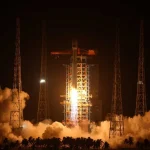
The CZ-12B lifted off at 08:40 UTC from the Jiuquan Satellite Launch Center, carrying two Qianfan satellites for SpaceSail’s tenth Polar group. The China Aerospace Science and Technology Corporation Commercial Rocket Company designed, built, and flew the rocket in just 20 months, one of the fastest development cycles for a Chinese launch vehicle. The two-stage rocket measures 72 m tall and 4.37 m in diameter, with payload capacity in the 20-tonne class and the ability to deploy up to 36 satellites into a single orbital plane. Its first stage uses nine YF-102R engines burning liquid kerosene and oxygen, with a single vacuum-optimized YF-102R on the upper stage. The first vehicle flew with mockup landing legs and grid fins and made no recovery attempt, though its second flight is rumored to include recovery testing.
The mission drew attention for the absence of usual hazard warnings, including Notices to Air Missions and maritime notices that give advance warning of a launch. It remains unclear which indications were issued domestically. A Chang Zheng 2D launch also flew without NOTAMs last October.
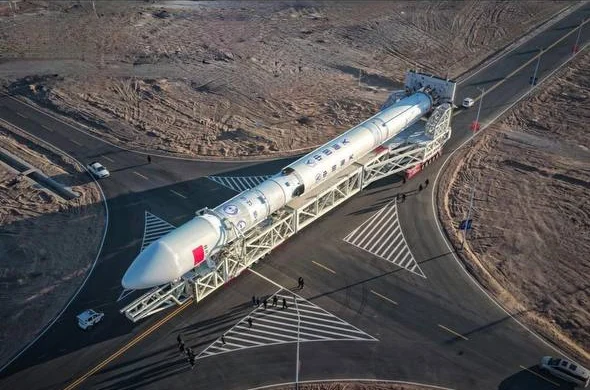
LandSpace, meanwhile, has been preparing to fly its ZhuQue-3 for the second time, with the rocket recently arriving at Jiuquan. The stainless steel vehicle stands 66 m tall and 4.5 m in diameter, powered by nine Tianque-12A engines burning liquid methane and oxygen and producing around 765 tons of thrust. It will attempt to land its first stage downrange at a site in Gansu Province. The first ZQ-3 flew on December 3, 2025, reaching low-Earth orbit with a dummy payload, but its first stage experienced an engine issue during its landing burn and impacted the ground, despite navigating to within meters of the landing pad.
Chief engineer Zhang Xiaodong said the team had estimated an 80% chance of success before that flight and has learned a great deal from the data, with the next attempt aiming to turn the near-miss into a perfect recovery. With both the CZ-12A and the ZQ-3 having failed debut landing attempts, the question remains open as to which Chinese orbital vehicle will conduct China’s first propelled landing.
There are now 200 Qianfan satellites in orbit, with plans to reach 324 this year and ambitions to deploy thousands in subsequent years. The constellation aims to bring an internet service online by the end of this year and says it already has the capacity to serve maritime customers.
The second ZQ-3 flight is expected no earlier than June 20, following transport erector rehearsals in early June. LandSpace has begun production at its new factory in Jiangsu, where the next ZQ-3 vehicle is reportedly being manufactured.