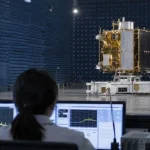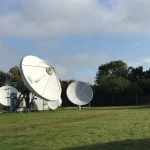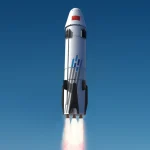
From “Dongfanghong No. 1” to the Shenzhou spacecraft, from Chang’e’s lunar exploration to Tianwen’s flight to fire, the Fifth Academy has created the backbone of China’s aerospace industry with numerous brilliant achievements. In recent years, in the face of the vigorous development of commercial aerospace, the Fifth Academy has actively deployed and proactively made changes. It released the commercial aerospace excellence supply platform on April 18, 2025, demonstrating its ambition and strength in the commercial aerospace field.
01
General overview of the five academies
The Fifth Academy of Aerospace Science and Technology, also known as China Academy of Space Technology, is affiliated to China Aerospace Science and Technology Corporation. It was established on February 20, 1968. Its first president was Qian Xuesen. It is an institution established in my country specifically to develop artificial satellites and other spacecraft. After more than 50 years of development, the Fifth Academy has become China’s main space technology and product development base and the main force of China’s space industry. As of April 19, 2025, the number of spacecraft developed and successfully launched by the Fifth Academy has exceeded 500, forming six series of spacecraft for manned spaceflight, lunar and deep space exploration, Beidou satellite navigation system, earth observation, communications and broadcasting, and space science and technology experiments, realizing the serialization and platform development of large, medium, small, and micro spacecraft. According to the official website, the Fifth Academy currently has 9 academicians of the Chinese Academy of Sciences and the Chinese Academy of Engineering, 11 academicians of the International Academy of Astronautics, 9 academicians of the Russian Academy of Astronautics, 15 national-level experts with outstanding contributions, 40 national technical experts, and more than 7,200 people with senior professional titles or above.
02
Affiliates of the Fifth Academy
The Fifth Academy has more than 20 research institutes, factories and companies, forming a complete research and development system covering all subsystems of spacecraft. Among them, many institutions have become the “national team” in the field of commercial aerospace: 1. Institutions affiliated with the academy Qian Xuesen Space Technology Laboratory: Founded in Beijing on December 7, 2011, it is the R&D center, system engineering research center and simulation center of the Fifth Aerospace Academy. The laboratory is responsible for the planning and strategic research of aerospace technology, leading the demonstration work of the space vehicle system, and leading the demonstration of cross-field systems and the research of cutting-edge, basic and disruptive technologies. As one of the important supporting units of the “China’s Aerospace” white paper, the laboratory has long-term attention and research on the policy dynamics of commercial aerospace, and provides strategic suggestions for the group company’s development in the field of commercial aerospace. Aerospace Material Support Division: formerly known as the Electronic Components Reliability Center established in 1984 and headquartered in Beijing, it is the earliest professional organization for quality assurance of aerospace components in China. Today, a comprehensive scientific research system has been established covering the reliability of aerospace components and materials, basic research on space environmental effects, quality assurance of aerospace components, aerospace material procurement and warehousing, and aerospace engineering consulting services. On October 11, 2024, the country’s first flight test device for reusable components and materials developed by the Ministry of Materials and Materials successfully returned. In the future, a collection of carrying projects will be launched for the commercial aerospace field. Communications and Navigation Satellite General Department: Established in Beijing on August 14, 2020, it is the competent unit and overall system unit of the Fifth Academy in the field of communications and navigation. As one of the overall applied satellite units of the Fifth Academy, it is mainly responsible for business planning, market expansion and customer maintenance in the field of communications and navigation, and is also responsible for the research and development, overall design, system integration, on-orbit technical support and product after-sales service of related spacecraft. The ministry has successively completed the overall development work of satellite Internet low-orbit group 01, 02 and 03 satellites, providing strong support for the construction of the GW constellation. Overall Design Department (Department 501): Founded in Beijing on August 16, 1968, it is my country’s core unit responsible for the technical overall planning of various spacecrafts. It has undertaken and completed the technical overall planning of various spacecraft models such as lunar exploration satellites, manned spacecrafts, remote sensing transmission satellites, navigation satellites, communication and broadcast satellites, and returnable satellites, as well as the research and development of related subsystems and products. Institute 502: Founded in Beijing on October 11, 1956, it was originally the Institute of Automation of the Chinese Academy of Sciences. It is one of the earliest units engaged in satellite development in my country, and is also the pioneer and leader of domestic space vehicle control and propulsion technology. Institute 502 is a comprehensive research institute that integrates the development of space vehicle control and propulsion subsystems, related sensors, controllers, actuators and other components. It covers research, design, development, production, integration and testing in control, propulsion, optoelectronics, electromechanics, computers and other professional technical fields. As early as 2017, Institute 502 has actively deployed in the commercial aerospace field at home and abroad. It has now provided independently developed electric propulsion and other core products to a number of private aerospace companies, and promoted the widespread implementation and development of aerospace technology in commercial applications. Xi’an Branch (No. 504): Founded in Xi’an on June 29, 1965, it is the core unit for the development and production of my country’s space vehicle payloads and satellite application electronic systems and equipment. Institute 504 represents the highest level of development of my country’s communication satellite technology and is a technological leader in the fields of satellite navigation, satellite remote sensing, land, sea and space-based measurement and control, and inter-satellite links. In addition, it is also the backbone of the development of spaceborne antennas, space data transmission systems and space microwave products. In March 2024, the SAR payload subsystem independently developed by the 504 Institute was successfully applied to a commercial satellite, marking a substantial breakthrough in its high-performance radar technology in the commercial aerospace field. Institute 508: Founded in Beijing on August 21, 1958, it is one of the earliest units engaged in space technology research in my country. The institute integrates research, design, production and testing, focusing on technical research and product development in six major professional directions: spacecraft recovery and landing, space optical remote sensing, space laser detection, aviation optical remote sensing, space pyrotechnics devices, and composite material structure molding. In 2017, Institute 508 established a project office in the field of commercial remote sensing. So far, it has developed more than 20 remote sensing payloads for a number of commercial aerospace companies and successfully applied them in orbit. Institute 510: Founded in 1962 in Lanzhou, Gansu Province, it was formerly the Lanzhou Institute of Physics of the Chinese Academy of Sciences. It is the earliest professional research institute engaged in vacuum science and technology in my country, the first batch of units directly engaged in the development of space vehicles in my country, and a backbone unit in the field of space technology in my country and a key military defense unit. The institute is mainly engaged in technology research and development and product development in many professional fields such as space electric propulsion, space environmental effects and detection loads, quantum frequency standards, surface engineering, secondary power supply, general electromechanical, vacuum measurement, pressure vessels, equipment applications, etc. In recent years, 510 Institute has delivered nearly 150 sets of low-power Hall electric propulsion products, successfully realizing the large-scale application of this technology in the commercial aerospace field. Institute 513: Founded in Yantai, Shandong Province in 1958, it is an important research and development unit for aerospace electronic products. The institute is mainly engaged in technology research and development and product development in professional fields such as comprehensive electronics, measurement and control communications, energy management, servo control, human-computer interaction, and advanced payloads. It has a complete scientific research, production and testing system for aerospace electronic products, covering a complete industrial chain such as cutting-edge technology tracking, design plan demonstration, product development, industrialization realization and technological achievement transformation. As early as 2018, Institute 513 hosted the first Commercial Satellite Manufacturing Industry Development Forum, actively promoted the development of the commercial satellite manufacturing industry, and successfully completed the development tasks of multiple commercial satellite products. Hangzhou Center: Established in Hangzhou, Zhejiang Province on December 18, 2020, it is the bridgehead of the Fifth Academy in the Yangtze River Delta region and the strategic fulcrum of reform and development. The Hangzhou Center will take the construction and use planning of the new park as an opportunity to further promote R&D, innovation and industrial development in the fields of new aerospace payloads, space intelligent control, advanced space power, aerospace information integration and application, and continue to promote the implementation of a number of commercial aerospace core stand-alone and component projects such as flexible solar wings and advanced power electronic products. At the same time, the Hangzhou Center will vigorously cultivate new productive forces, build a supply platform for the Five Institutes and the entire commercial aerospace industry, and build a commercial aerospace development base for the Five Institutes. It will bravely shoulder the mission of the times and promote the vigorous development of the commercial aerospace industry. 2. Affiliated companies of the academy: Beijing Satellite Manufacturing Factory Co., Ltd. (Factory 529): Founded in Beijing in 1958, formerly known as the Beijing Scientific Instrument Factory of the Chinese Academy of Sciences, it is the leader and core force in the innovative development of high-end aerospace manufacturing technology and products in my country. Factory 529 is responsible for the R&D and production of a variety of aerospace model structures, mechanisms, electronics, aerospace materials and other categories of products. It is committed to the R&D and product innovation of related professional technologies such as mechatronics, power electronics, composite materials, additive manufacturing, intelligent manufacturing, on-orbit manufacturing, and in-situ resource utilization. On September 22, 2024, China Aerospace Science and Technology Group Commercial Satellite Co., Ltd. was registered and established. As the second largest shareholder, 529 Factory holds 39.5% of the shares, actively deploying commercial aerospace, and assisting the development of my country’s commercial aerospace industry. China Dongfanghong Satellite Co., Ltd.: China Satellite for short, was established in Beijing in 1997 and is a listed company controlled by the Fifth Academy. The company is a high-tech aerospace enterprise specializing in the development of small satellites and microsatellites, satellite ground application system integration, terminal equipment manufacturing and satellite operation services. Aerospace Dongfanghong Satellite Co., Ltd.: established in Beijing on August 18, 2001, and is wholly owned by China Satellite. The company is mainly engaged in the research and development, system design, system integration and on-orbit support services of small satellite systems. As of the beginning of 2024, Aerospace Dongfanghong has successfully launched 35 commercial space satellite projects, covering multiple satellite constellations such as “Beijing 3”, “Gaojing 1”, “Zhuhai 1”, “4D Remote Sensing” and “Haisi 2”. Aerospace Star Technology Co., Ltd. (503 Institute): Founded in Beijing on August 16, 1986, it is a holding subsidiary of China Satellite. Relying on the National Key Laboratory of “Space-Earth Integrated Information Technology”, Aerospace Star has built a complete business structure with the satellite comprehensive application system as the core, covering eight major fields including space applications, satellite remote sensing, satellite navigation, satellite communications, data links, cloud computing and information security, UAV system integration, and data operation services. Previously, Aerospace Star cooperated with private aerospace companies such as Aerospace Yuxing to jointly create a one-stop on-orbit comprehensive service platform for the international market. Shenzhen Aerospace Dongfanghong Satellite Co., Ltd.: Founded in Shenzhen in October 2008, it is a holding subsidiary of China Satellite and one of the pioneers and leaders in China’s commercial aerospace development. In the field of commercial microsatellite R&D and manufacturing, Shenzhen Dongfanghong is in a leading position in the country and has successfully developed and launched 59 microsatellites of different types. Its business covers scientific exploration, technology testing, remote sensing, communications, atmospheric detection and other fields.
03
Entering commercial aerospace
On April 18, 2025, the Fifth Academy released the “Commercial Aerospace Excellence Supply Platform” in Yunqi Town, Hangzhou. Nearly 200 commercial aerospace-related companies participated in the meeting, marking that the Fifth Academy has officially taken an important step to deeply integrate into the commercial aerospace ecosystem.
It is worth noting that through this platform, the Fifth Academy has actually built a new infrastructure for the entire commercial aerospace industry in China. Traditional aerospace projects are usually customized and highly closed, making it almost impossible for “new entrants” to participate. But in the field of commercial aerospace, especially with the rapid emergence of small and medium-sized enterprises and start-up companies, what everyone needs is a supply system with low threshold, high efficiency and clear standards. The commercial aerospace excellence supply platform of the Fifth Academy happens to be at this critical node, providing directly callable standardized components, mature systems and even technical consulting support to help these companies smoothly integrate into the market.
In addition, judging from the multiple products released at the conference, such as flexible solar wings, loop heat pipes, flywheels, Hall electric propulsion systems, inter-satellite laser terminals, phased array antennas, spaceborne atomic clocks, etc., it can be clearly felt that the product design of the Fifth Academy is gradually moving closer to the direction of “commercialization, mass production, and standardization”. It is no longer just designed for a single engineering task, but laid out to meet broader and more diverse market needs.
The commercial aerospace excellence supply platform released by the Fifth Academy is a positive test for the future of traditional aerospace forces. It not only serves the Fifth Academy’s own strategic layout upgrade in the commercial aerospace field, but also builds a more open, flexible and dynamic innovation ecosystem for China’s aerospace industry. This marks that China’s aerospace industry is gradually shifting from focusing solely on national missions in the past to a new stage in which both national missions and market demands are equally important.
Summarize
As the “backbone” of China’s aerospace industry, while completing major national aerospace projects, the Fifth Academy has keenly captured the wave of commercial aerospace and promoted aerospace technology from “laboratories” to “big markets” with systematic innovation.