D-Orbit, Founded in 2011 and headquartered in Como, Italy, stands as a global leader in space logistics and orbital transportation, with commercial offices in Portugal, UK and the US. Their mission is to develop the world’s first space logistics infrastructure, enabling efficient satellite deployment, in-orbit servicing and end-of-life management supporting sustainable expansion in space.
Space Logistics & Orbital Transportation Services
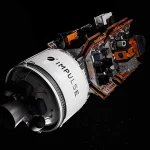
At the core of D-Orbit’s operations is the ION Satellite Carrier, an orbital transfer vehicle (OTV) designed for precision deployment, rideshare missions and constellation phasing. The platform’s configurable payload bay and electric propulsion enable it to transport satellites across multiple orbits, deploying each into its final slot dramatically reducing the time and cost to revenue for constellation operators. Additionally, add-on services like insurance, mission analysis, mission control and logistics ensure comprehensive support throughout each.
Their Advanced Services division includes innovative products like D3, a smart decommissioning motor enabling safe satellite disposal, and AOCS Suite, D-Sense, OBC Core, Simba, SimOn, and D-Raise all designed for precise attitude control, propulsion, and mission-critical autonomy. In addition, the upcoming General Expansion Architecture (GEA) system under ESA’s RISE mission aims to bring in-orbit servicing to FOX geostationary satellites starting in 2028.

- Launch & Deployment (Orbital Transportation & Precision Services): D-Orbit’s Launch & Deployment suite offers turnkey rideshare, precision deployment, and constellation phasing services through their innovative ION Satellite Carrier. With rideshare, small satellites are deployed into parking orbits using third-party launchers equipped with D-Orbit dispensers. For more advanced missions, the ION platform provides precision deployment, carrying satellites to exact operational orbits ideal for customized or nonstandard missions. Its constellation phasing service allows operators to position multiple satellites precisely along their constellation planes, accelerating revenue generation and lifecycle efficiency. D-Orbit handles all mission logistics from mission analysis and risk management to transport, insurance and mission control.
- Advanced Services (Hosted Payloads & Space Cloud): Under Advanced Services, D-Orbit transforms the ION vehicle into a versatile research and testing platform with Hosted Payload Services. Payload developers can integrate their instruments, experiments, and sensors into ION’s plug-and-play interfaces enabling rapid iteration and in-orbit validation across multiple missions. The company also delivers Space Cloud Services, hosting edge computing environments on ION. This includes Software In-Orbit Demonstration, allowing customers to deploy Linux-based or AI applications in space, and Intelligence Logistics, using satellites as a virtual cloud network for distributed data collection and processing. The Satellite-as-a-Service model, exemplified by Italy’s IRIDE program, enables access to SAR missions without the complexities of building and operating satellites.
- In-Orbit Servicing – GEA (General Expansion Architecture): The upcoming General Expansion Architecture (GEA) is D-Orbit’s first specialized servicing vehicle aimed at geostationary missions. Set to launch in 2028 as part of NASA’s ESA RISE project, GEA will demonstrate advanced robotic rendezvous, inspection, repair, refueling, relocation, and graveyard disposal operations. With its autonomous docking and propulsion capabilities, GEA is designed to extend satellite lifespans, remove defunct assets and support sustainable orbital ecosystems all at a fraction of the cost of launching new satellites.

- Aurora (Autonomous In-Orbit Demonstrator): Aurora is D-Orbit’s pathfinder in autonomous on-orbit robotics and inspection technology. Designed to host instruments such as advanced cameras, spectrometers, or sensors, Aurora enables self-inspecting orbital deployment critical for verifying satellite health and performance. While details from the website are limited, the program reflects D-Orbit’s strategy to combine deployment and servicing functions, reinforcing their broader vision of space logistics infrastructure.
- Systems & Components (Key Modules and Payload Support): D-Orbit manufactures key subsystems that support their full-space logistics ecosystem. These include the D3 decommissioning motor, enabling safe satellite removal from crowded orbits; attitude control systems (AOCS); on-board computers (OBC Core); propulsion modules; and mission-level toolkits like D-Sense, Simba, and SimOn. These components are not only used in the ION platform but are also offered to external integrators, making D-Orbit a comprehensive supplier for complex orbital systems and hosted payload infrastructure.
Mission Updates
D-Orbit’s success in orbital transportation and mission execution is exemplified by its track record of completing 19 ION Satellite Carrier missions, a major achievement in the commercial space logistics sector. These missions have collectively deployed over 129 satellites and hosted 71 distinct payloads, covering a wide array of applications such as Earth observation, telecommunications, scientific research, in-orbit demonstration and AI-powered space computing. By delivering consistent, high-performance missions, D-Orbit has validated its role as a critical player in the global small satellite ecosystem.
The most notable early missions was the deployment of Planet Labs’ SuperDove satellites in 2020, a milestone that positioned D-Orbit as a trusted satellite deployment partner for major commercial constellations. The 2021 “Pulse” mission marked another breakthrough by demonstrating the full versatility of the ION Satellite Carrier platform through precision orbit insertion and via hosted payload services. This mission included a pioneering in-orbit computing test powered by Unibap’s SpaceCloud, proving that edge computing in space could process data onboard, enabling faster response times and reducing ground data transmission loads.

Subsequent missions have continued to demonstrate D-Orbit’s technological maturity and growing portfolio of space services. For example, missions conducted in early 2025 showcased support for advanced propulsion testing like Pale Blue’s water-based thruster, emphasizing the ION platform’s suitability for R&D and innovation in sustainable satellite propulsion. These missions also reflect D-Orbit’s increasing cadence in launch operations, ensuring frequent flight opportunities for both commercial and institutional clients. D-Orbit has successfully proven multi-manifest deployments, constellation phasing and payload recovery across different orbital altitudes and configurations, reinforcing its vision of becoming the logistics backbone of the space economy.
Institutional Business & Collaborations
D-Orbit actively collaborates with major institutions and governments to advance space logistics. The company secured a €119.6M ESA contract to develop the GEA servicing vehicle for GEO satellites under ESA’s ADRIOS debris-removal program. D-Orbit also entered into a partnership with Eutelsat for ESA’s RISE mission and launched a strategic business combination with Planetek to integrate cloud-based applications and AI data processing in orbit. These agreements, along with a €150M Series C funding round, underscore its growing influence in commercial and public space sectors.

In recent announcements, D-Orbit revealed the launch of two orbital transportation missions and signed a new rideshare agreement with SpaceX. The strategic merger with Planetek was also highlighted, aimed at bolstering the company’s capabilities in AI-powered in-orbit data services. Additionally, several executive interviews featured on international outlets and has emphasized D-Orbit’s vision for creating a logistics in space. With its proven ION Satellite Carrier, advanced servicing systems like D3 and GEA, and strategic collaborations, D-Orbit is redefining how satellites are deployed, serviced and decommissioned, driving cost efficiencies and promoting a sustainable orbital ecosystem.