Austrian space propulsion company ENPULSION has secured €22.5 million in new growth funding as it seeks to expand its presence in the United States and scale production of its satellite propulsion systems.
The funding round, announced on March 3, was led by German investment firm Nordwind Growth. ENPULSION said the capital will be used to increase manufacturing capacity and strengthen its position in the U.S. market, which the company described as a key area for future growth.
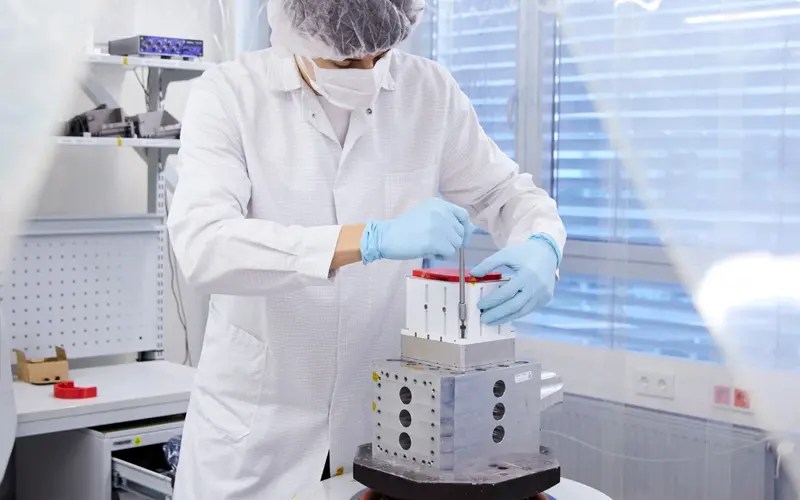
Founded in 2016, ENPULSION develops electric propulsion systems for micro, nano and small satellites. The company said it has delivered more than 320 propulsion systems based on its modular Field-Emission Electric Propulsion (FEEP) technology. The system produces thrust by accelerating ions extracted from a liquid propellant using electrostatic forces, with ENPULSION’s design relying on an indium-based liquid metal.
Chief Executive Officer Dr. Alexander Reissner said the new investment would support the company’s international expansion strategy.
“ENPULSION is one of the few companies worldwide combining technological maturity, proven flight heritage, and profitability,” Reissner said. “This investment empowers us to accelerate our global expansion from a position of strength, with the US market as a key focus.”
The company also plans to use the funding to expand beyond propulsion hardware into integrated satellite mobility services. According to ENPULSION, the strategy involves developing broader systems designed to support maneuvering, positioning and other in-orbit mobility capabilities for satellites.
“[This investment] will accelerate our mission to evolve from a leading propulsion equipment supplier into a system supplier, providing turnkey, in-space mobility solutions,” Reissner added.
In a statement posted on LinkedIn, Nordwind Growth Investment Manager Philipp Scheidt said the firm’s investment was supported by strong demand in the satellite sector, including growth driven by artificial intelligence applications and national space initiatives. He also pointed to the company’s established flight heritage, expanding product portfolio and operational profitability.