The European Union has launched its own secure and encrypted satellite communications system, a move aimed at strengthening Europe’s space sovereignty and defence capabilities, EU officials said on Tuesday.
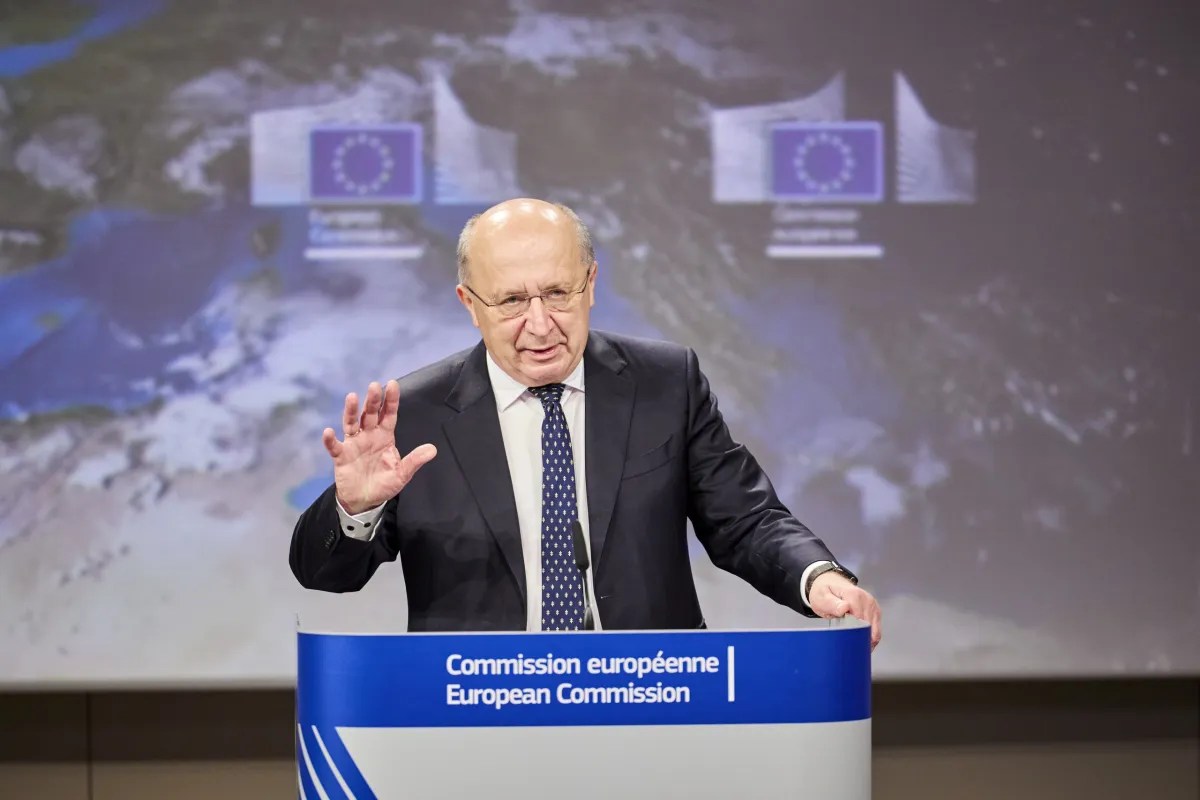
Speaking at the 18th European Space Conference in Brussels, EU Commissioner for Defence and Space Andrius Kubilius announced the start of operations under GOVSATCOM, an initiative that pools national satellite capacities to provide secure communications for EU governments and armed forces.
“We started very important GOVSATCOM operations… which means that all member states now can have access to sovereign satellite communication, military and government secure and encrypted, built in Europe and operated in Europe under European control,” Kubilius said.
GOVSATCOM is intended to ensure reliable and protected communications for public authorities, particularly during crises or security incidents. Kubilius described the launch as a first step toward a fully autonomous European space communications architecture, adding that coverage and bandwidth would be expanded globally by 2027 through additional capacity purchased from commercial providers, alongside strengthened security features.
Kubilius said the programme is advancing in parallel with the EU’s next-generation secure satellite constellation, IRIS2, which is expected to begin initial services in 2029. The multi-orbit IRIS2 system, comprising about 290 satellites, is designed to provide an encrypted communications backbone for EU institutions, member states and public agencies.
The push to accelerate Europe’s secure space communications has gained urgency amid the war in Ukraine and rising geopolitical tensions, which have heightened concerns over dependence on non-European space infrastructure and the protection of sensitive assets.
Kubilius also floated the idea of creating a “virtual European Space Command” to enable member states to share and mobilise space assets more efficiently in times of crisis or conflict. He said such cooperation would form a core pillar of a planned European Space Defence Shield, expected to be presented later this year as part of the European Commission’s Defence Readiness Roadmap.
He further pointed to upcoming negotiations on the EU’s next Multiannual Financial Framework, noting that the commission has proposed a fivefold increase in funding for both space and defence programmes.
At the same conference, European Space Agency Director General Josef Aschbacher warned that Europe risks falling further behind global competitors due to lower public investment in space.
“In 2024 the United States invested six times more in public space funding than all European actors combined,” Aschbacher said. “China spent 50% more compared to Europe, and as a result Europe’s global share declined by 50% in relative terms between 2019 and 2024. This should ring alarm bells. Europe must catch up, and fast.”