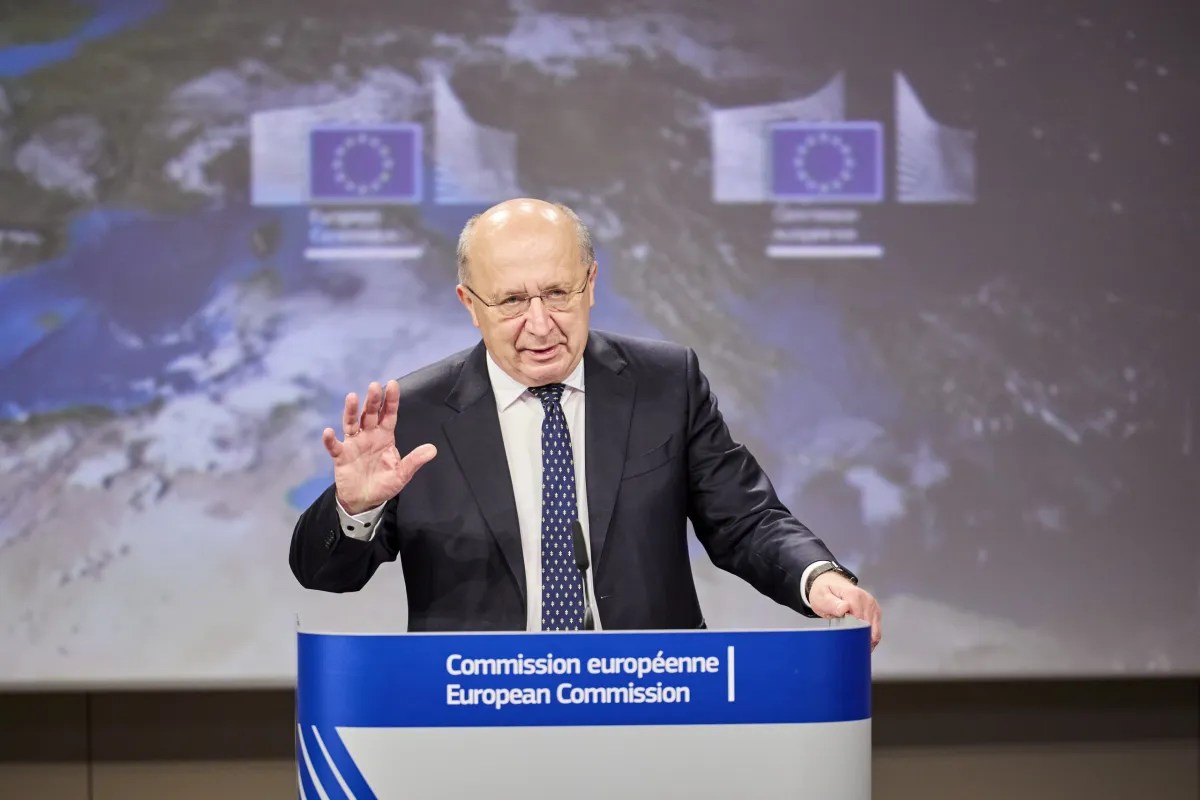
The European Union remains dependent on the United States for critical defence and space services and cannot yet replace U.S. capabilities, despite ambitions to build its own satellite infrastructure, EU Defence and Space Commissioner Andrius Kubilius told Euronews.
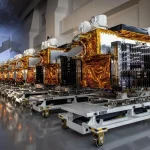
Kubilius said the EU’s Governmental Satellite Communications programme, known as GOVSATCOM, is intended as an interim solution while the bloc develops its flagship IRIS² project, a planned multi-orbital constellation of 290 satellites expected to become operational around 2029.
“To avoid having an empty space now for several years, especially when geopolitical challenges and threats are coming from different sides, we definitely need to develop some precursor capabilities for secure satellite communication,” Kubilius said at the European Space Conference. “That is what we did with GOVSATCOM.”
Kubilius said Europe must take a “very rational” approach to reliance on the United States, particularly as Washington signals a strategic focus on the Indo-Pacific and Western Hemisphere. He said the U.S. is likely to ask Europeans to assume greater responsibility for their own defence, including in space.
According to Kubilius, Europe’s main vulnerability lies in so-called strategic enablers, many of which are currently provided by the United States. These include space-based services as well as capabilities such as air refuelling and heavy airlift. “We are quite heavily dependent on, first of all, space services,” he said, adding that building European alternatives is now a matter of urgency.
“When we have IRIS², it will be better than Starlink,” Kubilius said, referring to the satellite network operated by SpaceX, founded by Elon Musk. He cautioned, however, that the EU is not yet in a position to match U.S. capabilities. “We need to build capabilities to ensure we are not left without any capabilities at all,” he said, describing GOVSATCOM as a first step in that direction.
Beyond space, Kubilius said Europe is currently unable to replace the United States in broader defence terms. He noted that up to 100,000 U.S. troops are stationed in Europe, providing what he described as a backbone force able to move rapidly across the continent. Replacing that capability with the EU’s 27 national armies would be difficult, he said, echoing past comments by former EU foreign policy chief Josep Borrell, who described some European forces as “bonsai armies”.
Kubilius also warned that Russia remains the most significant conventional military threat to European security and said Europe lacks the battle-hardened experience needed to deter or respond to aggression. He argued that closer integration with Ukraine’s military, which has gained extensive combat experience, would be essential to strengthening Europe’s overall defence posture.