Intuitive Machines was founded in 2013 and is headquartered in Houston, Texas, as a hub for space innovation due to its proximity to NASA’s Johnson Space Center. Intuitive Machines aims to open access to the Moon for the progress of humanity by providing lunar surface access, payload delivery, data transmission services, and lunar infrastructure. The company seeks to catalyze a lunar economy through transportation, data services, and autonomous lunar systems.
Intuitive Machines specializes in:
- Lunar Surface Access and Payload Delivery: It delivers satellites, scientific instruments, and cargo to the Moon, including rideshare services.
- Data Transmission Services: Collecting, processing, and interpreting space-based data for command, control, communications, reconnaissance, and prospecting.
- Lunar Infrastructure: Developing scalable systems for navigation, maintenance, scientific data collection, and system health monitoring.
- Propulsion Systems: Utilizing innovative methalox (methane and liquid oxygen) propulsion for lunar landers, enabling efficient navigation between Earth and the Moon.
The company’s expertise lies in lunar landers and data relay systems to support lunar missions.
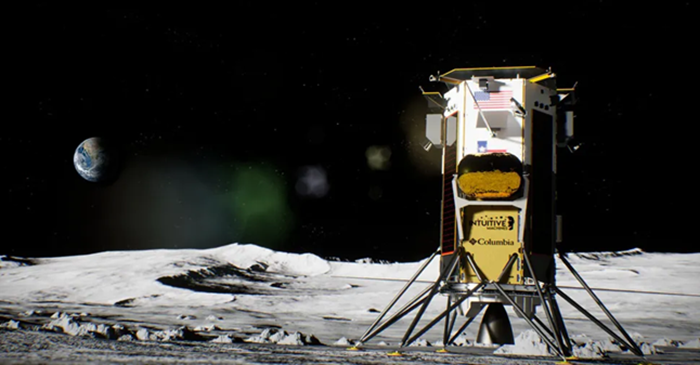
Selected in 2018 for the Commercial Lunar Payload Services (CLPS) program, Intuitive Machines holds three NASA contracts to deliver payloads to the Moon. It is also one of three companies advancing Lunar Terrain Vehicle (LTV) capabilities for NASA’s Artemis program. In September 2024, NASA awarded Intuitive Machines a $116.9 million contract for a lunar South Pole mission and a $4.82 billion Near Space Network Services (NSNS) contract to deploy lunar relay satellites. It collaborates with European Space Agency (ESA) on payloads, including a drill suite for water ice detection on the lunar South Pole. Intuitive Machines also partnered with SpaceX for launch services (Falcon 9 rockets), York Space Systems for lunar communication satellites, and Nokia Bell Labs for 4G/LTE lunar connectivity.
Key Technologies
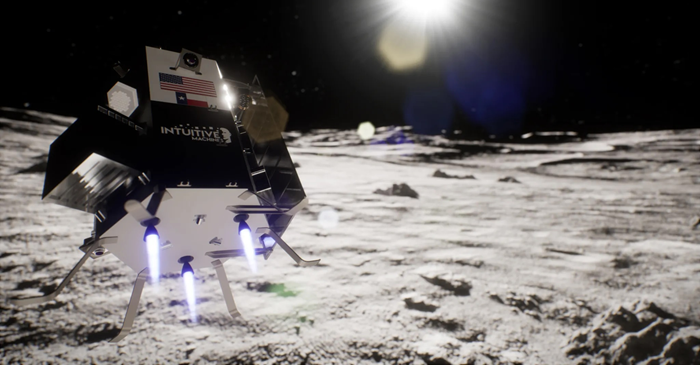
- Nova-C Lunar Lander: A hexagonal cylinder lander with methalox propulsion (VR900 main engine, 3,100 N thrust) and helium reaction control systems (4.45 N per thruster). It is designed to deliver small payloads (up to 100 kg) to the lunar surface and is scalable to mid- and large-class landers (Nova-D). The use of methalox propulsion is unique, as it leverages methane and oxygen, which can potentially be harvested on the Moon or Mars via in-situ resource utilization (ISRU).
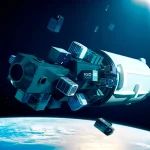
- Lunar Data Relay Satellites (Khon): Developed with York Space Systems, these satellites provide continuous communication and navigation services for lunar surface and cislunar operations, supporting NASA’s Artemis campaign.
- Micro-Nova Hopper: A small, hopping rover designed for lunar surface prospecting, deployed from the Nova-C lander to explore difficult terrains.
- 4G/LTE Connectivity: In collaboration with Nokia, Intuitive Machines is testing high-bandwidth lunar communication networks, a step beyond traditional ultra-high-frequency (UHF) systems.
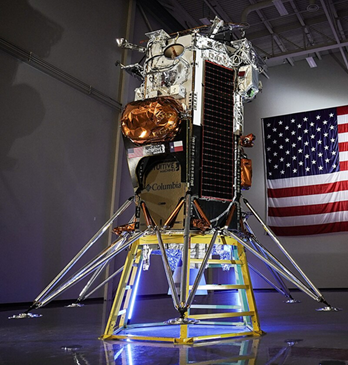
Intuitive Machines inherited technology from NASA’s Project Morpheus, which developed methalox propulsion for lunar landings. The company is researching fission surface power systems with X-energy to provide continuous lunar power, awarded in 2022.
Key Products and Services
- Nova-C Lunar Lander: Delivers payloads (satellites, rovers, scientific instruments) to the lunar surface. Supports rideshare missions, carrying multiple payloads for NASA, ESA, and commercial clients. Provides satellite operators and researchers with cost-effective lunar access and precise payload deployment.
- Lunar Data Relay Satellites (Khon): Offers 4K streaming, navigation, and communication services for lunar missions. Enables real-time data transmission for researchers and commercial enterprises, enhancing mission efficiency.
- Micro-Nova Hopper: A small rover for lunar prospecting, capable of hopping across the surface to collect data. Allows researchers to explore hard-to-reach lunar terrains, supporting resource identification (e.g., water ice).
- Lunar Infrastructure Services: Scalable systems for navigation, maintenance, and autonomous operations. Supports long-term lunar presence for commercial space enterprises and government agencies.
Notable Projects
- IM-1 Mission (Odysseus): Launched February 15, 2024, on a SpaceX Falcon 9, landing on February 22, 2024, at Malapert A (lunar South Pole). First U.S. lunar landing since Apollo 17 (1972) and the first commercial lunar lander to transmit NASA payload data. Carried six NASA payloads and commercial payloads (e.g., Columbia Sportswear). Despite tipping over, it was deemed a success.
- IM-2 Mission (Athena): Launched February 27, 2025, targeting Mons Mouton (lunar South Pole). Carried the Micro-Nova Gracie hopper, NASA’s PRIME-1 drill suite, and Nokia’s 4G/LTE equipment. Landed on its side on March 6, 2025, limiting operations, but collected 250 MB of data. Altimeter failure caused the lander to skid and tip.
- IM-3 Mission: Scheduled for early 2026, targeting Reiner Gamma. Payloads include NASA’s CADRE rovers, ESA’s MoonLIGHT actuator, and South Korea’s LUSEM. Aims to study lunar magnetic anomalies and radiation.
- IM-4 Mission: Awarded in September 2024 for a 2027 lunar South Pole landing. Will deliver six NASA payloads, including ESA’s drill suite, to search for water ice.
It partnered with X-energy for lunar fission power and had a joint venture with KBR for NASA’s Joint Polar Satellite System (2023). It had collaborations with Nokia and Lunar Outpost for IM-2’s 4G/LTE and MAPP rover. Intuitive Machine had its first commercial lunar landing of IM-1 in 2024. It is the sole awardee of NASA’s NSNS contract (2024).
Intuitive Machines is a trailblazer in commercial lunar exploration, leveraging methalox propulsion, lunar landers, and data relay systems to open the Moon for science and commerce. Its NASA and ESA partnerships, combined with innovative technologies, position it as a leader in the lunar economy. Despite challenges like IM-2’s landing issues, the company’s milestones (e.g., IM-1) and future projects (e.g., IM-3, IM-4) underscore its potential to shape the space industry.