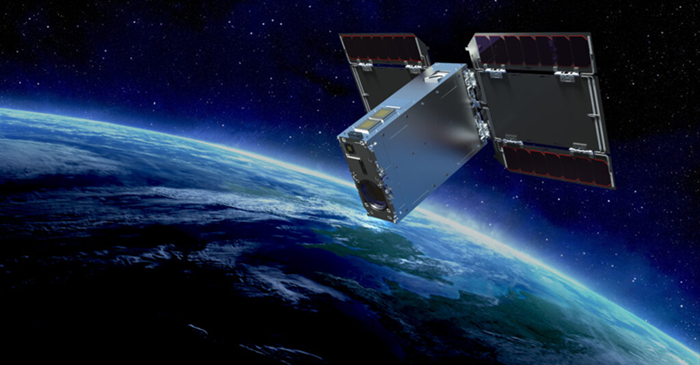
Pale Blue is advancing in-space propulsion with a portfolio of water-based electric propulsion systems designed for satellites ranging from CubeSats to larger spacecraft up to 700 kg. By replacing traditional propellants with water and eliminating high-pressure storage requirements, the company provides a propulsion approach focused on safety, cost efficiency and simplified mission integration. Pale Blue’s propulsion systems are engineered to deliver modular, ready-to-use and easily deployable solutions that reduce operational complexity while maintaining performance across a wide range of mission profiles.
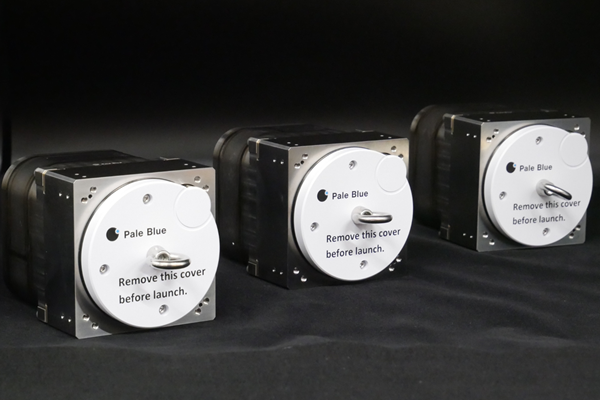
At the core of Pale Blue’s technology is the use of water as a propellant, enabling propulsion systems that do not require high-pressure tanks. This significantly reduces handling risks and simplifies launch logistics. The systems are delivered pre-filled with propellant, eliminating the need for fueling operations at the launch site and streamlining satellite integration workflows. This approach supports non-hazardous payload classification, reducing regulatory complexity and enabling faster mission readiness. The use of water also contributes to a more sustainable propulsion model, aligning with evolving industry priorities.
PBI: Miniaturized Gridded Ion Thruster in 1U Form Factor
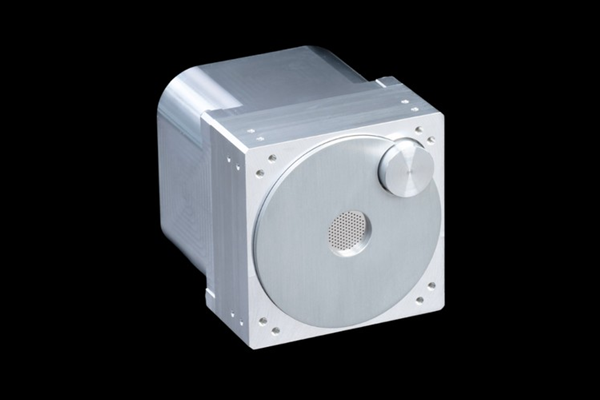
The PBI system is a compact gridded ion thruster designed to deliver high total impulse within a 1U form factor. It integrates all essential components including the thruster head, fluidics, electronics and propellant tank into a single unit. The modular and clusterable design allows multiple units to be combined to meet the propulsion requirements of different spacecraft sizes. By offering a fully integrated system, PBI simplifies spacecraft design and reduces integration effort while maintaining efficient propulsion performance.
PBR Series: Scalable Water Vapor Propulsion Systems
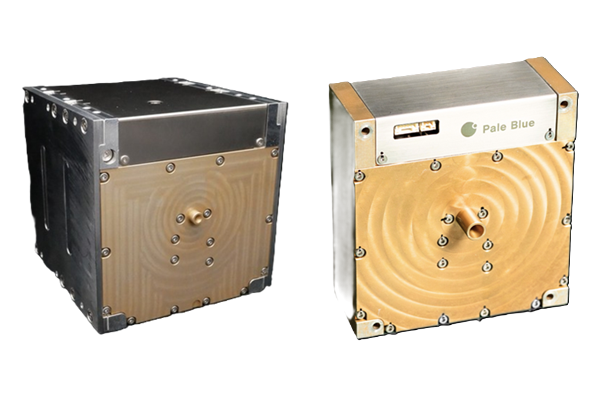
Pale Blue’s PBR series offers scalable water vapor propulsion systems tailored to different spacecraft classes, combining compact design with integrated functionality. The PBR-10 (0.5U) and PBR-20 (1U) provide low-SWaP propulsion solutions for small satellites by integrating the thruster head, fluidics, electronics and propellant tank into a single unit. The PBR-30 (2U), built on flight-proven resistojet technology, delivers up to 12 mN of thrust at 35 W, with throttling capability down to 3 mN at 10 W, enabling flexible mission control and efficient power usage. For larger platforms, the PBR-50 extends this architecture by offering increased propulsion capacity while maintaining the same integrated, water-based design. Across the series, all systems are fully integrated and clusterable, allowing operators to scale propulsion performance based on mission requirements, while the preloaded propellant design eliminates complex fueling procedures and simplifies deployment across multiple missions.
PBH-100 and Water Hall-Effect Thruster
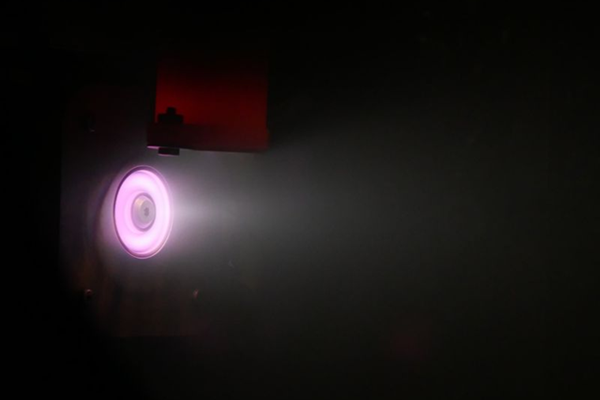
For missions requiring higher performance, Pale Blue offers the PBH-100, which combines thrust and efficiency through a microwave cathode-based Hall-effect propulsion system. This design eliminates typical startup delays associated with conventional Hall thrusters, enabling instant operation and improved responsiveness. The company also provides a water-based Hall-effect thruster, optimized from traditional architectures to operate with water propellant. These systems integrate the thruster, power processing unit (PPU), fluidics and tank, and can be configured or clustered to meet mission-specific requirements.
Operational Advantages and Mission Flexibility
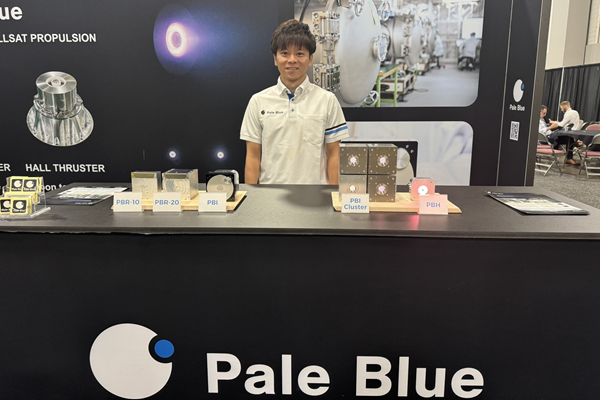
Pale Blue’s propulsion systems offer several operational advantages that enhance mission flexibility and simplify spacecraft operations. They feature quick startup and responsive thrust generation, enabling efficient maneuver execution, along with user-friendly control interfaces that allow thrust commands to be issued through simple operations. The systems are designed with low size, weight and power (SWaP), making them suitable for small satellites and resource-constrained platforms. In addition, the use of non-pressurized storage reduces safety and handling requirements, while preloaded propellant eliminates the need for fueling at the launch site. These features collectively support flexible mission design, enabling applications such as orbit raising, station-keeping, collision avoidance and deorbiting.
Pale Blue addresses these needs by delivering propulsion technologies that are modular, scalable and operationally efficient. Through the water-based propulsion approach and integrated system design, Pale Blue is contributing to the development of next-generation satellite propulsion solutions that support both commercial and institutional missions across a wide range of orbital environments.
About Pale Blue
Pale Blue is a Japan-based space technology company focused on developing water-based electric propulsion systems for small and medium-sized satellites. Headquartered in Kashiwa, Chiba, Japan, the company designs propulsion solutions that emphasize safety, simplicity and scalability for modern satellite missions. Pale Blue’s product portfolio includes integrated propulsion systems such as ion thrusters, resistojet thrusters and Hall-effect thrusters, all designed to operate using water as a propellant. These systems are engineered to eliminate the need for high-pressure storage and complex fueling procedures, with propellant preloaded prior to delivery to simplify satellite integration and launch preparation. By offering modular, low-SWaP propulsion solutions that can be clustered and adapted for different spacecraft sizes, Pale Blue supports a wide range of applications including orbit control, station-keeping and deorbiting across various orbital environments.