Redwire plans to expand pharmaceutical manufacturing research in orbit through an agreement between its SpaceMD subsidiary and SpaceX to fly up to 32 drug-crystallization laboratories on a 2028 Starfall mission.
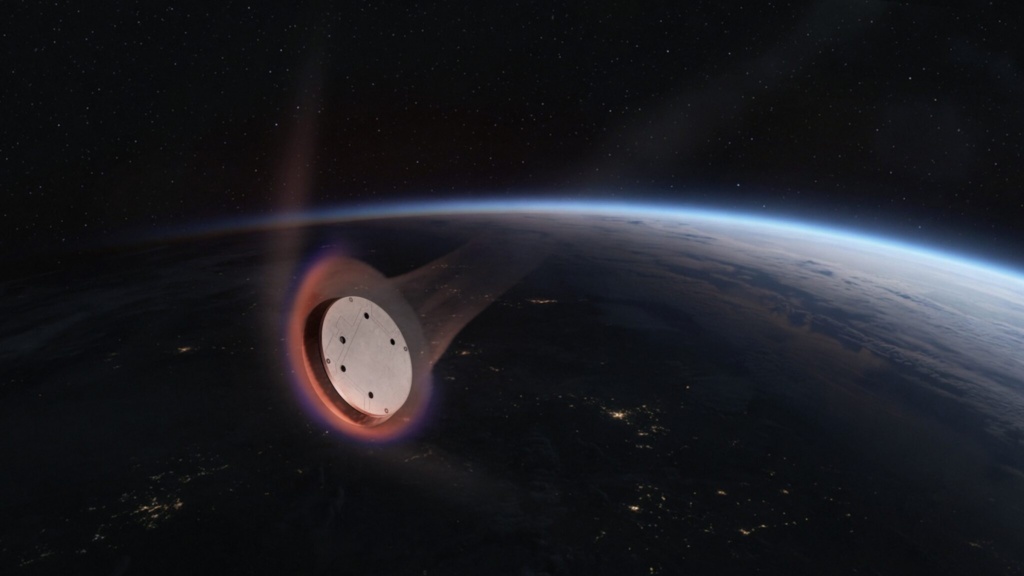
The contract, announced during Redwire’s second-quarter earnings call, represents the first dedicated commercial mission for SpaceX’s Starfall reentry capsule. The spacecraft made its debut in June with a ride-along experiment rather than a dedicated customer mission.
The planned flight would also represent the largest dedicated commercial microgravity research mission announced to date, according to the company.
SpaceMD Expands PIL-BOX Research
SpaceMD’s PIL-BOX technology is designed to crystallize pharmaceutical compounds in microgravity, allowing researchers to investigate improved drug formulations and potential new medicines.
The system has already been used extensively in orbit. Since 2023, 54 PIL-BOX laboratories have flown to the International Space Station, conducting crystallization experiments involving 45 different compounds. Another 12 units are scheduled to fly this year.
For the Starfall mission, SpaceMD is developing a new PIL-BOX configuration specifically designed to optimize research operations aboard the reentry vehicle.
“SpaceMD’s Starfall mission provides a major leap forward in scaling our microgravity capabilities,” Redwire Chairman and CEO Peter Cannito said during the call.
Cannito said the partnership with SpaceX would provide a new route for commercial microgravity manufacturing at greater scale.
SpaceMD CEO John Vellinger said the company expects the combination of its flight-tested payload technology and SpaceX’s transportation platform to increase research opportunities and accelerate pharmaceutical development.
“We’re dramatically expanding our ability to serve customers, increase research cadence, and accelerate the creation of life-changing therapies,” Vellinger said.
Reentry Capsules Target Pharmaceutical Research
Pharmaceutical development has become an important application for commercial reentry vehicles because they can provide controlled microgravity environments while allowing research materials to return to Earth relatively quickly for analysis.
Starfall also offers a potential alternative for commercial researchers as the International Space Station moves toward retirement. Dedicated free-flying missions could allow companies to schedule microgravity experiments without relying on ISS crew availability or station manifesting constraints.
For SpaceMD, the Starfall agreement provides an opportunity to move beyond individual experiments and increase the frequency and scale of pharmaceutical research conducted in space.
The companies did not disclose whether the contract covers additional Starfall missions or identify specific drug candidates that will be studied during the 2028 flight.