The warning drew on the physical reality of Earth orbit, which is not unlimited and includes crowded orbital inclinations containing thousands of spacecraft. When a satellite or other spacecraft breaks up in one of these orbits, it can create hazards for many other spacecraft, including crewed ones. When Russia destroyed a satellite with a missile in a 2022 test, it left a debris field that persists today, and the International Space Station has had to dodge it multiple times.
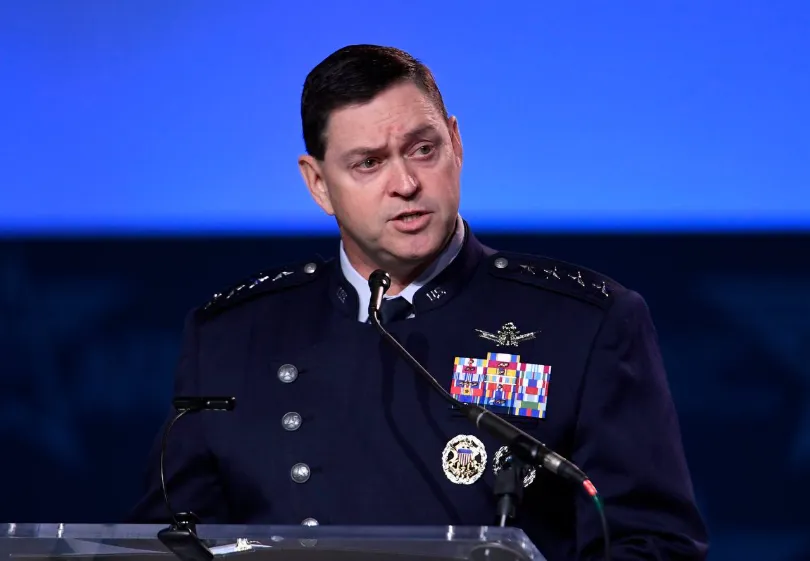
“If a conflict extends into space, none of us will be able to avoid the war zone. Unlike a combat zone in the air, land or sea, we will not be able to steer clear,” Saltzman said in remarks published by the Space Force. “Whether we want to be in the combat zone or not, orbital mechanics will put all of our space capabilities into the space war zone.” The destruction of even a single satellite in a conflict could create a runaway effect leaving parts of Earth’s orbit unusable.
Despite that warning, Saltzman stressed cooperation. “We will share the consequences; therefore, we should share the responsibility for a safe, secure and stable space domain,” he said, adding that “these widespread consequences of conflict in space should make deterrence a goal for all of us.” He has made similar appeals before, calling the defense of peaceful space use “the ultimate team sport” when introducing the Space Force’s International Partnership Strategy in 2025. “The domain is too big, too complex, too dynamic, for a single nation to secure alone,” he said at the time.
Saltzman has led the Space Force as it evolved into what he calls a “combat-credible” force. At the Space Foundation’s 41st Space Symposium in Colorado Springs, he pointed to the branch’s role in recent U.S. military operations, telling attendees, “We aren’t just talking about theories or plans anymore. We’re talking about real operational combat, space effects and the Guardians who deliver them.”
The speech stands as a significant public statement about the vulnerability of all space capabilities in any future conflict, framing the shared physical consequences of orbital war as a reason for shared responsibility and deterrence. In the same week, the incoming Space Force chief separately rejected the concept of arming private space operators as privateers, framing the rejection with a reference to Benjamin Franklin’s views from 240 years ago. Together the statements suggest a deliberate handoff message, signaling that the Space Force intends to keep military space power under government control even as commercial operators grow more central to national security missions.
Saltzman is set to retire in August 2026 after serving as the second Chief of Space Operations since 2022. President Donald Trump has nominated Lt. Gen. Douglas A. Schiess, Deputy Chief of Space Operations for Operations since November 2025, as his successor. At a recent confirmation hearing, Schiess defended the Space Force’s $71 billion budget request as necessary to deter China’s development of military space capabilities. “The 71.1 billion dollars that the president has asked for is exactly what we need,” Schiess said.