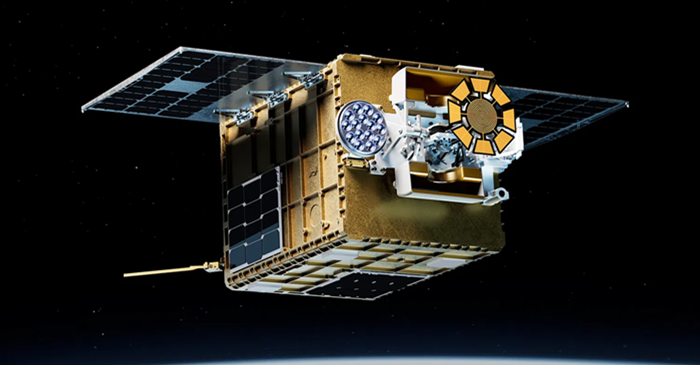
Starfish Space announced its next demonstration mission, Otter Pup 2, set to launch this summer. Building on the heritage of the Otter Pup 1 mission, Otter Pup 2 will conduct rendezvous, proximity operations, and ultimately attempt docking with another spacecraft, an unprepared satellite in low Earth orbit (LEO). If successful, this will be the first commercial satellite docking in LEO.
In addition, a successful docking of Otter Pup 2 would validate Starfish’s uniquely affordable approach to satellite servicing. Since the start of the Space Age, humanity has sent satellites into orbit knowing they’ll be on their own. With no affordable, practical options for servicing once in orbit, satellites must be entirely self-sufficien greatly constraining how they can be built, how much they can do, and how long they can last. Starfish Space was founded to change this paradigm, starting with the Otter satellite servicing vehicle. As a demonstration platform supporting Otter, Otter Pup 2 will allow Starfish to test key software and hardware technologies in orbit, paving the way for the company’s first Otter missions for Intelsat, the U.S. Space Force, and NASA in 2026.
“If successful, this mission will further validate our unique approach to satellite servicing: taking complex problems that were traditionally solved with hardware and instead solving them with software,” said Trevor Bennett, co-founder at Starfish Space. “This allows us to make Otters an order of magnitude smaller than other servicing vehicles, making them faster to build, faster to launch, and finally closing the business case for satellite servicing to scale across the space industry.”
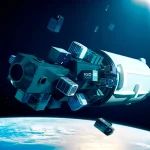
A set of key partners throughout the space industry have helped Starfish bring the Otter Pup 2 mission to life. The satellite bus was manufactured and integrated by Astro Digital, and the vehicle is equipped with electric propulsion thrusters from ThrustMe and the Argus camera system from Redwire. Additionally, Honeybee Robotics has contributed components that are part of Starfish’s Nautilus capture mechanism. The mission will launch aboard the Transporter-14 rideshare mission with SpaceX. A D-Orbit ION spacecraft will serve as the client satellite for the mission.