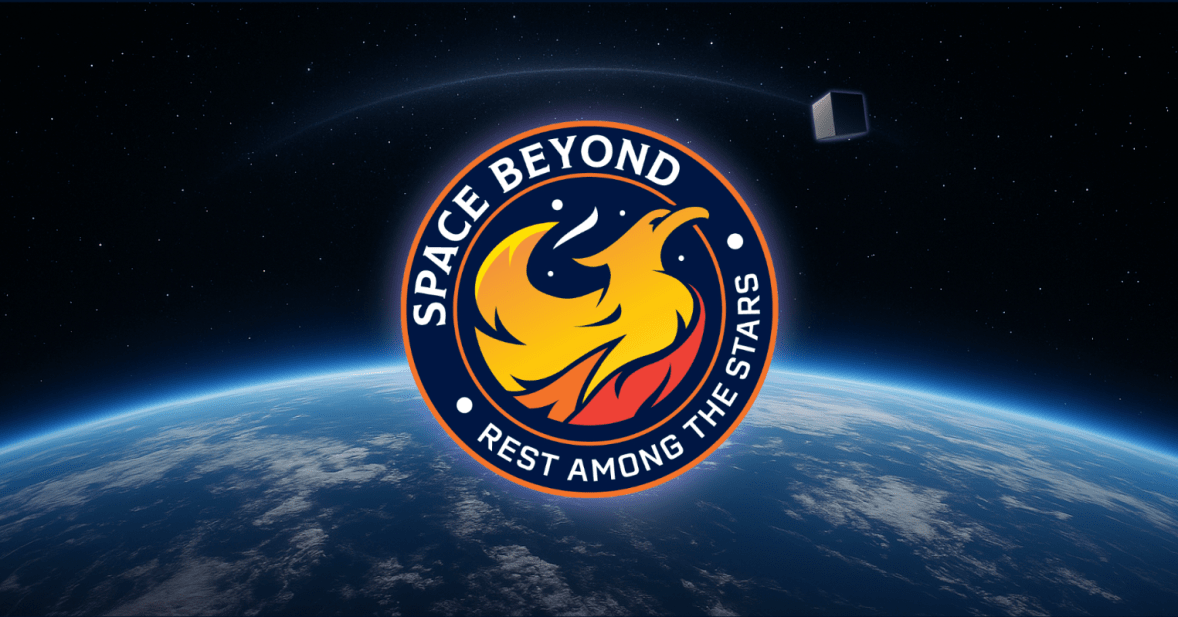
Space Beyond, a startup founded by former aerospace engineer Ryan Mitchell, plans to launch a CubeSat mission that will carry small portions of cremated remains into low-Earth orbit, leveraging lower launch costs and rideshare services to offer what it says is a lower-priced alternative in a niche space memorial market.
Mitchell, who previously worked on NASA’s space shuttle program and spent nearly a decade at Blue Origin, said the idea for Space Beyond’s “Ashes to Space” program emerged from personal experiences and from observing how access to space has become more affordable, in part due to the launch cadence and pricing set by SpaceX.
Space Beyond said on Thursday it had signed a launch services agreement with Arrow Science and Technology, which will integrate its CubeSat onto a SpaceX Falcon 9 rideshare mission scheduled for October 2027. The satellite is designed to carry up to 1,000 individual memorial capsules, each containing about one gram of cremated remains.
Sending cremated remains into space is not new. Companies such as Celestis have offered similar services since the 1990s, often at prices running into the thousands of dollars. Space Beyond said its lowest-priced offering will start at $249, excluding cremation costs, which are handled separately.
Mitchell said the lower pricing is made possible primarily by the rideshare model, which allows small satellites such as CubeSats to fly as secondary payloads at a fraction of the cost of a dedicated launch. He added that Space Beyond is self-funded and not seeking to maximise investor returns, allowing it to prioritise cost control.
The CubeSat will be placed into a sun-synchronous orbit at an altitude of about 550 kilometres, allowing it to pass over most of the Earth’s surface. Customers will be able to track the satellite using publicly available spacecraft tracking tools, the company said.
Space Beyond said the CubeSat is expected to remain in orbit for about five years before re-entering the Earth’s atmosphere and burning up, along with its contents. The company said it will not disperse ashes in space, citing concerns about orbital debris and spacecraft safety.
Mitchell said the limited capacity — roughly one gram per person — reflects both the physical constraints of the CubeSat format and the continued importance of mass limitations for launch providers.
Space Beyond has not disclosed how many customers have signed up so far. The company said it is continuing development work ahead of the planned 2027 launch.
TechCrunch