The rocket is responsible for sending the satellite into the sky, but who is responsible for sending the satellite accurately “in place”? As satellite constellation networking accelerates and multi-mission off-orbit deployments become the norm, the “last mile” delivery of satellites into orbit has become a core pain point that needs to be solved urgently for commercial aerospace.
Today we will learn about: 10 new tracks for commercial aerospace in 2025 – Orbital Transfer Vehicle (OTV).
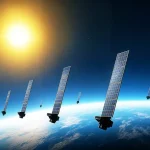
On November 29, 2025, SpaceX Falcon 9 performed the “Transporter-15” carpool launch, and 140 satellites were sent into the SSO orbit at one time. On the surface, this is an ordinary carpooling mission, but three space trailers “mixed into the team” and started their own multiple maneuvers after the Falcon 9 completed its mission, sending the satellites it carried to different orbits as needed. This also means that space trailers are moving from experimental applications to regular commercial deployment.
01
Why did space trailers become an “infrastructure-level” track?
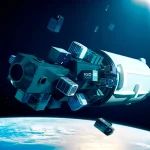
As launch costs continue to drop, ride-sharing launches have become the standard for global commercial aerospace. Whether it is Falcon 9 carrying hundreds of satellites at a time, or the one-rocket multi-satellite mission of Lijian 1, Ceres 1, and the Long March series of launch vehicles, they are essentially designed to improve the efficiency of orbit insertion and reduce satellite launch costs. But the shortcomings of ride-sharing launches are also obvious-all satellites are released uniformly in the same orbit. However, the mission requirements of each satellite are completely different. If the satellite can only be released in the same orbit, it will not be able to reach the expected position directly. It can only rely on its own propulsion system to complete the orbit change and make up for the missing section. As a result, satellites need to carry more propellant, reserve more structural space, and configure more complex attitude control and propulsion units. This not only directly affects the life of the satellite, but also increases the cost of a single satellite and brings more risks. It can be said that the rocket has completed the “go to space” step, but the “last mile” of satellites’ accurate orbit is still a pain point in the industry. The space trailer solves this problem. In essence, it is an orbital transfer vehicle that can be understood as a “shuttle bus” in space. After the rocket sends the “trailer + satellite” combination into the initial orbit, the space trailer starts its own propulsion system and cruises in space for weeks or even months, sending the satellites it carries to the designated location one by one. For future large-scale constellation deployment, the value of a space trailer does not lie in a single flight, but in its ability to withstand long-term high-frequency requirements such as cross-orbital transportation, constellation network repair, and off-track launch. When the number of satellites is planned on a scale of thousands or tens of thousands, the rocket is responsible for sending the satellites to the sky, and the space trailer is responsible for “delivery”. The two naturally form a clear division of labor.
02
Space trailers, rocket upper stages, on-orbit services
What is the difference between the three?
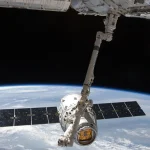
Space trailers, rocket upper stages, and on-orbit servicing spacecraft are often confused, but their positioning and missions are actually completely different. The space trailer is a type of independent spacecraft that operates in orbit for a long time and can perform multiple ignitions and orbit adjustments to provide “last mile” orbital distribution services for multiple satellites. It can operate in orbit for weeks or even months, supporting multi-batch and multi-customer orbital transfer tasks. It is an infrastructure-based capability for orbital logistics. The upper stage of the rocket is part of the launch system. It has a short life and a limited mission window. Its main task is to send the satellite from the launch orbit to the target orbit. The upper stage is usually tightly coupled to the launch vehicle, operates for periods ranging from hours to days, and is discarded once the maneuver is complete. In a ride-sharing launch environment, the upper stage is limited by size, cost and flexibility, making it difficult to undertake complex, multi-batch orbital distribution tasks. On-orbit service spacecraft are more like “orbit maintenance workers”, equipped with robotic arms, visual navigation and docking systems, and can perform highly complex tasks such as on-orbit life extension, on-orbit maintenance, and debris clearance. They have long mission cycles, high technical thresholds, and serve mature satellites already in orbit, rather than the initial distribution of newly launched satellites.
03
Global space trailer market
Currently, the space trailer market is still in its infancy. According to ResearchAndMarkets.com’s forecast, the market size will be approximately US$1.31 billion in 2024, growing to US$1.53 billion in 2025, with a compound annual growth rate of 17.1%. By 2029, the market size is expected to reach US$2.84 billion, maintaining an annual growth rate of more than 16%. Factors driving this growth include: an increase in global ride-sharing launches, increased demand for the deployment of giant communication constellations, rising demand for transportation and logistics capabilities in deep space, and the increasing trend of establishing logistics chains between the moon and the earth. From a regional perspective, North America is still the largest market for space trailers, while the Asia-Pacific region is expected to be the fastest growing region in the next few years. The United States: Commercialization is progressing the fastest. Many commercial companies have sent space trailers into space. This trend can be clearly seen from the launch record of SpaceX. At the same time, NASA will allocate funds to six companies, including Blue Origin, ULA, and Rocket Lab, in 2025 to support the early research and development of orbital transfer vehicles, covering multiple directions from low-Earth orbit transportation to pre-deployment of deep space missions. Europe: ESA promotes a “standardized rail logistics system” with the core goal of building a sustainable rail economy. A number of space cleaning and orbital logistics projects led by ESA include the capacity building of orbital transfer aircraft. Japan, South Korea, and India: They all use small orbital transfer vehicles as their entry point, and then gradually expand to larger-scale and higher-complexity orbital services. China: Already possesses systematic orbital transfer capabilities. The national team’s “Expedition” series of upper stages have rich in-orbit experience and can achieve multiple ignitions and formation-based mission scheduling, covering multiple types of orbital injection capabilities such as LEO, MEO and GEO.
04
Major global business players
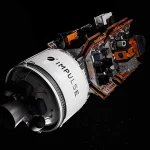
With the rapid development of the space trailer market, companies around the world are accelerating their deployment on this track. The following are some representative domestic and foreign companies: (1) Major foreign players Momentus (USA): Established in 2017, it provides commercial satellite platforms and on-orbit infrastructure services, including space transportation, payload hosting and on-orbit services. Its core product is the Vigoride orbital transfer vehicle, which provides “last mile” orbital transportation solutions for ride-sharing satellite launches. So far, Vigoride has completed three launches and signed multiple payload carrying contracts with NASA, DARPA and SpaceWERX, the innovation department of the U.S. Space Force. Impulse Space (USA): Established in 2021, it focuses on the development of orbital transfer vehicles and deep space transportation technology, and owns Mira and Helios. Among them, Mira has demonstrated stable cargo capabilities in two low-Earth orbit transportation missions in 2023 and 2025; Helios is still in the research and development stage and will be oriented to farther orbits and deep space transportation missions in the future. D-Orbit (Italy): Founded in 2011, it is building space logistics infrastructure to simplify satellite launches, cross-orbit transportation, orbit maintenance and refueling, and end-of-mission disposal. Its orbital transfer vehicle ION can accurately deliver satellites into target orbits and host payloads for on-orbit testing. Currently, ION has successfully completed 20 missions. ExoTrail (France): Founded in 2017, it provides end-to-end space transportation services. Its self-developed spacevan orbital transfer vehicle has completed its first flight on the SpaceX Transporter-9 mission in November 2023, and the second spacevan is scheduled to be launched into space with the Transporter-16 carpool in early 2026. The company also plans two low-Earth orbit missions in 2026 and two geosynchronous orbit missions from 2027, one of which is supported by the French National Center for Space Research (CNES). UARX Space (Spain): Established in 2020, it aims to provide space transportation services from low-Earth orbit to non-traditional destinations such as the moon and deep space. The business covers space logistics, ride-sharing transportation and dedicated launch services for small satellites. It also provides satellite deployment services to ensure the smooth completion of missions. Its independently developed OSSIE space trailer is scheduled to make its first flight in 2026. (2) Major domestic players 1. Space trailer Infinite Aerospace: Founded in 2019, it is one of the first domestic companies to systematically deploy space trailers. Its self-developed “Space Bus” series of on-orbit service aircraft can achieve full-orbit transportation from 200km to 36,000km, solving the “last mile” problem of current satellite deployment. In the future, the business areas of on-orbit life extension, space transportation and load hosting are also planned. In addition, Infinite Aerospace’s first “Space Bus (IH-1)” is scheduled to fly for the first time in 2026, and is currently in a leading position in the commercialization of domestic space trailers. Round trip to Jiuxiao: Established in 2024, it is a space shuttle service provider. Its route is more like a fusion of “upper stage + space trailer”. The goal is to provide multi-satellite networking/network repair services, multi-star off-orbit space carpooling services, and high-orbit direct delivery services through self-developed upper-stage orbit transfer vehicles with multiple starts, large-scale orbit transfer control, and long-term on-orbit operation. 2. Rocket upper stage (trailer-like product) Galaxy Power: Founded in 2018, it is the first domestic private rocket company to achieve continuous, stable and successful launches. Its Eros orbit-retaining test platform is adaptively modified based on the final stage of the Ceres-1 launch vehicle and has the capability of long-term operation in orbit. It has completed two successful launches on June 6, 2024 and September 5, 2025. Interstellar Glory: Founded in 2016, it is a high-tech enterprise that provides commercial launch vehicle system solutions. The Hyperbolic 1 Yaoyi launch vehicle adopts a three-solid + liquid upper stage configuration and successfully carried out its first flight on July 25, 2019, carrying two satellites, three final stage payloads and two commercial counterweights. Tianbing Technology: Founded in 2019, it is an enterprise developing a new generation of liquid rocket engines and medium and large liquid launch vehicles in my country’s commercial aerospace field. Tianlong 2 adopts a three-stage configuration, and the last stage has the capability of multiple maneuverable orbit changes, which can support the one-rocket multi-satellite orbit deployment plan. So far, a total of 1 launch mission has been carried out. Tianlong 3 is a two-stage rocket that can be equipped with an upper stage according to mission requirements. It is planned to make its first flight in December 2025. New Rocket Company: In addition to several leading companies, some domestic start-ups are also working towards upper-stage products, such as Zhihang Technology, Shimmer Navigation, etc., which have begun to deploy upper-stage products with multi-satellite orbiting capabilities.
05
Industry bottlenecks and future opportunities
Although the attention of space trailers is constantly rising, overall, this direction is still in the early stage of exploration. There are obvious immaturities in propulsion capabilities, navigation accuracy, mission organization methods, business models, etc. However, these shortcomings themselves also indicate that there will be greater room for improvement in technology and models in the next few years. (1) Three major industry bottlenecks 1. The propulsion system needs to be upgraded urgently, and high-performance chemical propulsion is the core bottleneck. Currently, most foreign mainstream space trailers (OTV) use chemical propulsion systems with greater thrust to quickly complete orbital transfer and transportation tasks. In scenarios that require long-term on-orbit maintenance or multiple maneuvers, electric propulsion will also be considered to balance efficiency and fuel consumption. In contrast, the high-performance, reusable, and long-life space chemical propulsion system is a brand-new technical route. It is significantly different from the current power system that mainly meets the single orbit change requirements of satellites. Key technological breakthroughs are urgently needed. 2. The technical threshold for orbital transfer capability and autonomous navigation control (GNC) is high. The essence of the space trailer (OTV) is the “space version of autonomous driving + handling robot”. At present, reliable relative navigation and perception capabilities are still immature. The accuracy of GNSS alone cannot meet the demand. Vision, lidar, reflectors, and even ground measurement and control data need to be combined to improve reliability. The autonomous GNC system is very difficult and has extremely strict requirements on the redundant design, fault tolerance and real-time response of the algorithm. This challenge is even more prominent when facing non-cooperative targets. 3. The business model has not yet been finalized. Many satellite companies still follow the traditional idea of ”satellites come with their own thrusters” and are not highly dependent on towing services. At the same time, there is a lack of unified pricing methods, service levels and standard contracts in the industry, and the commercial insurance system is not perfect. This makes customer education costs high and profit methods are still being explored. In other words, the value is clear, but the market structure is still unclear. (2) Four major future opportunities and trends 1. The deployment of mega-constellations will promote space trailers to become “standard infrastructure.” Large-scale constellations such as Starlink, GW State Grid, and Amazon Leo will enter the most intensive networking stage in the next few years. Taking Starlink as an example, the new generation constellation needs to deploy thousands of satellites every year and completely relies on the satellites’ own thrusters for orbit adjustment. There are obvious shortcomings in cost, lifespan and efficiency. The space trailer is expected to become an important part of the constellation “assembly line” and become a necessary equipment for high-frequency deployment. 2. “Launch + trailer” integrated service will become the mainstream model. In the future, rocket companies will most likely integrate launch, initial orbit and final orbit into a complete service package to form a more standardized “orbital logistics product.” Similar to the transfer system in ground logistics, the space field will also have its own “collection and distribution nodes” and become an important competitive point for launch services. 3. Standardized interfaces promote “one towing multiple satellites and precise investment in different orbits” to become the norm. As satellite manufacturing tends to be batch-oriented, the interfaces and load structures of trailers will gradually be standardized, such as universal docking rings, modular cabin sections, and quick locking structures. In this way, trailers do not need to be customized for each customer, and “one tow, multiple stars” will become more routine. 4. Reusable space trailers will reshape the cost structure. The industry generally believes that when trailers can replenish propellant, perform on-orbit maintenance, and replace vulnerable parts, their service life will be significantly extended and orbital transportation costs will also be significantly reduced. Similar to the cost revolution brought about by rocket recyclability, the orbital logistics system will also usher in its own “reusable stage.” By then, the trailer will become a “track node” for long-term stable operation and have strategic infrastructure value.
Conclusion
In the next 10 years, space trailers will become the core node of the space logistics system. Whether it is the deployment efficiency of commercial constellations, the cost structure of deep space missions, or the utilization of space resources, they will all be reshaped by “orbital transfer capabilities.”