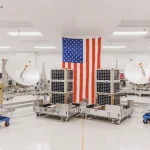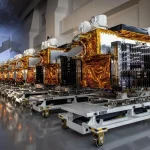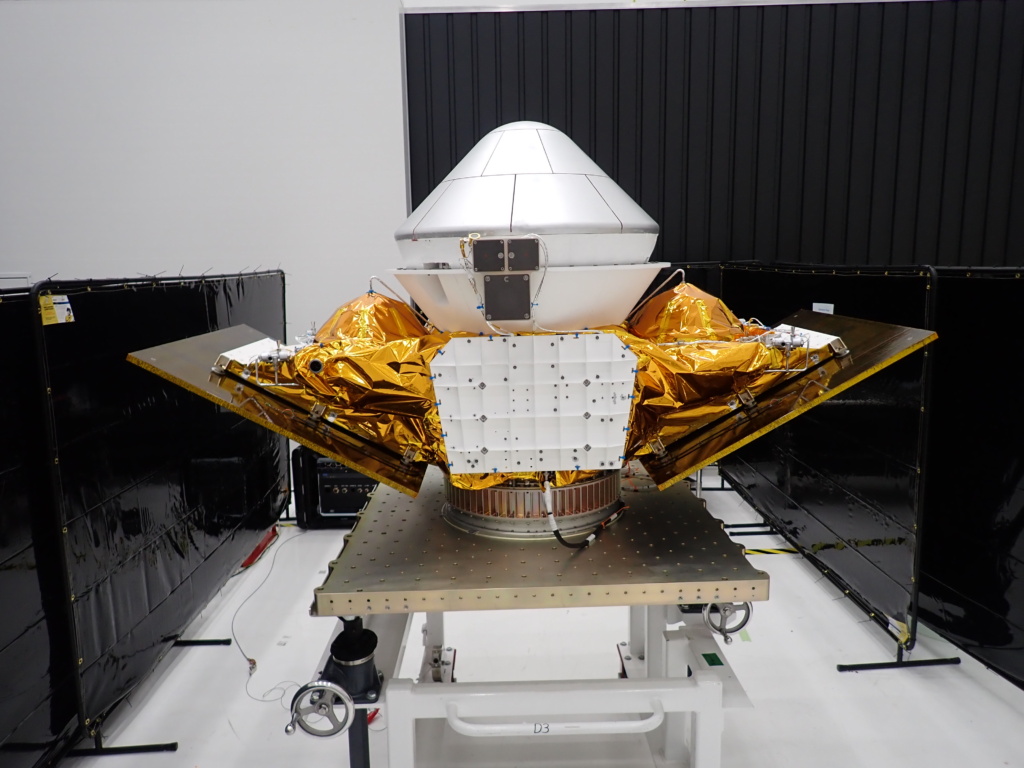
Varda Space Industries is preparing for its fifth reentry mission, marking the first time the company will operate two spacecraft simultaneously in orbit. The mission is scheduled to launch aboard SpaceX’s Transporter-15 rideshare, joining the firm’s existing W-4 spacecraft already circling Earth.
The California-based startup is ramping up operations to increase its launch cadence, with plans to begin sending two spacecraft per launch cycle starting in 2026. President and cofounder Delian Asparouhov said the company ultimately aims to reach a weekly launch rate, supported by automation and streamlined processes.
“To get there, we need to ensure our ~175-person team can handle building and launching one spacecraft while operating another in orbit and processing returned payloads,” Asparouhov told Payload. “Our cadence targets will require automation, allowing fewer employees to manage a much larger fleet.”
Varda’s reentry service—which returns materials manufactured in space to Earth—has drawn strong customer demand, with flights booked into 2027, according to Asparouhov. The company’s growth comes as businesses look for alternatives to the International Space Station (ISS) ahead of its expected decommissioning.
Last week, Varda announced a new partnership with United Semiconductor, a company that previously worked with the ISS National Lab on semiconductor manufacturing experiments.
“Space stations are a great place for early basic research,” Asparouhov said. “But as you scale, you need autonomous platforms that allow for much higher cadence and much lower cost.”
Alongside its manufacturing customers, Varda also conducts pharmaceutical research in orbit, testing how microgravity affects drug formulations. The company hopes to transform treatments that currently require long intravenous drips into simple syringe-based delivery.
“At a high level, the types of drugs we like to work on are those where the formulation can have a huge impact on patient experience,” Asparouhov said. “We expect to have drugs in patients’ hands before the end of the decade.”