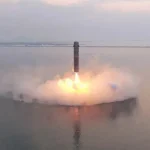
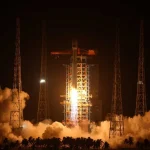
In the past few years, rockets have been the industry that has attracted the most public attention in the field of commercial aerospace: there is a lot of financing and high popularity, and everyone says that rockets are the biggest shortcoming of commercial aerospace at present. But the truth is – Rockets are not the biggest bottleneck in the industry.
Let’s talk about a heart-wrenching question: Where is the biggest “stuck point” in China’s commercial aerospace industry?
01
Current status of China’s commercial aerospace development
The private rocket industry has been very popular recently. In the past month, three companies, Star Glory, Galaxy Power, and Tianbing Technology, have raised a total of more than 5 billion yuan in financing, focusing all industry attention on the field of “large capacity, recyclable” rockets.
Even extending the timeline, in the past few years, Rocket Company’s trends have always been the focus of attention from the industry, media, and local industrial investment. Whether it is the ignition test of a new engine, the launch of a commercial rocket into orbit, or new progress in the test of a recyclable rocket… Rockets, with their technical symbolic significance as a major power weapon and their ability to drive the high-end manufacturing industry chain, have deservedly become the “top class” of commercial aerospace in the past few years.
In addition, the two tenders for the Qianfan Constellation launch service of Yuanxin Satellite this year ended in “failure”, which has intensified the urgent demand for “large capacity, low cost, recyclable” rockets in the domestic commercial aerospace field. Nihao Space also discussed this situation in its previous article “The “Star Network” is booming, and the most injured one is the Yuanxin Satellite.”
In the first decade of commercial aerospace development, we have experienced the construction of high-end manufacturing and low-orbit satellite Internet constellation networking capabilities. As Xingwang and Qianfan have started networking, China’s commercial aerospace is going through a critical stage from “technical research” to “project implementation”.
The unsatisfactory “launch progress” has triggered a “fever” in rocket research and development throughout the industry. In 2024, China’s private rocket companies won 30% of the financing quota in the national commercial aerospace field in the capital market, but they ignored the structural problem that rocket launch services accounted for only 2.24% of the revenue of the mature commercial aerospace industry.
Are rockets really a “stuck point” in China’s commercial aerospace development? Or to ask more deeply, can China’s commercial aerospace industry take off if the problem of rockets is solved? The answer is no.
02
Satellite applications: mismatch between “needs” and “capabilities”
From October 18 to October 20, 2025, China’s private rocket company Blue Arrow Aerospace completed the fueling joint training and static ignition test of the Zhuque-3 first flight rocket in Jiuquan, and entered the countdown to the first flight. According to the official announcement of Blue Arrow Aerospace, the first flight of Zhuque 3 will be accompanied by a recovery test, which means that if the test flight and landing are successful, China will truly have its first large-capacity recyclable rocket.
In addition, Tianlong 3 of Tianbing Technology and Lijian 2 of China Aerospace Science and Technology Corporation will both complete their “first flights” in 2025. Many large recyclable rockets, including Oriental Space’s Gravity 2, Galaxy Power’s Pallas 1, and Interstellar Glory’s Hyperbola 3, have also announced that they will be “capable of first flight” by the end of 2025.
It seems that by the end of the year, recyclable rockets from private rocket companies will gather together for their first flights. As long as the technical roadmap is determined and there are mature application examples, it is only a matter of time before China’s recyclable rockets are commercialized. The biggest problem is: our application market does not yet have matching service capabilities. A shocking fact is: So far, China has launched more than 1,000 satellites and planned dozens of constellations. However, except for successful models such as “Starlink” for communication satellites, the data utilization rate of most earth observation and remote sensing satellites does not exceed 5%! This is not only a huge waste of resources, but also a “breaking point” in the entire commercial aerospace industry chain. Although most of our commercial remote sensing satellites have been able to achieve sub-meter-level commercial service capabilities, due to the limited number of ground stations, poor on-board data processing capabilities, and insufficient communication capabilities, there is a lack of “instant remote sensing” capabilities and data waste, and there is a mismatch between “capabilities” and “demands.” This is a typical lack of judgment on the application market. At present, local governments and enterprises are still keen on planning constellations and launching test satellites, but how many of them have clear application scenarios and clear business models? Many times, we fall into the vicious circle of “launching stars for the sake of launching stars”: the primary purpose of launching a satellite becomes to prove “I have the ability to launch satellites” rather than “what problems can the satellite I launch solve”.
03
Why is it so difficult to apply?
The stuck point of “application” is far more complicated than technical problems. Behind it lies the deep dilemma of the market, ecology and thinking.
1. There is a “huge gap” between data and demand
Not easy to use: What the satellite transmits back is raw remote sensing data, which is tantamount to a “book from heaven” for potential users in agriculture, finance, logistics and other fields. What they need is “information” or even “decision-making advice” that can be directly integrated into their business processes, such as “which area of corn may be affected by pests and diseases next week”, rather than a complex spectral image.
Not timely: Key scenarios such as floods, fires, and ship dynamics require near-real-time information. However, the chain from downloading, processing, correction to distribution of data is too long. By the time it reaches users, the prime time for decision-making has already been missed.
Unstable: It is difficult for a single constellation to guarantee global, all-weather, and dead-end data services. For business customers, the stability and reliability of services are the lifeline. A loss of key data may lead to permanent loss of customers.
2. The business model is immature and value verification is difficult
To convince a farmer to pay for satellite monitoring services, you need to clearly calculate how much production it can increase and how much cost it can save. This “proof of value” process is long and arduous. In contrast, although To G’s orders are easy to get, it can also easily make companies dependent and lose the ability to polish market-oriented products.
3. The industrial ecology is weak and the “middle layer” is missing
Between the original “space data” and the terminal “industry applications”, there is a lack of a huge “middleware” industry. These companies are “translators” and “value-added service providers” that connect heaven and earth. They are responsible for processing raw data into standardized and easy-to-use information products. The prosperity of this ecosystem directly determines the breadth and depth of application development.
04
How to open up the “Ren and Du” of the application?
To truly break the situation, the attention of policy, capital and industry must be resolutely tilted towards the “application side”.
1. Build a “national satellite data platform” to release data dividends
This is the most critical and basic step. It is recommended that the state take the lead in establishing a unified “national satellite data platform” to aggregate, organize and open all types of civilian satellite data (especially basic data) for free or at low cost.
This seems to be giving up short-term interests, but in fact it is “building a road” for the entire industry. Just as the rise of the Internet relies on the free circulation of basic information, the outbreak of commercial aerospace must first allow data to flow. When entrepreneurs, students, and researchers can easily obtain and use real space data, unlimited innovative applications will spring up like mushrooms after a rain.
2. Cultivate the “data middleman” ecosystem and build a bridge between heaven and earth
Policies should encourage and support those “data middlemen” who focus on data cleaning, algorithm development, and model construction. They are the “catalysts” that activate the application ecosystem. Investment institutions should also shift their focus from “rockets” and “satellites” to innovative companies that “use satellites”.
More importantly, practitioners themselves must transform from the role of “scientific researchers” to “service providers.” Investigate the market with business personnel and understand the needs before you can adjust “capacity building” in a targeted manner so that technology can truly serve users instead of sticking to a certain technical parameter.
3. Promote a “begin with the end in mind” procurement model, from “buying satellites” to “buying services”
As the most important initial customer, the government can change its procurement thinking. Shift from purchasing satellite hardware and launch services to purchasing data services themselves. For example, the Ministry of Natural Resources does not purchase satellites, but instead purchases “National Quarterly Land Use Change Analysis Report”; the Ministry of Transportation purchases “National Key Port Ship Real-time Dynamic Information Service”.
This approach can force satellite operators to no longer just focus on technical indicators in the sky, but to truly lean down, understand the needs of ground users, and think about how to provide stable, efficient, and easy-to-use services.
4. Strengthen the popularization of science on satellite applications, and “disenchantment” is the beginning of industrialization
In the past, the narrative style of the aerospace industry as a “national treasure” would invisibly create a “sense of distance” between the public and the industry; the once “highly confidential” nature made many talents who wanted to join the aerospace industry choose to “stay away”; Nihao Space’s industrial research has also been labeled as a “leak” more than once.
For commercial aerospace to serve the people, it not only needs to “disenchant” the public, but also requires practitioners themselves to first remove the “national halo” above their heads.