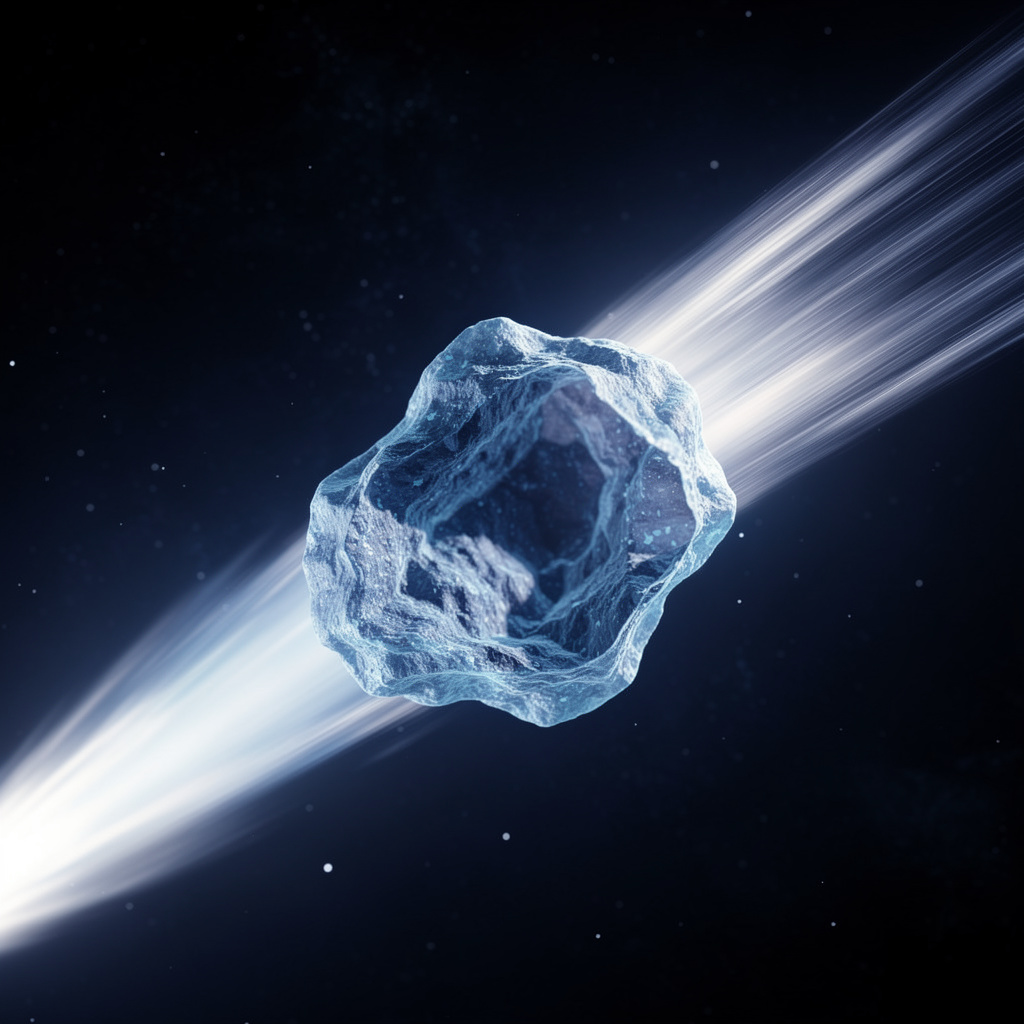
The comet is estimated to be more than 10 billion years old, several times older than the solar system itself. It is the third confirmed interstellar comet ever detected, placing it among a small group of objects that originated outside our own planetary neighborhood.
The Webb data measured the chemical makeup of the comet’s water, identifying both the elevated deuterium content and the depressed carbon-13 signature. The deuterium-to-hydrogen ratio is the central finding, exceeding the values seen in solar system comets by more than a factor of 30. The low carbon-13 level is also described as anomalous relative to comets formed within our solar system. Together, the measurements describe a body chemically distinct from comets that share our Sun’s origins.
The age estimate of more than 10 billion years reinforces the comet’s status as a relic from a period predating the formation of the solar system. The observations were released to the public on June 22, 2026.
The finding challenges the long-held assumption that comets in our solar system are a representative sample of comets across the universe. If 3I/ATLAS is more typical of comets formed elsewhere, then our own comet family may be the chemical exception rather than the rule. The result carries implications for theories of how water reached early Earth, many of which depend on the delivery of water by comets. A comet population with a markedly different water chemistry would complicate the picture those theories rely on.
3I/ATLAS is the third interstellar object ever detected, and continued analysis of the Webb data will further define how its water chemistry compares with comets that originated in our solar system.