Space technology start-up Atomic-6 is preparing for an unusual milestone: hoping one of its protective tiles is struck by space debris during its first flight, a test the company says is essential to proving a new approach to shielding satellites in orbit.
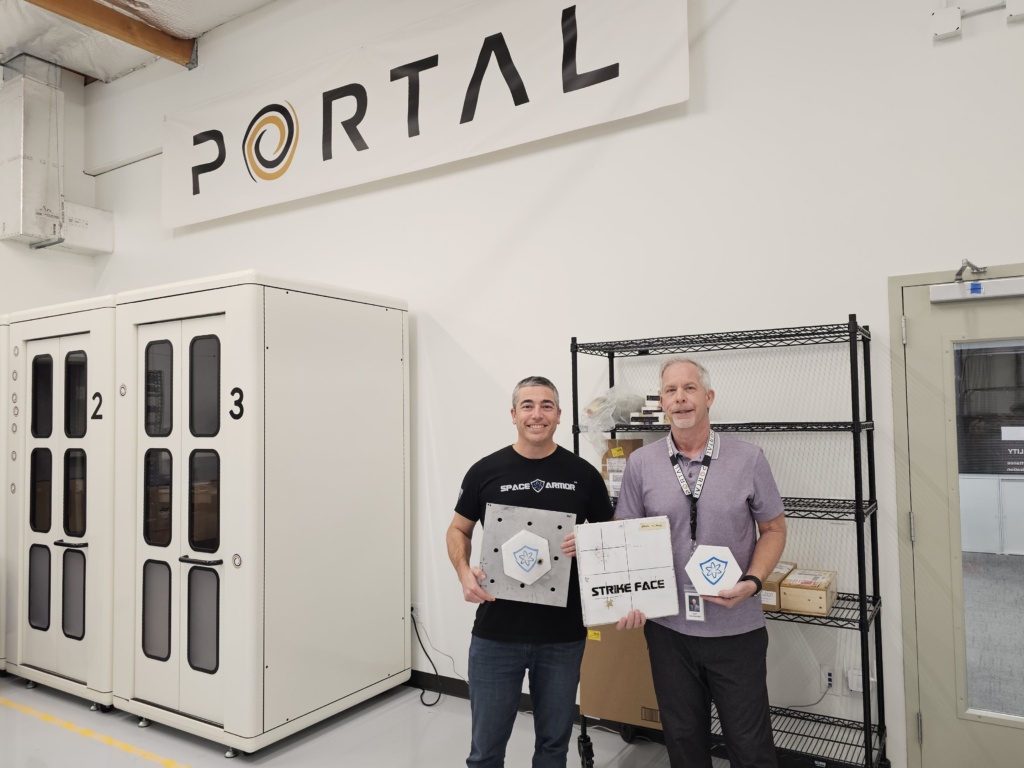
The company’s Space Armor tile system is scheduled to fly for the first time in October aboard a SpaceX Transporter-18 rideshare mission, protecting its first commercial customer, Portal Space Systems’ Starburst-1 satellite. Atomic-6 Chief Executive Trevor Smith said the technology’s value can only be demonstrated if it absorbs an actual impact in space.
“I hope [Portal Space CEO Jeff Thornburg] gets hit in just the right spot,” Smith told Payload. “We won’t see the impact because it’s so fast, but we will see a hole in it afterwards… Between the camera and the telemetry, we should be able to confirm it gets hit and nothing bad has happened.”
Space debris has become a growing threat in Earth orbit, with even millimetre-scale fragments capable of disabling spacecraft at orbital speeds. Recent incidents involving damage to high-profile missions have underscored the risks to satellites valued in the hundreds of millions of dollars.
Atomic-6’s Space Armor system consists of hexagon-shaped tiles designed to absorb impacts without generating secondary debris. The version flying on Starburst-1 is the “Light” configuration, intended to protect against micrometeoroids and debris up to 3 millimetres in size. A heavier “Max” variant, designed to withstand particles up to 12.5 millimetres, is being developed for human-rated systems.
Smith said the tiles are not meant to cover an entire spacecraft but to shield critical components such as avionics and fuel tanks. By preventing debris fragmentation, the system could also reduce collision risks for neighbouring satellites in crowded orbits.
The company has begun discussions with insurers, including underwriters linked to Lloyd’s of London. “Once this is flight-qualified, they’re interested in offering a discount on the premium… because it cuts the risk,” Smith said.
Beyond satellites, Atomic-6 is exploring applications for crewed missions. “We would love to implement this into astronaut suits,” Smith said, adding that the technology could improve protection against untrackable micro-impacts while reducing weight.
If the October mission delivers the hoped-for — and carefully monitored — strike, Atomic-6 believes it could help open a new market for in-orbit protection as congestion and debris hazards continue to rise.