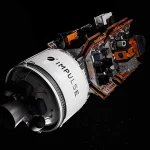
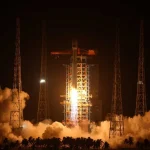
In the past two years, a phenomenon worthy of attention has emerged in China’s commercial rocket industry. More and more rocket companies no longer insist on building the engine first, but choose to directly purchase mature engines and quickly promote the development of the entire rocket. Typical representatives are the three companies that are currently in the limelight: Jianyuan Technology, Yushi Space’s Longyun engine of Kyushu Cloud Arrow, and YF-102 developed by Aerospace for space navigation. This also brings up a new question: when commercial rockets enter the era of satellite Internet, will engines still be the core barrier of a rocket company?
01
Time is more important than engine
It usually takes five years to develop a mature liquid rocket engine from the concept to the conditions for engineering application. If the target is a reusable engine, recovery technology verification, life testing and other links need to be added, and the time may be further extended to 6-10 years. Therefore, commercial rocket start-ups established in recent years almost always build rockets first and outsource the engines. The reason is simple, the window of satellite Internet waits for no one. So far, Qianfan Constellation has completed 9 batches of network launches, with a total of 162 satellites launched. According to the plan, the Qianfan Constellation will carry out 9 launch missions by the end of 2026, and send 162 satellites into predetermined orbits, increasing the total number of satellites in orbit to 324, completing 50% of the 648-satellite plan in the first phase. The GW constellation is also accelerating. Since the first batch of networking in December 2024, it has currently launched the 21st group. From the initial group every two months, now one group is launched in as little as three days. These two major constellations alone have planned more than 28,000 satellites. The situation on the launch side is that these orders are being quickly locked in by leading companies. Three commercial rocket companies, Blue Arrow Aerospace, Tianbing Technology, and China Science and Technology Aerospace, have obtained the Qianfan Constellation’s “18 satellites in one rocket” batch launch service contract. Once the leading company takes the lead in developing recyclable large rockets, reduces costs, and increases transportation capacity, even if the following companies can fly, they may no longer have a market. This is why those startups choose to bypass self-developed engines, because by the time they are developed, most of the golden window for networking may have passed. What they are betting on is a time difference.
For many start-up rocket companies, the biggest pressure now is not to catch up with technology, but to catch up with time. Because satellite Internet not only brings opportunities, it may also be the first real industry convergence of Chinese commercial rockets.
02
Why does the outsourced engine route appear?
From a business logic point of view, outsourcing engines is not a wild idea. The aviation industry has long been playing this game. Boeing and Airbus are the world’s largest aircraft manufacturers, but they do not make their own engines. Instead, they purchase them from professional power companies such as General Electric and Rolls-Royce. When the industrial chain matures to a certain extent, division of labor is the result of maximizing efficiency. But the problem is: it took the aviation industry decades to form a stable division of labor, and commercial rockets are still in the high-speed iteration stage. According to the latest statistics from Nihao Space, as of June 1, 2026, there are 27 domestic commercial aerospace companies with the ability to develop self-developed liquid engines, with a total of 51 engines under development or in active service. However, not many products of powertrain companies have gone through the complete closed loop from testing to delivery. Jiuzhou Yunjian’s Longyun engine has completed its first flight with the Long March 12A, and has completed the sea flight-recovery test with the Yuanxingzhe 1; the YF-102 series of engines launched by the Aerospace Development Corporation under the Sixth Academy of Aerospace Science and Technology for commercial aerospace, after promoting the first flight of Tianlong 2, has become the power choice for Zhihang 1, Lijian 2, Long March 12B and other rockets. In other words, domestic commercial aerospace has already begun to take shape, with some people focusing on building engines and others focusing on building rockets. For a start-up company with limited funds, it is a reasonable calculation to put all the limited funds and talents into integration and market development, at least on paper.
However, it needs to be emphasized that whether this division of labor model can be established depends on the maturity of the industrial chain rather than the correctness of the theory.
03
Where are the risks?
Although the logic of outsourcing engines is valid, there is a premise that the industrial chain is mature enough and the supply and demand relationship is stable enough. But today’s China’s commercial aerospace industry is far from reaching the stage of mature division of labor in the industrial chain. The first problem is that the engine itself is still being iterated like crazy. Thrust, number of reuses, and cost are all being rapidly optimized. One hundred liquid oxygen methane engines of Blue Arrow Aerospace have been rolled off the production line, covering Tianque’s full series of iterative models; Galaxy Power uses 3D printing to improve engine performance by more than 3%, reduce thrust chamber production costs by 15%, and shorten production cycles by 30%. And relying on external engines, the iteration speed and supply priority are all determined by the power system company. What’s even more fatal is that the entire rocket design has been locked by the engine parameters from the beginning. If you want to switch to a self-developed engine later, the amount of changes is no less than redesigning a rocket. The second question is the cost of homologous power. When these rocket companies all buy the same engine, the only thing that can compete is the ability to integrate the entire rocket, such as whether the structure is light enough, the cost is low enough, and the recovery is stable enough. Moving space is extremely limited. Head rocket companies with the ability to develop engines in-house can also perform more in-depth collaborative optimization between the power system and rocket body design. This system-level advantage is difficult to obtain simply by relying on outsourcing. The third problem is that the market simply cannot support so many companies. At present, leading rocket companies such as Blue Arrow Aerospace and China Science and Technology Aerospace are rushing towards the Science and Technology Innovation Board. Capital is pouring in like crazy, but the incremental demand in the launch market is limited. Those who can truly survive must be the first companies to develop low-cost, large-scale and industrialized launch capabilities. For the latter, even if the rocket can fly, there may be no market for it. Because of the large orders for satellite Internet, there is no need for so many rocket companies. The engine is not the core problem, missing the window is.
Another issue that is easily overlooked is supply chain dependence.
If a large number of rocket companies focus on purchasing a few engines in the future, then the engine companies will actually control the core production capacity resources of the industry. Once production capacity is insufficient, delivery delays, technical route adjustments, etc. occur, the pace of downstream rocket companies will also be affected.
04
What to fight for next round?
Buying engines and building rockets is essentially to seize the golden window of satellite Internet. At this stage, speed is more important than completeness. Therefore, the real route of many companies is to “outsource first, then develop in-house”. They use mature engines to complete the first flight and commercial verification. After receiving orders and establishing a firm foothold, they will go back to make up for the power system lessons. But the problem is that the rocket industry will fight to the end to see who can survive first and who can continue to lower costs and increase launch frequency. The thrust-to-weight ratio, reuse life, and recovery conditions behind this are all deeply tied to the engine. SpaceX can push all the way to starships by holding Merlin and Raptor at the same time, so that the three systems of power, structure, and recovery can be iterated simultaneously. According to Nihao Space statistics, there are still 16 rocket companies in the industry that have not yet deployed self-developed engines. This road will allow them to catch up to the window, but after the window closes, the real test begins.
It is still difficult to draw conclusions as to what the future market pattern will ultimately be.
But what is certain is that in the next few years, China’s commercial rocket will definitely have its first real industry knockout. The key to competition is whether you can establish your own core competitiveness before the window closes.
This may be the question that rocket companies that take the outsourced engine route ultimately need to answer.
Conclusion
What China’s commercial rockets are discussing today is not just the technical route, but the time window. For many latecomers, the biggest risk may not be that the engine cannot be built, but that the market has completed the first round of shuffling before the engine is built.