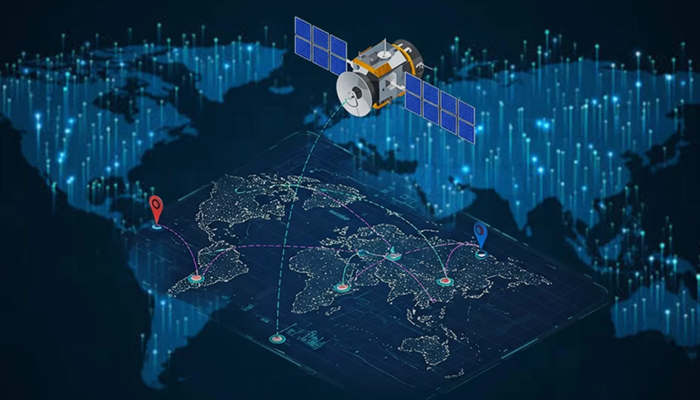
The space industry has experienced a profound transformation with the emergence of software-defined satellites (SDS) which is a revolutionary approach to satellite design that emphasizes flexibility, adaptability and long-term mission resilience. Software-defined Satellites are equipped with programmable payloads, reconfigurable processors and software-driven architectures that can be modified even after launch. These satellites can adapt dynamically to evolving mission requirements, customer demands and technological advancements without requiring costly hardware replacements or new satellite deployments. As global needs for high-speed broadband, Earth observation, defense intelligence and SATCOM continue to rise, software-defined satellites are positioned to serve as the core of next-generation space systems, offering unmatched versatility and cost efficiency for both commercial and government operators.
What are Software-Defined Satellites?
Software-defined satellites are spacecraft whose functions and mission capabilities can be modified through software updates rather than hardware redesigns. At the core of SDS are technologies such as software-defined radios (SDRs), reprogrammable digital processors and modular payload architectures, which together allow operators to alter frequency bands, coverage areas, data throughput, and mission objectives through software updates even while the satellite is in orbit. This means that instead of being locked into a single purpose, such as broadcasting or Earth observation, an SDS can be reconfigured multiple times during its lifespan to meet new demands, adapt to market shifts or respond to unforeseen events. This programmability extends the operational value of satellites and reduces costs, enhances responsiveness and ensures that space assets remain relevant in an era of fast-changing technological and geopolitical landscapes.

Key Characteristics:
- Reconfigurable Payloads: Software-defined satellites can dynamically adjust their payload configurations to meet changing mission requirements. This includes switching between frequency bands, modifying antenna coverage patterns and adopting new communication protocols. Such flexibility allows a single satellite to support multiple services over its operational life, making it highly adaptable to evolving customer or market demands.
- On-Orbit Updates: Unlike traditional satellites that require physical intervention or are permanently fixed, SDS can receive software updates remotely while in orbit. Operators can upload new algorithms, patch security vulnerabilities, or optimize performance in real time. This capability reduces downtime, enhances operational efficiency and ensures satellites remain relevant throughout their lifespan.
- Multi-Mission Capability: A software-defined satellite can perform diverse functions without hardware modifications. For example, it can switch between telecommunications, Earth observation, or defense tasks simply by changing its software profile. This multi-mission flexibility maximizes the value of each satellite, reduces the need for multiple dedicated spacecraft and accelerates deployment of new services.
- Cost-Effective Lifecycle: By allowing in-orbit reconfiguration and software-driven adaptability, SDS significantly extends a satellite’s operational life. Operators can respond to regulatory changes, emerging technologies, or shifting customer needs without launching new hardware. This reduces overall lifecycle costs, increases return on investment and minimizes space debris associated with premature satellite retirement.
Enabling Technologies Behind Software-Defined Satellites

- Software-Defined Radios (SDR): SDRs replace conventional hardware transceivers with digital, programmable radios that can operate across multiple frequency bands and communication protocols. This allows satellites to adapt to evolving standards, support multiple services simultaneously and even interoperate with different satellite networks. By reducing reliance on fixed hardware, SDRs enhance the flexibility and longevity of software-defined satellites.
- Onboard Digital Signal Processing (DSP): High-performance DSP units manage complex tasks such as modulation, encryption, compression and signal switching directly on the satellite. This capability enables dynamic allocation of communication resources, improving bandwidth efficiency and reducing latency. Additionally, onboard DSP allows satellites to process data in real-time, reducing dependence on ground stations for immediate decision-making.
- Artificial Intelligence (AI) & Machine Learning (ML): AI and ML algorithms empower satellites to autonomously detect anomalies, optimize operational parameters, and manage spectrum usage in real time. These intelligent systems can predict and mitigate potential failures, improve signal routing and adapt mission strategies based on changing environmental or operational conditions. By embedding AI onboard, software-defined satellites become more resilient, responsive and capable of self-optimization.
- Reconfigurable Payload Architectures: Flexible payloads equipped with field-programmable gate arrays (FPGAs) allow satellites to rapidly switch between different mission profiles without hardware modifications. This reconfigurability supports multi-mission operations, such as transitioning from telecommunications to Earth observation or defense tasks. It also reduces the need for launching separate specialized satellites, saving costs and enabling faster deployment.
- Cloud-Connected Operations: Integration with ground-based cloud systems facilitates seamless software upgrades, data distribution and mission optimization. Operators can monitor satellite health, deploy patches and update algorithms remotely, ensuring satellites remain up-to-date with the latest capabilities. Cloud connectivity also enables large-scale coordination of satellite constellations, enhancing operational efficiency and global coverage.
Role of Software-Defined Satellites in Next-Generation Spacecraft

1. Flexible Communications and Broadband Delivery: Software-defined satellites are revolutionizing satellite internet and SATCOM by enabling dynamic allocation of bandwidth, adaptive beam shaping, and frequency adjustments according to real-time demand. For instance, operators can redirect capacity to high-demand regions during natural disasters, large-scale events or military operations. Additionally, SDS supports integration with emerging technologies such as 5G and Non-Terrestrial Networks (NTN), enhancing global connectivity and broadband efficiency.
2. Adaptive Earth Observation: In Earth observation missions, software-defined satellites allow sensors to be reprogrammed for different spectral bands, resolutions, or imaging modes, enhancing mission versatility. This adaptability is critical for applications like precision agriculture, environmental monitoring, disaster management and defense surveillance. By enabling on-demand reconfiguration, SDS ensures satellites can respond to changing priorities without launching new spacecraft.
3. Defense and Security Applications: Military and intelligence agencies leverage SDS for reprogrammable satellites that can perform anti-jamming operations, update encryption protocols and gather dynamic intelligence in response to evolving global threats. This flexibility allows satellites to maintain operational effectiveness even in contested or degraded environments. By providing rapid adaptability, SDS enhances resilience, situational awareness and strategic advantage in space security operations.
4. Mission Longevity and Sustainability: Traditional satellites risk becoming obsolete as communication standards evolve, such as the transition from 3G to 5G. Software-defined satellites extend operational life through in-orbit software and firmware updates, reducing the need for expensive replacements. This capability not only cuts costs but also contributes to long-term space sustainability by minimizing orbital congestion and debris from redundant satellites.
5. Multi-Mission Platforms: A single software-defined satellite can perform multiple roles simultaneously, including communications, navigation augmentation, and IoT connectivity, effectively replacing multiple dedicated satellites. This consolidation reduces launch costs, simplifies constellation management, and accelerates deployment timelines. By offering versatile multi-mission functionality, SDS enables operators to maximize the value of each satellite in orbit.
Software-Defined Satellites in Operation
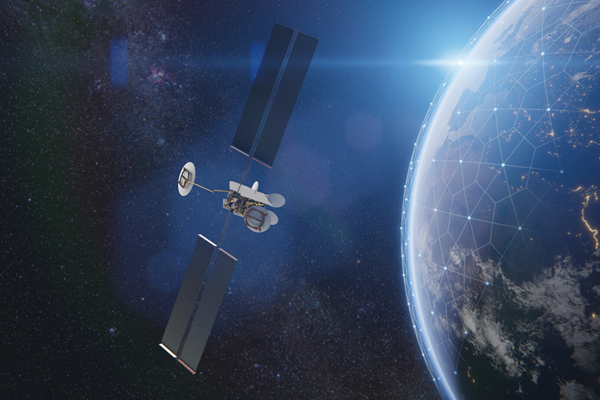
- Eutelsat Quantum (ESA/Airbus): Eutelsat Quantum is the world’s first fully software-defined satellite, designed to provide unprecedented flexibility in orbit. Operators can dynamically reconfigure coverage areas, power levels and frequency allocations to meet changing user demands or respond to emergencies. This capability allows the satellite to serve multiple clients and mission scenarios without physical hardware modifications.
- Intelsat’s EpicNG Series: Intelsat’s EpicNG series integrates digital payload technology to deliver high-throughput and adaptable connectivity solutions. By leveraging software-defined features, these satellites can optimize bandwidth allocation, adjust beam coverage, and support diverse communication standards. This flexibility enhances service quality for both commercial and government users, ensuring reliable connectivity across multiple regions.
- SES O3b mPOWER: SES’s O3b mPOWER constellation consists of software-defined satellites that deliver scalable, low-latency broadband services to underserved and remote regions. The SDS architecture allows for real-time capacity reallocation and adaptive beamforming, maximizing coverage efficiency. These satellites exemplify how dynamic payload management can transform satellite-based broadband operations globally.
- OneWeb and Starlink (Future Integration): OneWeb and SpaceX’s Starlink are exploring software-defined satellite integration to enhance the flexibility and reconfigurability of their LEO broadband networks. By adopting SDS capabilities, these constellations could dynamically adjust coverage, manage congestion and respond to regional demand changes. This approach promises to further improve global connectivity, especially in rural and remote areas.
Advantages of Software-Defined Satellites

- Flexibility: Software-defined satellites provide unmatched operational flexibility by allowing mission parameters to be adjusted remotely through software updates. Operators can switch frequency bands, reallocate power, or modify coverage areas without launching new satellites, enabling rapid adaptation to changing market or mission requirements. This flexibility ensures that a single satellite can serve multiple purposes throughout its lifespan.
- Faster Time-to-Market: SDS platforms accelerate deployment of new services and applications by enabling quick software upgrades and reconfiguration. Instead of waiting years for new hardware designs, operators can roll out enhanced features, regulatory compliance updates, or bandwidth expansions in orbit. This capability allows satellite operators to respond promptly to emerging customer demands and competitive pressures.
- Reduced Costs: By eliminating the need for frequent satellite replacements or hardware redesigns, software-defined satellites significantly reduce lifecycle costs. Upgrades and mission modifications can be performed remotely, avoiding expensive launch campaigns. This cost-efficiency makes SDS an attractive solution for both commercial and government satellite operators.
- Resilience: Software-defined satellites enhance operational resilience against cyber threats, jamming and other disruptions. Real-time software patches and encryption updates can be deployed to protect communication channels and maintain service continuity. This adaptability ensures that SDS can remain secure and functional even in contested or challenging space environments.
- Scalability: SDS architecture supports the growing demands of broadband, IoT networks, and 5G backhaul by enabling dynamic allocation of satellite resources. Operators can expand coverage areas, increase throughput and manage multiple simultaneous services without deploying additional hardware. This scalability allows satellites to efficiently meet the needs of expanding user bases and high-demand regions.
Challenges and Limitations of Software-Defined Satellites

- Cybersecurity Risks: While software-defined satellites offer flexibility through programmability, this very feature also introduces potential vulnerabilities to cyberattacks. Hackers could attempt to access onboard systems, manipulate payloads, or disrupt communication links, which could compromise both commercial and defense missions. Robust encryption, secure software updates and continuous monitoring are essential to mitigate these risks.
- Complexity in Design: Designing SDS platforms is inherently more complex than traditional satellites because they integrate advanced processors, field-programmable gate arrays (FPGAs), and large onboard memory. This complexity increases both the development timeline and costs, as engineers must ensure the satellite can reliably execute software updates while handling multiple mission profiles. Testing and validation also become more challenging, particularly for multifunctional payloads.
- Power Consumption: Software-defined satellites require substantial onboard computational resources to manage dynamic payloads, reconfigurable antennas, and signal processing in real-time. These high processing demands lead to increased power consumption, necessitating efficient energy management systems and advanced solar arrays or batteries. Power constraints can limit operational capabilities if not carefully designed for the satellite’s mission profile.
- Regulatory Challenges: SDS platforms often dynamically change frequencies, coverage areas, or transmission power, which can create regulatory complications. Spectrum allocation must be coordinated internationally to prevent interference with other satellites and terrestrial networks. Ensuring compliance with global and regional regulations adds another layer of complexity to the deployment and operation of software-defined satellites.
Future of Software-Defined Satellites in Space Industry
- Integration with 6G and NTN: Software-defined satellites will be central to the integration of 6G terrestrial networks with Non-Terrestrial Networks (NTN), providing seamless connectivity across land, sea and air. SDS platforms can dynamically allocate bandwidth and adjust frequencies to maintain consistent high-speed communication, enabling applications like ultra-reliable low-latency communications and global IoT networks. This integration will bridge digital divides and support emerging technologies such as autonomous vehicles and smart cities.
- AI-Powered Autonomy: Next-generation SDS will leverage artificial intelligence and machine learning to operate with minimal human intervention. AI algorithms will optimize spectrum usage, dynamically manage payload resources, detect anomalies and autonomously adapt to changing mission demands in real-time. This autonomy reduces operational costs, enhances resilience against failures, and ensures satellites remain responsive to evolving user requirements.
- Mega-Constellation Flexibility: Future mega-constellations will depend on software-defined satellites to dynamically reconfigure network topologies, coverage areas and beam steering according to global demand patterns. SDS enables operators to redirect capacity to high-demand regions or emerging markets without launching additional satellites. This flexibility ensures efficient use of orbital assets while maintaining service quality across large user bases.
- Sustainability Focus: By allowing in-orbit upgrades and mission reconfiguration, software-defined satellites reduce the need for hardware replacements caused by obsolescence. This approach directly contributes to space sustainability by minimizing the creation of orbital debris and extending the operational life of satellites. Additionally, SDS platforms support more adaptable and efficient resource utilization, aligning with long-term environmental and economic goals for space operations.
- Transforming the Space Economy by 2035: Industry projections indicate that by 2035, the majority of both geostationary and non-geostationary satellites will be software-defined. This transformation will revolutionize the space economy by enabling versatile, upgradable, and cost-efficient spacecraft capable of serving multiple missions simultaneously. The widespread adoption of SDS will facilitate global connectivity, Earth observation, defense and commercial applications on an unprecedented scale.
Software-defined satellites represent a transformative leap in space technology, introducing unprecedented levels of flexibility, adaptability, and operational resilience to modern spacecraft. By enabling in-orbit reconfiguration, software updates, and multi-mission capabilities, SDS platforms empower operators to respond rapidly to evolving market demands, emerging technologies and global connectivity needs. Their applications span telecommunications, broadband internet, Earth observation, defense, and IoT networks, making them integral to both commercial and strategic space infrastructure.