The announcement followed the Flight 13 test on Friday, July 24, 2026, which ended in a controlled soft splashdown in the Indian Ocean. During that mission, the 123-meter-tall launch vehicle executed its suborbital deployment test and atmospheric entry profile, validating critical upgrades to Starship’s thermal protection shield, underbelly heat tiles, and landing flap actuation algorithms needed to survive the high dynamic pressures of reentry. Musk conditioned the Flight 14 catch attempt on a clean review of the mission data.
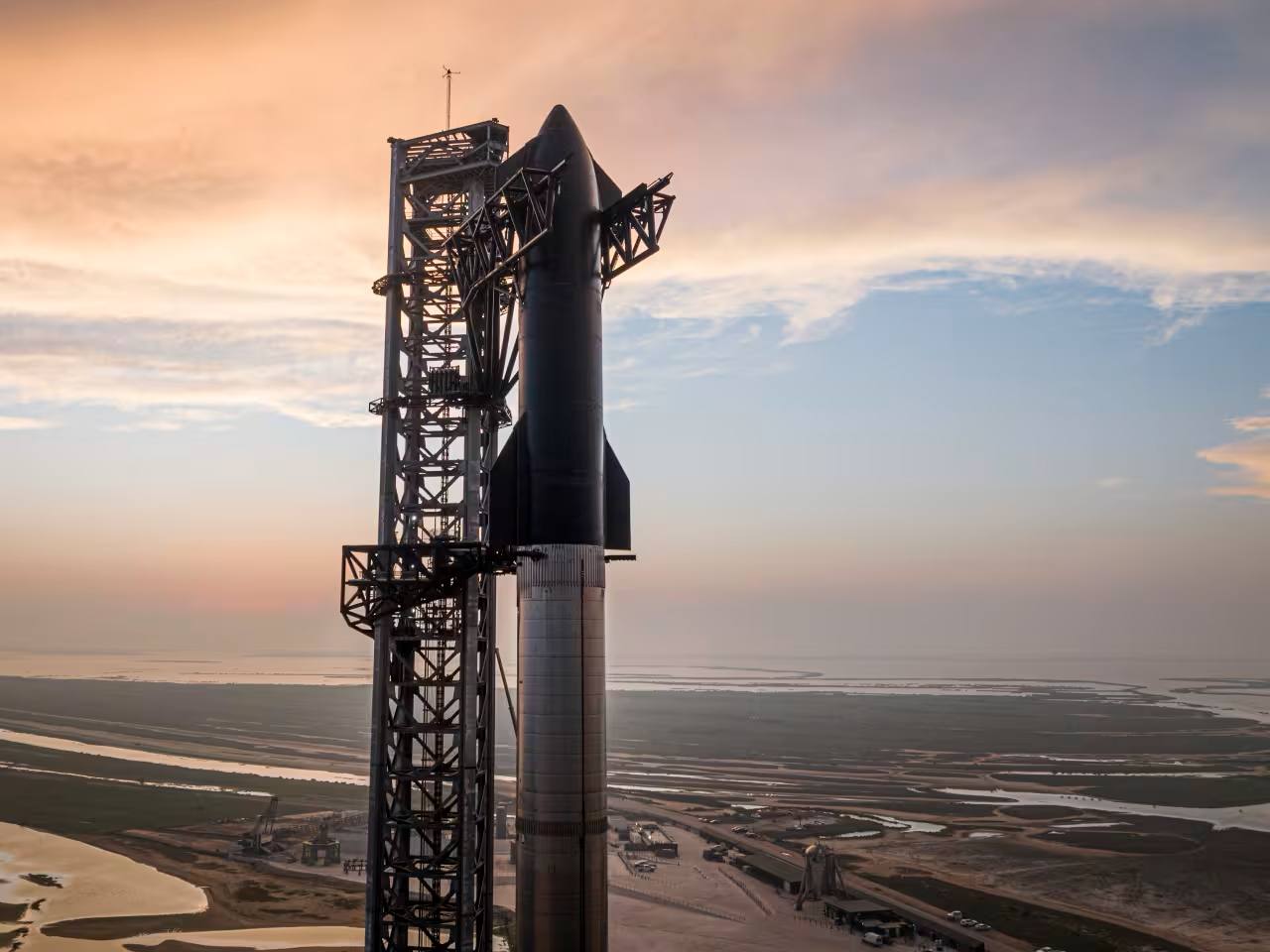
The “Mechazilla” launch tower arms at Starbase in Boca Chica, Texas, previously demonstrated a catch of the Super Heavy booster on Flight 11. Catching the 50-meter upper stage presents a different challenge. The stage enters at near-orbital velocities, subjecting its airframe, actuators, and catch pins to significant thermal and structural loads before deceleration. The maneuver requires precise flight path vectoring and real-time guidance corrections during the final landing burn. The upper stage is significantly larger and heavier than the booster at the point of catch.
SpaceX is pursuing the milestone while a booster relight problem, which caused two consecutive losses, has not yet been publicly resolved. The approach suggests the company is willing to stack ambitious milestones simultaneously rather than solve problems in sequence.
Demonstrating rapid recovery of both the Super Heavy booster and the Starship upper stage directly targets the high capital and turnaround costs associated with disposable launch hardware. Eliminating maritime recovery operations and ocean water exposure allows SpaceX to reduce refurbishment cycles between launches. Catching the upper stage is described as the final piece of the full-stack reusability puzzle. If SpaceX can catch both stages at the tower, Starship becomes a rapidly reusable system without ocean recovery infrastructure, the economic argument underpinning the program. Achieving operational catch reusability is critical to expanding Starship’s flight cadence, lowering per-kilogram payload costs to low-Earth orbit, and supporting high-volume manifests including Starlink V3 deployment and crewed lunar missions.
SpaceX engineering teams are analyzing telemetry, thermal sensor logs, and propulsion performance metrics from Flight 13 to finalize the landing trajectory and tower interface systems for Flight 14. Regulatory approvals from the Federal Aviation Administration for the expanded landing zone profile at Starbase are expected ahead of the targeted vehicle stacking schedule later this year.