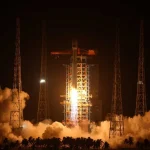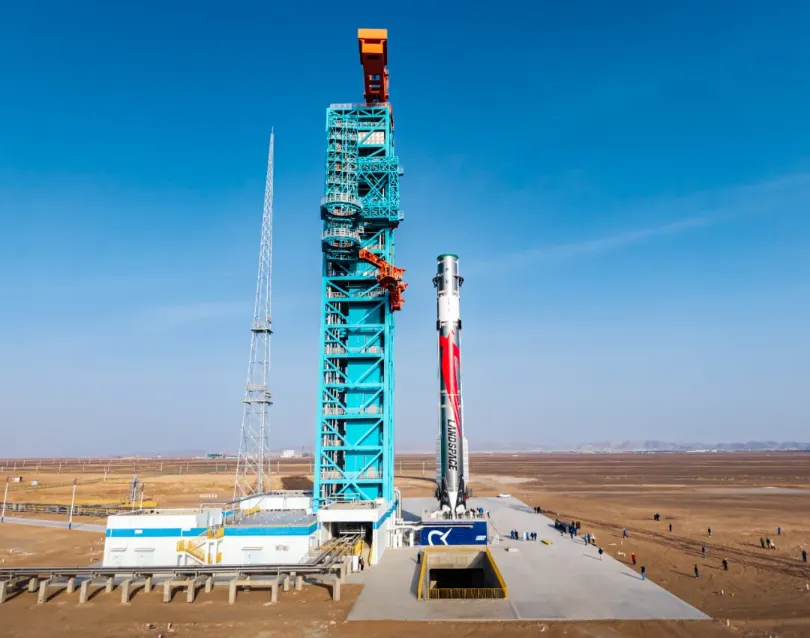
The highly anticipated second flight mission of LandSpace’s Zhuque-3 reusable launch vehicle has entered its final countdown. According to launch preparations released by the company, the rocket is scheduled to lift off on August 11, 2026, from LandSpace’s dedicated Launch Pad No. 2 at the Dongfeng Commercial Space Innovation Test Zone in Jiuquan, Gansu Province. The first stage will attempt a vertical landing recovery at the company’s recovery site in Minqin, Gansu Province.
If the recovery attempt succeeds, Zhuque-3 will mark a historic milestone for China’s privately developed commercial reusable launch vehicles.
Note: The launch time is a preliminary forecast. The actual launch will be subject to the final official announcement and may be adjusted due to weather conditions, equipment status, or other factors.
Two Major Objectives for Zhuque-3’s Second Mission
The Zhuque-3 Y2 mission carries two primary objectives.
First, the rocket must successfully deliver its payload into the planned orbit, completing the orbital launch phase.
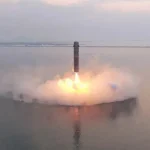
Second, the first stage must complete the entire recovery sequence — including atmospheric reentry, controlled descent, and landing — to validate vertical landing recovery using landing legs.
Unlike the grid-fin recovery approach planned for China’s Long March 10B reusable rocket, Zhuque-3 relies on a powered vertical landing with landing legs, requiring extremely high levels of performance in multiple areas, including:
- Multiple engine restarts;
- Real-time attitude control;
- Low-altitude aerodynamic stability and wind resistance.
The significance of this mission lies in achieving a complete operational loop of “successful payload delivery + stable first-stage recovery”, laying the engineering foundation for future rocket reuse and high-frequency commercial launches.
Learning from the First Flight: Data-Driven Improvements
During Zhuque-3’s first flight mission, the rocket successfully completed payload deployment and achieved orbit insertion. The first stage also accomplished most of the critical recovery procedures, including atmospheric reentry and secondary engine ignition.
However, an anomaly occurred during the final braking phase of landing. The vehicle lost attitude stability and failed to complete the recovery.
Although the recovery objective was not achieved, the Y1 mission generated a large amount of real flight data on vehicle dynamics, propulsion performance, and control systems. These valuable test results provided critical engineering experience for optimization ahead of the Y2 mission.
A Major Step Forward for China’s Commercial Reusable Rockets
Zhuque-3 is one of the most significant reusable launch vehicle projects in China’s private commercial space sector.
The rocket extensively uses high-strength stainless steel structures and propellant tanks, helping reduce manufacturing costs and shorten production cycles.
Key specifications include:
- Core stage diameter: 4.5 meters
- Fairing diameter: 5.2 meters
- Total length: 76.6 meters
- Liftoff mass: approximately 660 tonnes
- Liftoff thrust: approximately 900 tonnes
Payload capacity:
- Expendable mode: up to 21.3 tonnes to low Earth orbit (LEO);
- First-stage recovery mode: up to 18.3 tonnes to LEO.
For propulsion, the first stage is equipped with nine Tianque-12B sea-level engines, each producing 1,000 kN of thrust. The second stage uses a single Tianque-15B vacuum engine with 1,183 kN of vacuum thrust.
According to design targets, the first stage is expected to support at least 20 reuse cycles. Under ideal conditions, a recovered booster could return to flight without extensive refurbishment, potentially reducing launch costs by 80%–90% compared with traditional expendable rockets.
Reusable Rockets and the Future of Large-Scale Satellite Constellations
The importance of reusable rockets extends beyond technological achievement. Their true commercial value lies in addressing one of the most pressing needs of the space industry: large-scale satellite constellation deployment.
China’s low Earth orbit constellation projects, including the G60 constellation and GW constellation, are advancing rapidly. Satellite manufacturing capacity is already being established, making launch capability the next major factor limiting deployment speed.
Once reusable launch vehicles become mature, they could:
- Dramatically increase launch frequency;
- Reduce the cost per mission;
- Enable large-scale satellite deployment;
- Strengthen China’s position in global competition for orbital resources.

What Would a Successful Recovery Mean?
If Zhuque-3 Y2 successfully completes first-stage vertical landing recovery, it would have two major implications.
1. A Key Breakthrough for Private Reusable Launch Vehicles
China would become the second country to have a privately developed commercial launch vehicle with verified first-stage recovery capability.
The achievement would close a major engineering validation gap in China’s private space sector and provide valuable flight experience for future commercial rocket development.
2. New Launch Capacity for Large LEO Constellation Deployment
Low-cost, highly reusable rockets could provide the launch capacity required for deploying thousands of satellites, accelerating the construction of China’s low Earth orbit communication networks and improving its competitiveness in the global space economy.
Recovery Success Would Be a Beginning, Not the End
However, one successful recovery does not mean a reusable rocket system has reached full commercial maturity.
True commercialization requires overcoming additional challenges, including:
- Multiple reuse cycles;
- Rapid turnaround operations;
- Long-term reliability verification;
- Cost-effective maintenance processes.
The Zhuque-3 Y2 mission is only one important step in a much longer journey.
From the valuable flight data collected during the first mission to the targeted improvements implemented for the second recovery attempt, LandSpace’s efforts reflect the continued pursuit of high-difficulty engineering breakthroughs by China’s private commercial space industry.
The outcome of the mission remains uncertain, but every launch represents another solid step forward for China’s commercial space ambitions.
All eyes are now on Zhuque-3 Y2 as it prepares for its next attempt at reusable rocket recovery.