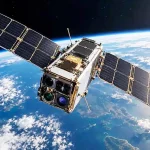
In the traditional satellite-to-Earth transmission model, satellites serve only as relay nodes: they forward information but do not process it directly, while ground gateways and terrestrial networks perform the core functions. With inter-satellite links, by contrast, satellites can transmit and exchange information directly without routing every connection through a ground station. Each spacecraft acts as both a relay and a switching node.
Inter-satellite link technology can therefore ease the difficulty of building ground stations worldwide, enable real-time telemetry, tracking and command across an entire multi-satellite network, accelerate data return, and connect satellites directly. It also expands the available methods for positioning, orbit determination and time synchronization. For these reasons, large satellite-internet constellations such as Starlink and China’s GW, or Guowang, constellation have made inter-satellite links a core part of their transmission architecture. Such links are increasingly becoming essential infrastructure for networking and interconnecting large constellations.
Depending on the electromagnetic frequency band used, inter-satellite communications can be divided into microwave, terahertz and laser communications. Microwave links have long been the main transmission method for satellite internet, offering mature technology, long range and broad coverage. But as the communications capacity required by satellites grows exponentially, microwave systems are struggling to keep pace. Terahertz communications remain largely at the research stage, making the shift from conventional radio-frequency links to lasers a critical technological leap.
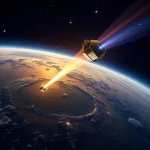
The extremely high frequency of laser light provides enormous bandwidth, enabling data rates tens or even hundreds of times those of conventional RF systems—enough to support real-time transmission of the vast data volumes expected in the future. Highly concentrated, narrow beams also make communications more private and harder to intercept or jam, while allowing terminals to become smaller, lighter and less power-hungry. Crucially, laser communications do not require access to scarce licensed radio spectrum, removing a major obstacle to the rapid and cost-effective deployment of mega-constellations. Inter-satellite laser communications are therefore widely regarded as one of the most promising technologies for the future of space communications.
I. The Core Links in the Inter-Satellite Laser Communications Value Chain
The value chain can be divided into three segments: upstream core components, midstream terminal integration and system manufacturing, and downstream applications and operations.
The upstream segment mainly includes photonic chips, high-power lasers, acquisition, pointing and tracking (APT) subsystems, and radiation-hardened electronic components. Because laser terminal systems are complex and demand strong integration capabilities, most terminal manufacturers are developing and producing their own core optical components, apart from selected outsourced parts.
The midstream segment is responsible primarily for developing inter-satellite laser communications terminals. It carries high technical barriers and high added value. Spaceborne terminals must simultaneously deliver high-precision APT, high-speed modulation and demodulation, low power consumption, compact form factors and space-grade reliability. The thresholds are therefore high in opto-mechanical-electrical-computational co-design, coordination among core components, full-system integration and environmental qualification. As the industry matures, volume-delivery capability and cost control are becoming central to competition.
The downstream segment covers specific applications and operating models, including satellite-internet constellations, remote-sensing data return, specialized secure communications and emerging space-based computing networks.
Satellite-internet constellations use optical inter-satellite links to build low-Earth-orbit backbone networks, enabling switching across orbital planes without terrestrial relays and supporting global broadband access and bandwidth-leasing services for maritime, aviation and remote-area users. Remote-sensing systems use high-speed inter-satellite relays to deliver observation data to a nearby gateway within minutes, supporting real-time emergency response such as disaster warnings and agricultural yield estimates. Specialized communications exploit the narrow beams and low probability of interception of laser links for missions including secure military communications and deep-space relay. Space-based computing networks combine in-orbit edge computing with high-speed optical interconnection to create distributed satellite computing clusters, providing low-latency data distribution and computing-capacity leasing to research institutions and financial-market users.
II. Key Technologies in Satellite Laser Communications
Efficient and reliable satellite laser communications depend on several critical technologies. First, the inherently narrow beam requires high-precision acquisition, pointing and tracking to establish and maintain a stable link while satellites move rapidly relative to one another. Once the link is established, efficient signal modulation is needed to encode data onto the optical carrier. Finally, advanced routing technology must determine how data should travel between satellites, enabling efficient and reliable global distribution.
1. Acquisition, Pointing and Tracking
Laser beams concentrate energy and have small divergence angles, allowing long-distance links to close at relatively low power. Those same characteristics, however, place much more demanding requirements on the terminal’s APT system. Its primary task is to align the transmit and receive beams precisely and keep the connection stable throughout communications.
Because satellites undergo large relative movements and mechanical vibration, the system requires a coarse-pointing assembly (CPA) with a wide search range and a fine-pointing assembly (FPA) with high precision. A photodetector (PD) senses the distribution of received optical power to determine the incident angle, while an inertial measurement unit (IMU) measures spacecraft vibration.
At the start of acquisition, two satellites use ephemeris data to estimate their relative direction. They scan a designated area with a wide-beam optical beacon and use the CPA to align their fields of view. After detecting the beam, a satellite uses its sensors to determine the incoming direction and sends an acknowledgement in return. Once both sides confirm acquisition, the transmitter switches to a narrow beam for high-speed communications. The FPA then makes continuous fine adjustments using feedback from the sensors and IMU, establishing stable tracking.
Because LEO satellites can have high relative velocities, a point-ahead angle (PAA) mechanism is also used to compensate for relative motion. After tracking stabilizes, the terminal transmits a modulated optical signal carrying predetermined data at the required communications rate and begins carrier-frequency acquisition and phase locking. Once the optical signal is phase-locked and the predetermined data can be demodulated correctly, the link is ready for measurement and communications, completing link establishment.
2. Satellite Laser Signal Modulation
The electro-optic modulation and optical demodulation units in a satellite laser communications subsystem modulate and recover the optical signal. Modulation methods fall into two broad categories: non-coherent and coherent communications.
Non-coherent communications, also known as intensity modulation/direct detection (IM/DD), use the data signal to control laser power directly. In the simplest example, light represents a “1” and no light represents a “0,” a scheme known as on-off keying (OOK). At the receiver, a photodetector such as an avalanche photodiode (APD) converts changes in optical intensity back into an electrical signal. The chief advantages are simplicity, maturity and reliability. The drawbacks are lower sensitivity and weaker interference resistance because the system uses only the intensity of the light.
Coherent communications are more complex. In addition to intensity, they can modulate phase, frequency and even polarization. Common formats include binary phase-shift keying (BPSK) and quadrature phase-shift keying (QPSK). Rather than detecting the received signal directly, the receiver mixes it with a local-oscillator laser. Much like a precisely tuned receiver extracting a faint signal from a noisy environment, this process enables highly sensitive homodyne or heterodyne detection. Coherent systems offer exceptionally high sensitivity, better spectral efficiency and strong resistance to interference, but at the cost of greater complexity and expense. Compared with non-coherent systems, coherent communications are the preferred option for future satellite-internet backbones and for ultra-high-speed, long-distance inter-satellite and space-to-ground links.
3. Inter-Satellite Routing
Routing is the process of moving information from a source node to a destination through one or more intermediate nodes. Depending on the topology of the overall network, routing can be proactive or reactive.
In a proactive scheme, every satellite maintains knowledge of the network topology and can identify a path and establish a connection when a packet must be sent. As networks grow more complex, however, routing tables become harder to maintain and consume more power and bandwidth. Reactive schemes address this problem through on-demand routing: a satellite searches for an optimal path only when a connection is required.
Space communications can also suffer intermittent connectivity, meaning that a continuous end-to-end path may not always exist between source and destination. Long or variable signal-propagation delays between satellites and ground stations can produce extremely long round-trip times, undermining the performance of conventional internet protocols such as TCP/IP. These conditions have driven the development of delay-tolerant networking (DTN).
DTN introduces an overlay protocol known as the Bundle Protocol (BP), which uses underlying “convergence-layer” protocols to provide reliable transmission between BP nodes. Data sent through BP is forwarded toward its destination at each node along the end-to-end route. If the connection to the next node is temporarily unavailable, however, the data remains in local storage until communications resume. In a conventional TCP/IP network, by contrast, a temporary network partition may cause the data to be discarded.
III. Technical Challenges
1. Precise Alignment and Attitude Control
The first major challenge is precise alignment between transmitter and receiver. Laser communications use narrow beams over distances of thousands or even tens of thousands of kilometers, placing extraordinary demands on spacecraft attitude control and positioning accuracy. In orbit, external forces such as solar-radiation pressure and irregularities in Earth’s gravitational field can cause small attitude changes that destabilize the optical link. Satellites also move rapidly relative to one another, requiring real-time adjustment of transmit and receive directions. Achieving high-precision alignment and stable attitude control therefore remains a central technical problem.
2. Atmospheric Interference and Signal Attenuation
Although inter-satellite laser communications operate mainly in space, some links—particularly those between LEO satellites and ground stations—must pass through the atmosphere. Turbulence, cloud cover and aerosol scattering can attenuate and distort optical signals, especially in severe weather. Scattering and absorption also reduce signal energy and weaken link reliability. Maintaining stable laser communications through a complex and changing atmosphere, while mitigating attenuation and interference, remains another major challenge.
3. Long Equipment Life and High Reliability
Extreme temperatures, intense radiation and microgravity place stringent requirements on the materials and manufacturing processes used in laser communications equipment. Transmitters and receivers must operate stably across extreme temperatures; optical components must withstand radiation; and mechanical structures must survive long-term vibration and shock. Because equipment is difficult to repair or replace after launch, it must also offer long service life and very high reliability. Designing terminals that can operate steadily for years in the harsh space environment is therefore a critical engineering task.
IV. Milestones in China’s Satellite Laser Communications Development
2007: The laser altimeter aboard Chang’e-1 operated successfully in orbit. Although designed mainly for ranging rather than communications, it showed that China’s first domestically developed spaceborne all-solid-state laser could withstand the harsh space environment.
2011: Harbin Institute of Technology completed China’s first satellite-to-ground laser data-transmission experiment, achieving a 20 Mbps downlink. The demonstration marked the field’s transition from zero to one and made China one of the few countries to master satellite-to-ground laser communications.
2016: Using the Micius experimental satellite, the Shanghai Institute of Optics and Fine Mechanics under the Chinese Academy of Sciences completed China’s first in-orbit validation of coherent laser communications. Across a satellite-to-ground distance of 1,000 km, the system achieved downlink and uplink rates of 5.12 Gbps and 20 Mbps, respectively. At the time, coherent communications represented the international technological frontier. The test demonstrated China’s growing ability to encode information in the phase and frequency of light and laid the groundwork for subsequent jumps in data rate.
2017: The Shijian-13 satellite completed China’s first coherent laser communications link from a geostationary satellite to the ground. Over a distance of 45,000 km, it achieved 5 Gbps, an average acquisition time of 2.5 seconds and 100% tracking stability over one hour. The mission validated key technologies including high-speed optical data reception and forwarding and compensation for atmospheric effects in long-distance, high-speed links.
2018: An integrated communications-and-ranging laser terminal for BeiDou-3, developed by the Shanghai Institute of Optics and Fine Mechanics together with the 504th and 704th research institutes, established an inter-satellite optical link across 55,000 km at 1 Gbps. It also established a satellite-to-ground laser link with the Nanshan mobile laser ground station over 25,000 km.
2019–2020: China’s first high-speed, high-order coherent laser communications terminal, developed by the 504th Research Institute, was launched aboard Shijian-20 in 2019. The following year, it demonstrated 10 Gbps in orbit, bringing China into the “10G club” for coherent optical communications and placing the country at the international advanced level.
2023–2024: In 2023, the Jilin-1 MF02A04 satellite conducted a satellite-to-ground laser communications test at 10 Gbps and maintained stable communications for 100 seconds. In January 2024, the Jilin-1 Platform 02A01 and 02A02 satellites achieved 100 Gbps ultra-high-speed inter-satellite laser communications and transmitted remote-sensing imagery—the highest communications rate achieved in China at the time.
March 2025: Laser Starcom’s self-developed LT-II laser communications terminals achieved a 400 Gbps inter-satellite link over 640 km aboard the Guangchuan-01 and Guangchuan-02 experimental satellites. The terminals recorded a tracking error of less than 5 microradians and supported both coherent and non-coherent communications.
July 2026: During on-orbit testing of the Three-Body Computing Constellation, HiStarlink demonstrated a low-cost optical communications payload capable of maintaining a long-duration stable link. At an inter-satellite distance of 1,000 km, a single connection remained stable for more than 192 hours, with zero recorded link interruptions and availability above 99.99%—a new record in commercial spaceflight, according to reports released at the time.
V. Where the Industry Is Heading
As large AI models and commercial spaceflight advance rapidly, satellites are evolving from conventional information-collection and transparent-relay nodes into intelligent space platforms integrating communications, navigation, remote sensing, computing and storage. Vast volumes of data will increasingly be generated, processed and coordinated in orbit, while space-based intelligence becomes embedded in resource scheduling and mission decisions aboard satellites.
Building a space computing network requires more than energy-efficient processors and heterogeneous computing architectures. It also demands high-bandwidth, highly reliable and low-latency inter-satellite and space-to-ground backbone links so that computing resources can be pooled and allocated dynamically. Against this backdrop, laser communications—with their bandwidth and interference-resistance advantages—are becoming the core physical-layer infrastructure connecting space-based computing nodes.
Space laser communications terminals are now moving from being merely usable to being practical, durable and intelligent. The main drivers are drastic reductions in size, weight and power, together with a leap in autonomous on-orbit survivability. The principal directions include:
1. Chip-Scale Terminal Design
Conventional terminals assembled from discrete components cannot meet the severe capacity and cost requirements of large LEO constellations. Chip-scale integration can produce dramatic reductions in volume, weight and power, directly lowering launch costs. Terminal mass is moving from tens of kilograms toward the single-kilogram range, while power consumption can fall by more than one-third. This is not merely an incremental improvement but a structural change in how optical terminals can be manufactured and deployed.
2. Technology Convergence and Integrated Space–Ground Networks
Inter-satellite laser communications can create powerful synergies with other frontier technologies. Combining optical links with 5G and 6G could support integrated space–ground high-speed networks and seamless connectivity between terrestrial and satellite systems. Integration with quantum communications could improve security and interference resistance for military and confidential-data applications. Laser communications can also converge with remote sensing, navigation and the Internet of Things, widening the range of satellite-internet services. Ultimately, an integrated space–ground network could blur the boundary between Earth and orbit and provide ubiquitous high-speed connectivity worldwide.
3. Intelligence and Automation
Artificial intelligence and machine learning are likely to make laser communications systems significantly more autonomous. AI algorithms could optimize and adjust optical links in real time, improving stability and reliability. Automation could also enable more precise spacecraft attitude control and beam alignment, reducing human intervention and improving response speed and accuracy. Future systems will increasingly respond autonomously to complex space environments and changing communications demand.
VI. Problems the Industry May Face
1. Engineering and Industrialization
Inter-satellite optical systems designed for space computing networks must deliver tens or hundreds of gigabits per second while also establishing links quickly, remaining stable for long periods, consuming little power, weighing little and being suitable for mass production. High data rates are only the price of entry. Engineering reliability and the ability to deploy at scale will determine whether the industry can mature.
2. Supply-Chain Constraints
Upstream opto-mechanical-electrical components still face bottlenecks in cost control and delivery times, while downstream markets remain in an early cultivation phase and end-user awareness will take time to develop fully. This will be a long contest, determined not only by who can build a product first but also by who can survive and deliver consistently. Some companies are gradually establishing more independent and controllable supply chains, but the transition from custom scientific-research hardware to reliable volume supply will take time.
3. The Clash Between Research and Commercial Timelines
Researchers are trained to put technical correctness first; commercial customers demand products that can be delivered on schedule. The tension between verification-driven research and delivery-driven business is a deep structural conflict in the industry’s early development. Every commercial team must find a way to shorten development cycles without compromising the reliability required in space, including radiation tolerance, thermal-vacuum performance and resistance to micro-vibration.
Brand-name note: Company and constellation names were rendered using their official English branding where available. “China” is used wherever the Chinese source referred to the domestic market or domestic records.