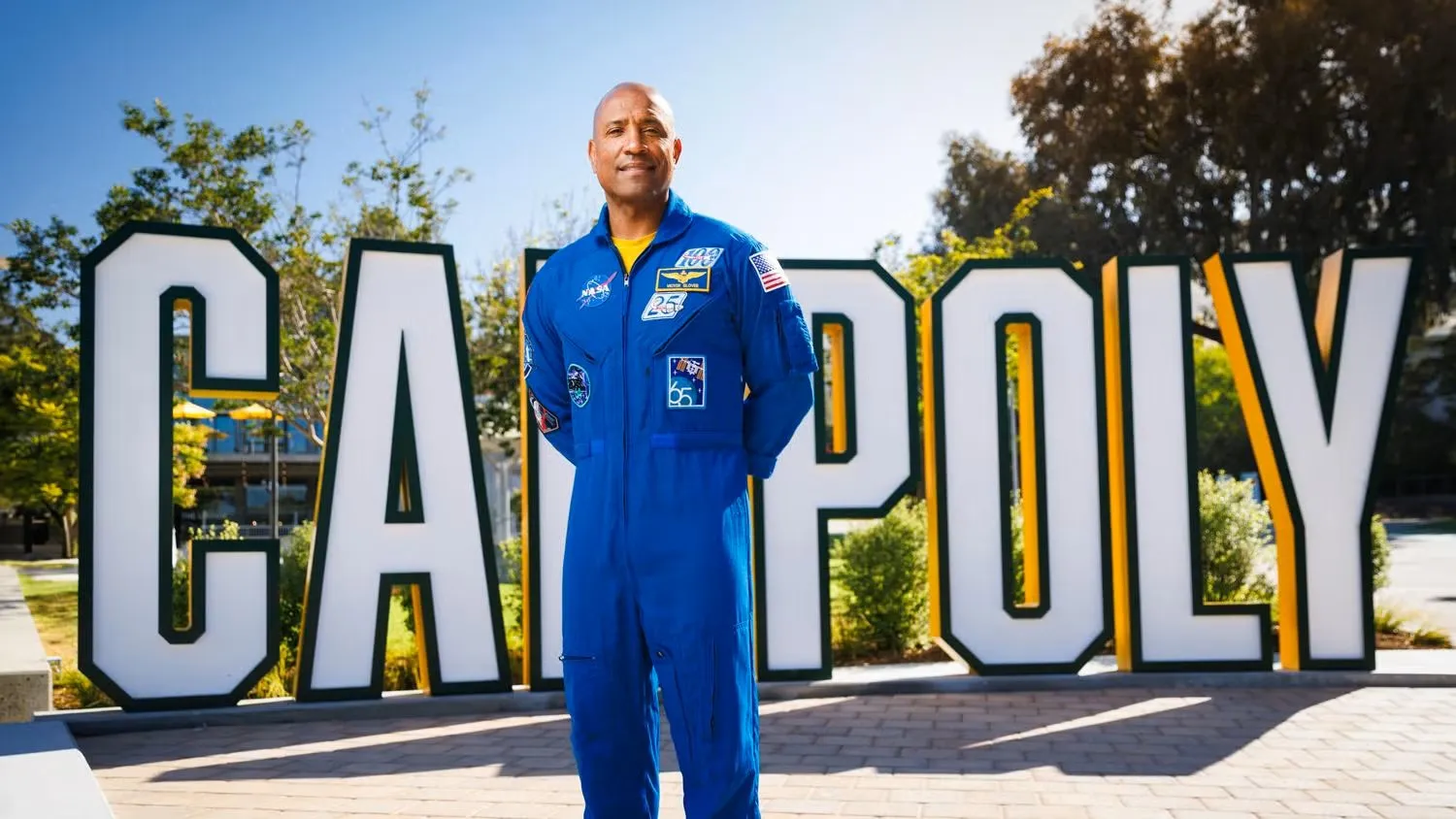
NASA astronaut Victor Glover has moved to emeritus status after piloting the Artemis II mission around the Moon in April 2026 and has begun a full-time role as executive advisor to California Polytechnic State University President Jeff Armstrong. Glover started the Cal Poly position on September 1 and plans to relocate from Houston to California with his family after the new year.
NASA announced on September 9 that Glover and Artemis II commander Reid Wiseman were transitioning to astronaut emeritus status. Neither is fully retiring from the agency. Glover will remain a special government employee with continued access to NASA and the ability to advise the Artemis program, support astronaut crews and contribute his operational experience with the Orion spacecraft.
The arrangement allows NASA to retain knowledge from the only crew to have flown Orion in space while Glover assumes a broader leadership role outside the agency. He said future spaceflight is not part of his plan, adding, “If I wanted to go to space, I would have stayed at NASA.”
From Orion Pilot to University Advisor
At Cal Poly, Glover will work with the president, provost, college deans and other university leaders to identify and advance strategic initiatives, partnerships and philanthropic opportunities. The work will cover engineering, applied computing, aerospace, aviation, maritime studies, artificial intelligence, cybersecurity, autonomous systems and national defense.
The university has not assigned Glover a conventional teaching or administrative schedule. His responsibilities will instead depend on where his operational, technical and leadership experience can provide the greatest value. He expects to help strengthen existing programs, connect disciplines and apply lessons from NASA’s approach to teamwork, risk management and complex engineering.
Glover graduated from Cal Poly with an engineering degree in 1999. He competed in wrestling and football at the university and met his wife, Dionna, there. Their four daughters have either graduated from or are attending Cal Poly, giving the family an unusually extensive connection to the institution.
His arrival comes during a period of institutional change. Cal Poly has shifted from an academic quarter system to semesters and completed the integration of the former California State University Maritime Academy. The academy’s Vallejo site now operates as Cal Poly’s Solano Campus and hosts the Cal Poly Maritime Academy.
Glover said his work at NASA reinforced the value of Cal Poly’s “Learn by Doing” model. Human spaceflight requires personnel to combine technical competence with practical judgment, effective communication and risk-informed decision-making—skills that also apply to educating engineers and preparing leaders for aerospace and national-security programs.
Artemis II Experience Remains Valuable to NASA
Glover launched aboard Orion on a Space Launch System rocket on April 1 with Wiseman, NASA astronaut Christina Koch and Canadian Space Agency astronaut Jeremy Hansen. The crew spent approximately 10 days in space and traveled around the Moon’s far side, completing the first crewed mission to lunar space since Apollo 17 in 1972.
Artemis II was the first crewed flight of NASA’s Artemis program and the first opportunity to evaluate Orion’s human-spaceflight systems with astronauts aboard in deep space. The crew’s experience operating the spacecraft, assessing its habitability and responding to mission conditions will inform training, procedures and vehicle development for subsequent flights.
NASA is targeting mid-2027 for Artemis III, which is planned to test docking systems involving Orion and the program’s lunar lander architecture in Earth orbit. Artemis IV is scheduled to follow in 2028 as the program’s first lunar landing attempt, before later missions begin delivering additional crews and cargo for a planned surface outpost in the 2030s.
The Artemis II crew is already dispersing into different roles. Hansen completed his mission duties on September 2 and is returning to Canada after stepping back from active astronaut service. Koch remains the only Artemis II crewmember on an active astronaut roster, while Glover and Wiseman will remain available to NASA in emeritus capacities.
Maintaining access to the crew’s operational knowledge is particularly important because Artemis II remains Orion’s only crewed flight. Firsthand observations can help NASA refine cockpit procedures, astronaut training and mission-support practices as the program shifts from an initial lunar flyby toward docking demonstrations and landing missions.
Closing a Two-Mission Spaceflight Career
Before joining NASA’s astronaut corps in 2013, Glover was a U.S. Navy aviator and test pilot who accumulated 4,000 flight hours in more than 40 aircraft and flew 24 combat missions.
His first spaceflight was SpaceX’s Crew-1 mission to the International Space Station. During that expedition, he spent 168 days in orbit, served as a flight engineer for Expeditions 64 and 65 and completed four spacewalks. Artemis II subsequently made him one of the first people in more than five decades to travel to lunar space.
Glover said he does not expect to follow former NASA astronauts who later returned to orbit through commercial missions. Instead, his next phase will focus on university leadership while preserving a working relationship with NASA and supporting the astronauts and teams preparing for the next stages of Artemis.