
Tag: Onboard Processing
-

How Satellites and AI Help Deliver Disaster Warnings 72 Hours Ahead
Disaster preparedness starts well before an emergency unfolds. The goal is to get people moving while there is still time to protect lives, crops and property. Every extra day of warning changes what can be saved. Three hours may leave time for evacuation; three days can also allow farmers to harvest crops early, reinforce greenhouses…
-

From Sending Data to Delivering Answers: How AI Lets Satellites Process Observations in Orbit
A wildfire breaks out, and a satellite hundreds of kilometers above Earth captures a clear view of the blaze. Under the conventional workflow, the imagery must wait for a ground-station contact window, be downloaded and processed at a data center, and finally reach the incident commander. That process can take days. By then, the fire…
-
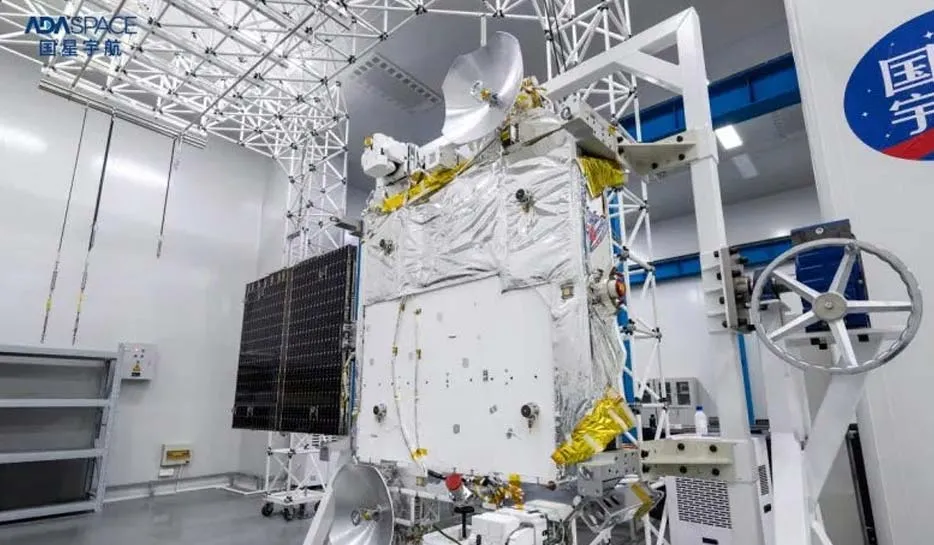
Why Can 12 Networked Satellites Do More Than 12 Working Alone?
Intuitively, 12 identical satellites should offer 12 times the computing power of one. But the value of connecting the first 12 satellites in Zhejiang Lab’s Three-Body Computing Constellation goes beyond adding up their processors. What creates that extra value? This article examines three sources of collaborative capability—and the costs that come with them. 1. Scheduling:…
-

A Cloud Provider in Orbit: How Is Space Computing Priced?
Whether an industry can survive over the long term comes down to one question: Who keeps paying for it? Space computing has three potential revenue models, each with a parallel in the evolution of cloud providers. Model One: Selling Data—The “Selling Produce” Business The most established model is also the most straightforward: package processed results…
-

Onboard Intelligence, Space Data Processing in Orbit and Earth Data Processing in Orbit: Which Will Succeed First?
Space computing covers three distinct approaches: satellites that process their own observations, constellations that share computing tasks in orbit, and orbital infrastructure designed to handle workloads originating on Earth. They share a label, but their technical requirements and commercial readiness differ substantially. This lesson maps out the three approaches, making it easier to understand where…
-

The In-Orbit Remote Sensing Pipeline
Key Insight An in-orbit processing pipeline essentially takes a ground-based data center apart and fits its functions inside a satellite. Each stage uses the computing hardware best suited to its task: FPGAs for rule-based processing, NPUs for AI inference, and CPUs for scheduling. Models that are “good enough” trade complexity for real-time performance. To assess…
-

Xiopm SPACE’s Qin Jing: What Is the Real Commercial Value of Space-Based Computing?
In 2026, space-based computing emerged as a major new direction for the commercial space industry. What problems is it meant to solve, and where is the industry heading? Hello Space has launched the Space-Based Computing Interview Series, speaking with leading Chinese companies to examine the real progress being made in this emerging field. Our guest…
-
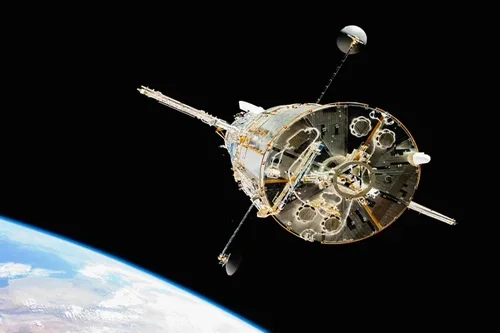
Loft Orbital and NASA JPL Partner to Demonstrate AI Software in Orbit
Loft Orbital has entered into an agreement with NASA’s Jet Propulsion Laboratory (JPL) to host and operate artificial intelligence software demonstrations in orbit as part of a NASA-funded Earth science technology program. The collaboration supports the Federated Autonomous MEasurement (FAME) project, which is funded by NASA’s Earth Science Technology Office (ESTO) and focuses on advancing…