The European Space Agency (ESA) has outlined a revised barter arrangement with the United States that would allow it to meet its International Space Station (ISS) cost-sharing obligations without commissioning a dedicated commercial cargo delivery mission, senior officials said this month.
The move follows ESA’s decision in December to cancel a call for proposals for commercial cargo transport services to the ISS, which had been intended to help cover the agency’s share of the station’s Common System Operations Costs (CSOC). ESA cited “programmatic adjustments” at the time but did not provide further details.
Under the CSOC framework, ISS partners are required to contribute to the station’s overall operations, including cargo and crew transport. ESA has historically met its obligations through the use of its Automated Transfer Vehicle and, more recently, by providing service modules for NASA’s Orion spacecraft.
In October 2025, ESA issued a call for commercial cargo transport services seeking delivery of up to 5,000 kilograms of pressurised cargo to the ISS by 2028. The requirements effectively limited potential bidders to U.S.-based providers, with Northrop Grumman’s Cygnus spacecraft widely viewed as the most likely option.
Speaking at a press conference on Jan. 8 following ESA Director General Josef Aschbacher’s annual briefing, Daniel Neuenschwander, director of ESA’s human and robotic exploration programme, said the agency had now agreed on an alternative barter structure with NASA.
“In this new barter scheme, we now have a reduced requirement with regard to commercial transportation services, and we have introduced the use of the LEO cargo return services as part of the deal,” Neuenschwander said. “Meaning that the United States will allow Europe to deliver LEO cargo return services as part of the ISS cooperation.”
He added that ESA plans to publish a new call for proposals to support the updated arrangement.
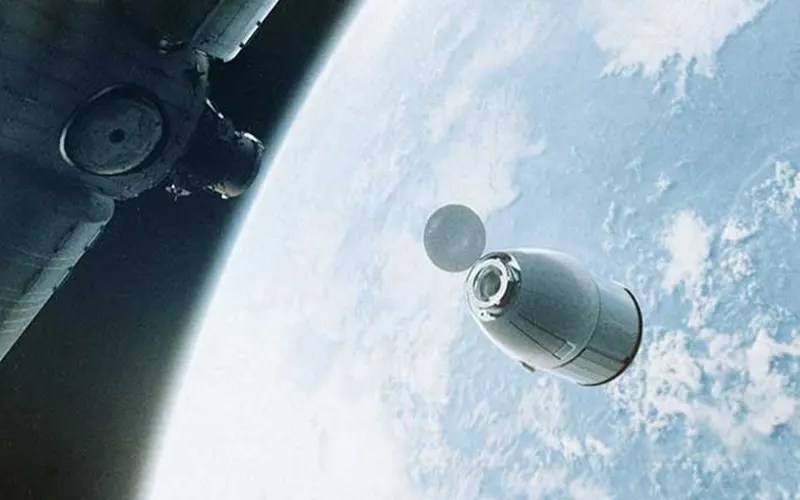
ESA’s Low Earth Orbit (LEO) Cargo Return Services initiative was first announced in May 2023 to encourage the development of a commercially operated European spacecraft capable of returning cargo from orbit. In May 2024, ESA awarded initial Phase 1 study contracts to The Exploration Company and Thales Alenia Space Italia.
Member states agreed in November 2025 to fully fund Phase 2 of the programme, which includes two demonstration missions to the ISS by mid-2029. Neuenschwander previously said member states had also committed to act as anchor customers for four additional missions following successful demonstrations, which are expected to form part of the revised barter agreement with NASA.
The ISS is scheduled to remain operational until at least 2030, with partner agencies continuing to adjust cooperation frameworks as commercial capabilities expand.