SpaceX on Tuesday night launched an advanced, jam-resistant GPS satellite for the U.S. Space Force, marking the company’s fastest turnaround to date for a national security mission.
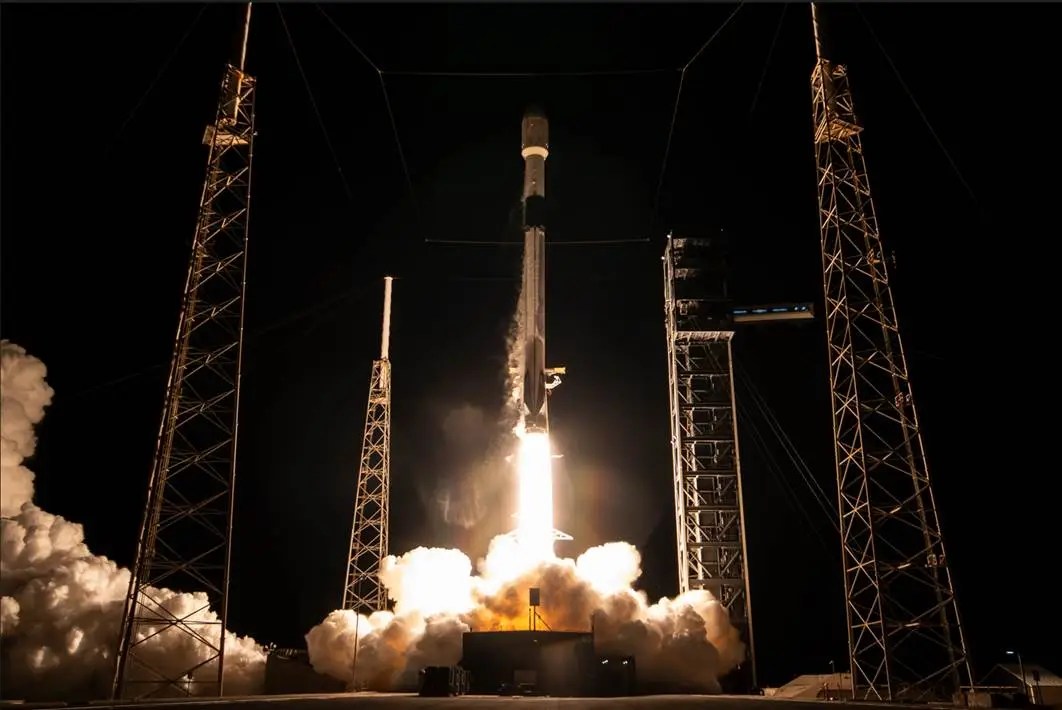
A Falcon 9 rocket carrying the GPS III-SV09 spacecraft lifted off from Cape Canaveral Space Force Station at 11:53 p.m. EST (0453 GMT on Jan. 28), following a one-day delay caused by poor weather. The satellite was deployed into orbit about 90 minutes after launch at an altitude of roughly 2,650 miles (4,265 km), SpaceX said.
GPS III-SV09 is part of the GPS III constellation built by Lockheed Martin and features M-Code technology, which is designed to provide enhanced resistance to jamming and interference for military users. It is the ninth satellite launched in the GPS III series, with one remaining spacecraft expected to be sent to orbit later this year.
The mission underscored the Space Force’s ability to adjust launch plans amid shifting schedules and vehicle availability. GPS III-SV09 had originally been assigned to fly on United Launch Alliance’s Vulcan Centaur rocket before being reassigned to Falcon 9.
“For this launch, we traded a GPS III mission from a Vulcan to a Falcon 9, then exchanged a later GPS IIIF mission from a Falcon Heavy to a Vulcan,” said Ryan Hiserote, commander of the Space Systems Command’s SYD 80 and program manager for National Security Space Launch. “Our commitment to keeping things flexible — programmatically and contractually — means that we can pivot when necessary to changing circumstances,” he said.
According to SpaceX, GPS III-SV09 was integrated and launched in just 41 days, setting a company record for a national security payload. The Falcon 9 first-stage booster, flying its fifth mission, returned to Earth and landed on the drone ship A Shortfall of Gravitas in the Atlantic Ocean about 8.5 minutes after liftoff.
The Space Force named GPS III-SV09 after Ellison Onizuka, a U.S. Air Force colonel and NASA astronaut who died in the 1986 Space Shuttle Challenger accident, continuing a tradition of honoring former astronauts through the GPS program.
The next generation of satellites, known as GPS IIIF, is expected to begin launching in 2027 and will provide enhanced positioning, navigation and timing capabilities for both military and civilian users.