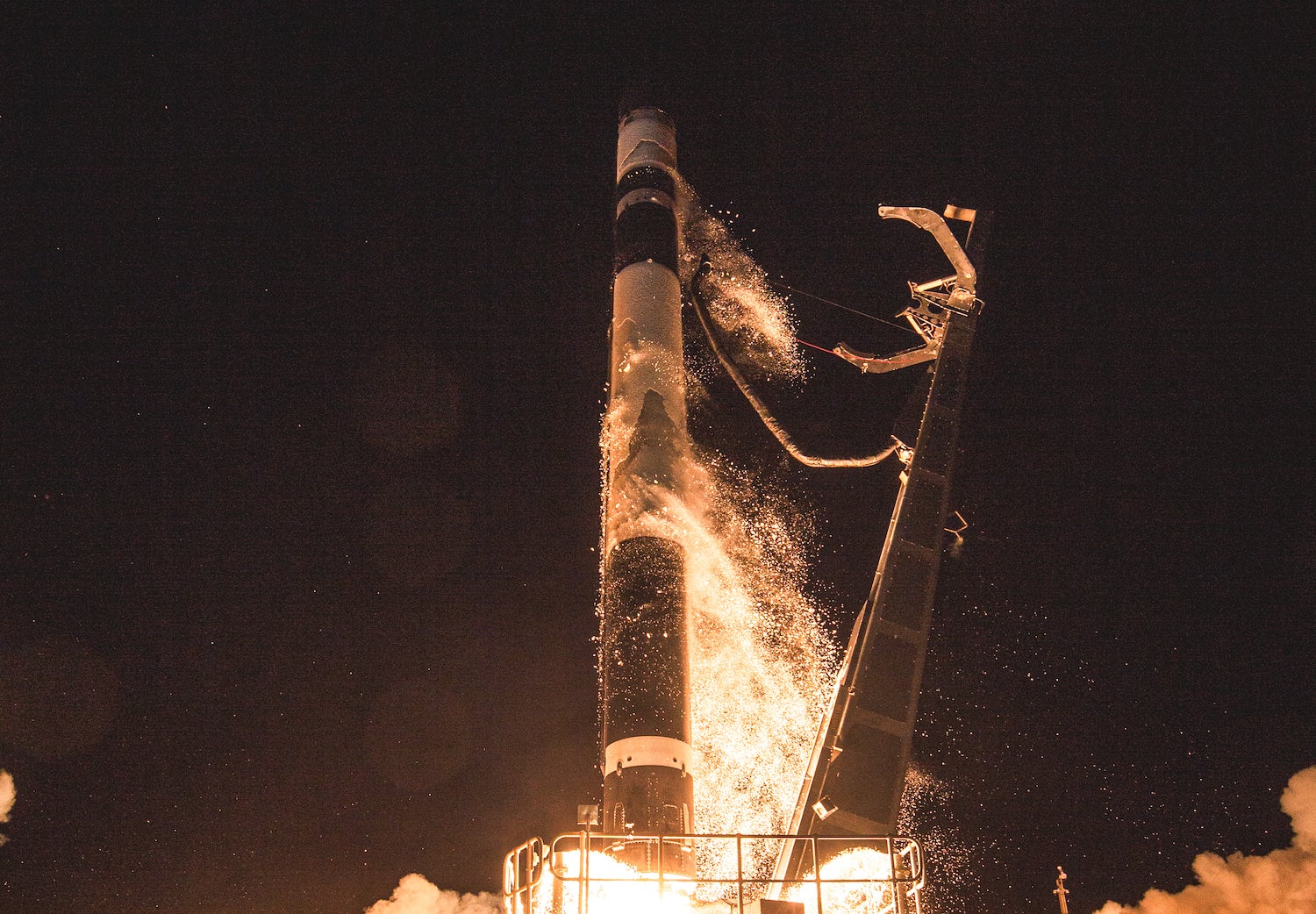
Rocket Lab has successfully launched a responsive space mission for the U.S. Space Force, deploying a spacecraft less than 17 hours after receiving a launch order as part of the Victus Haze mission.
The mission, conducted under the U.S. Space Force’s Tactically Responsive Space (TacRS) program, lifted off aboard a Rocket Lab Electron rocket from Launch Complex 1 in New Zealand at 10:19 p.m. local time on June 19.
According to Space Systems Command (SSC) and Rocket Lab, the company launched the mission just 16 hours and 42 minutes after receiving notice to proceed, setting a new responsiveness record for the TacRS initiative.
Rocket Lab Provides Spacecraft and Launch
Unlike previous TacRS demonstrations, Rocket Lab supplied both the launch vehicle and the spacecraft.
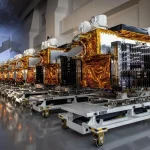
The mission deployed a Rocket Lab-built Pioneer satellite designed to perform rendezvous and proximity operations (RPO) in low Earth orbit.
The spacecraft was fully commissioned within 37 hours and 36 minutes after launch, significantly ahead of the program’s 72-hour commissioning requirement.
Simulating On-Orbit Threat Response
The Victus Haze mission is designed to demonstrate rapid response capabilities in space under operationally realistic conditions.
In the coming weeks, the Pioneer spacecraft will conduct rendezvous and proximity operations while simulating a threat-response scenario involving another satellite in orbit.
The target spacecraft is the JACKAL-0004 satellite developed by True Anomaly, which was launched earlier this year aboard a SpaceX rideshare mission.
According to SSC, the two spacecraft will demonstrate space domain awareness and satellite characterization capabilities while dynamically interacting in orbit.
Supporting Space Domain Awareness
U.S. Space Force officials said the mission highlights the growing role of commercial providers in supporting national security objectives in space.
“Victus Haze set out to demonstrate our ability to respond to irresponsible behavior on orbit under operationally realistic conditions, and we are doing just that, leveraging commercial partnerships to maximize flexibility and minimize cost,” said U.S. Space Force Colonel Bryon McClain, acting portfolio acquisition executive for Space Combat Power.
The mission is intended to improve the military’s ability to rapidly deploy assets capable of monitoring, identifying, and responding to emerging activities in orbit.
Breaking the Previous TacRS Record
The launch surpassed the previous TacRS responsiveness benchmark established during the Victus Nox mission in 2023.
That mission, conducted by Firefly Aerospace, was prepared for launch within 24 hours and lifted off approximately 27 hours after receiving its activation order.
By comparison, Victus Haze reduced the call-up-to-launch timeline to less than 17 hours.
Expanding Responsive Space Capabilities
Rocket Lab Chief Executive Officer Peter Beck said the mission demonstrates the value of integrated launch and spacecraft capabilities for national security customers.
“Our launch-plus-spacecraft integrated mission capability is transformative for responsive space,” Beck said.
“By launching on demand with spacecraft at-the-ready we’ve shown we can secure and defend the nation’s space interests rapidly.”
The successful mission marks another milestone in the U.S. Space Force’s effort to develop rapid-response space capabilities that can quickly deploy satellites when operational needs arise.
As competition and activity in orbit continue to increase, responsive launch and spacecraft deployment are becoming increasingly important components of national security space architectures.