China’s main space contractor has pledged to develop space tourism within the next five years, state media reported on Thursday, underscoring Beijing’s efforts to accelerate commercial spaceflight and deepen its technological competition with the United States.
State-owned China Aerospace Science and Technology Corporation (CASC) said it aims to “achieve the flight operation of suborbital space tourism and gradually develop orbital space tourism,” while also building a “gigawatt-level space digital intelligence infrastructure,” according to a report by CCTV.
China and the United States are vying to turn space exploration into a commercially viable industry while also securing strategic and military advantages. CASC has said it wants to help transform China into a “world-leading space power” by 2045, as Beijing ramps up launch activity and invests in next-generation technologies.
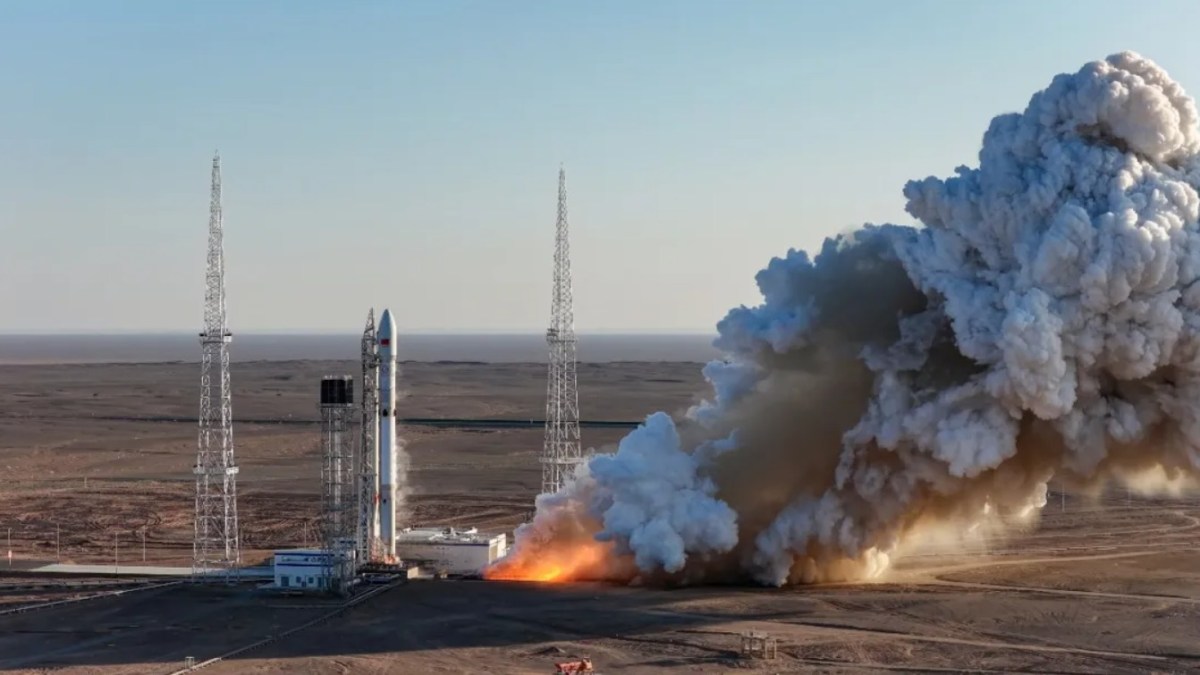
A key constraint for China has been the development of reusable rockets, which are seen as essential to reducing launch costs. U.S. rival SpaceX has used its reusable Falcon 9 rocket to dominate launches to low Earth orbit (LEO), support its Starlink satellite network and enable orbital space tourism. China has yet to complete a full reusable rocket test, though it achieved a record 93 launches last year, buoyed by the growth of commercial space startups.
Chinese officials have repeatedly described SpaceX’s near-monopoly in LEO satellites as a national security concern and are pursuing domestic alternatives. In late December, Chinese entities submitted filings to the International Telecommunication Union outlining plans to place roughly 200,000 satellites into orbit over the next 14 years, with two mega-constellations accounting for most of the total.
CASC’s announcement followed the inauguration of China’s first School of Interstellar Navigation at the Chinese Academy of Sciences, according to state media. The institution is intended to cultivate talent in fields such as deep-space navigation and interstellar propulsion, supporting projects including a planned lunar research station.
“The next 10 to 20 years will be a window for leapfrog development in China’s interstellar navigation field,” state news agency Xinhua reported, citing the school’s launch.
State media said CASC also plans to pursue breakthroughs in areas such as small celestial body resource exploration, autonomous space mining and space debris monitoring, while contributing to the development of international space traffic management rules.
China has expanded its profile in space exploration in recent years. Its Chang’e-6 mission returned samples from the far side of the moon in 2024, and Beijing has sought to shape international standards for space infrastructure as it competes with the United States, which aims to return astronauts to the lunar surface later this decade.