Sophia Space has announced new funding and a series of planned in-orbit demonstrations as it advances development of its orbital computing technology platform.
The company said it is finalizing a $7 million SAFE financing round that is expected to close this week. Investors participating in the round include EverGreen, the NVIDIA Alumni Investment Network, SparkLabs Group, and other undisclosed backers.
Upon completion, the financing will bring Sophia Space’s total funding to approximately $22 million.
Funding to Support Expansion
According to the company, the new capital will be used to expand research and development activities, grow engineering and commercial teams, and establish manufacturing capabilities for its TILE orbital computing platform.
Sophia Space is developing hardware designed to provide computing capacity directly in orbit, reducing the need to transmit large volumes of data back to Earth for processing.
Planned In-Orbit Demonstrations
The company also announced plans for two demonstration missions intended to validate its technology in space.
The first mission, scheduled for later this year, will test Sophia Space’s orbital operating system, known as SOOS, aboard infrastructure provided by Kepler.
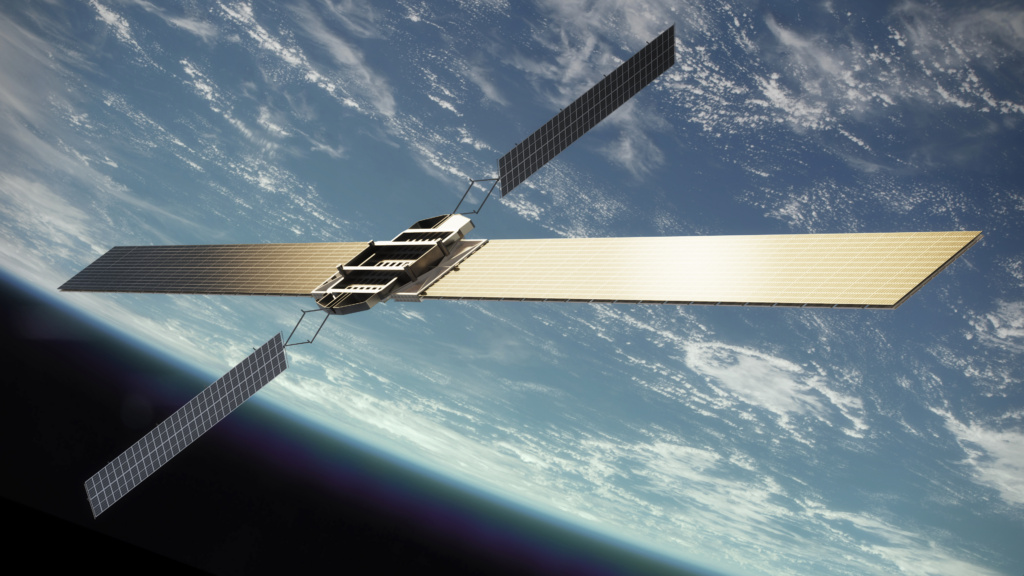
A second demonstration is planned for 2027 using a Nova satellite bus supplied by Apex.
During that mission, the TILE platform will process data generated by onboard sensors, allowing engineers to evaluate its ability to run artificial intelligence inference workloads and perform tasks such as image processing in orbit.
Focus on Edge Computing in Space
Sophia Space is targeting the growing market for space-based computing, where increasing volumes of satellite-generated data are creating demand for greater onboard processing capabilities.
The company said its architecture is designed to distribute computing workloads and heat management across individual TILE units, addressing some of the technical challenges associated with operating high-performance computing systems in the space environment.
Growing Orbital Computing Market
Interest in orbital computing infrastructure has increased as satellite operators seek ways to process data closer to its source and reduce reliance on communications bandwidth.
Potential applications include Earth observation, communications, scientific research, artificial intelligence workloads, and future orbital data center concepts.
Sophia Space said the upcoming demonstrations are intended to validate its technology ahead of broader commercial deployment and support future growth in the emerging in-space computing sector.