Constellation announcements often promise billions in investment, but rarely explain where the money goes. To understand the economics of space computing, we need to break down five costs across a computing satellite’s life, from development to disposal. The exercise reveals why companies in this industry need to understand both aerospace engineering and cost accounting.
1. Development and Manufacturing: Reliability Comes at a Price
A satellite can cost one or two orders of magnitude more than ground-based equipment with comparable computing capabilities. The premium is not simply about scarce materials. It reflects the demanding reliability requirements of spaceflight: intense vibration during launch, repeated temperature changes as the spacecraft moves between sunlight and shadow, and persistent radiation exposure that can damage chips or disrupt their operation. Radiation hardening was discussed in Lesson 5 of the 101 series.
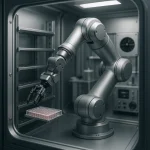
Components and assemblies must undergo appropriate environmental qualification, including vibration, thermal-vacuum and radiation testing. For some hardware, the cost of qualification can exceed the purchase price of the components themselves.
The encouraging development is that manufacturing costs can fall as production scales. Batch manufacturing, moving assembly lines and the use of suitably qualified commercial off-the-shelf (COTS) components are helping turn satellites from individually crafted machines into industrial products.
2. Launch: Reducing the Delivery Bill
Lesson 7 of the 101 series explored the economics of getting payloads into orbit. Reusable rockets can reduce launch costs, although the price customers pay depends on the vehicle, destination orbit and contract.
Constellation operators have two additional ways to save. The first is rideshare: dozens of satellites share a rocket, with charges typically linked to mass and deployment requirements. The second is bulk purchasing: committing to multiple launches can strengthen an operator’s negotiating position.
The exclusive “first rocket, first satellite” branding associated with S-AIDC-1 also illustrates a commercial approach in which the launch provider and satellite developer promote each other.
But launch is only one part of the bill. Its share varies by project, and even substantial savings cannot eliminate the recurring costs of keeping a constellation operating.
3 and 4. Insurance and Operations: The Bills Keep Coming
Insurance: Launch and in-orbit coverage protect against different stages of mission risk. Premiums are generally calculated as a percentage of the insured value, with pricing influenced by the launch vehicle’s record, spacecraft maturity, orbital risks and policy terms. For operators that maintain annual in-orbit coverage, premiums remain a recurring expense even when nothing goes wrong.
Operations: A constellation needs ground-station access, telemetry, tracking and command teams, and round-the-clock monitoring. While the satellites travel overhead, their support teams work shifts on the ground.
Technology demonstrations such as PEGA-SUS1, which combines communications, sensing and intelligent computing, also point toward a possible way to simplify operations over time. If one spacecraft can perform functions that would otherwise require several satellites, it may spread infrastructure and operating costs across more services. Whether that produces a net saving depends on the complexity and reliability of the integrated system.
5. Deorbiting: Retirement Has a Cost
A satellite cannot simply be abandoned when its working life ends. Low-Earth-orbit missions need an appropriate disposal strategy, which may involve reserving propellant for deorbiting, carrying a dedicated disposal device or using an orbit that allows timely atmospheric reentry.
The objective is to prevent retired spacecraft from becoming long-lived debris. Lesson 8 of the 101 series cited ESA’s 2025 estimate of more than 1.2 million debris objects larger than 1 centimeter.
This end-of-life budget must be included from the beginning of the design process. Competition for orbital capacity, debris mitigation requirements and potential liability make disposal planning a financial consideration as well as an engineering responsibility.
Industry Term: TCO
Total Cost of Ownership (TCO) is the full cost of acquiring, using, maintaining, insuring and disposing of an asset throughout its life.
In everyday terms: the purchase price tells you what it costs to buy a car; ownership tells you what it really costs to keep one.
Key Figures and Budget Checks
- Space debris: ESA’s 2025 estimate put the number of debris objects larger than 1 centimeter at more than 1.2 million, as cited in the 101 series.
- Launch economics: Reusable rockets can lower the cost of reaching orbit, but any budget should use current quotations for the required launch service.
- Constellation investment: Costs vary substantially by project. This article does not rely on unverified multibillion-dollar announcements. When reading one, first ask whether the figure covers development, launch or the full operating life.
A Question for Investors: Who Pays for the Next Generation?
Consider the mismatch between asset replacement cycles and long-term market forecasts. A financial model might depreciate satellites over five to eight years, while the investment narrative looks toward a market developing over a decade. CCID Consulting projects that the global space-computing market could reach approximately $16 billion by 2030.
Depreciation periods and actual service lives vary by spacecraft and accounting policy. But the underlying question remains: when the first generation of computing satellites retires in large numbers, can operating revenue cover the cost of replacing it?
That is a critical test of whether a constellation has a sustainable business model or remains dependent on successive rounds of fundraising.
The Takeaway
Think of launch as the down payment and recurring ownership costs as the mortgage. Assess a constellation by its TCO, not just the amount it has raised.
The same discipline applies when planning a satellite mission: compare the full cost of delivering the required capability, rather than focusing on the spacecraft’s purchase price alone. STARPATH GLOBAL connects international customers with China’s expanding satellite manufacturing capacity, offering competitively priced satellite, payload and assembly, integration and testing (AIT) solutions. To discuss the capabilities and budget your project requires, contact STARPATH GLOBAL and explore options suited to your mission.